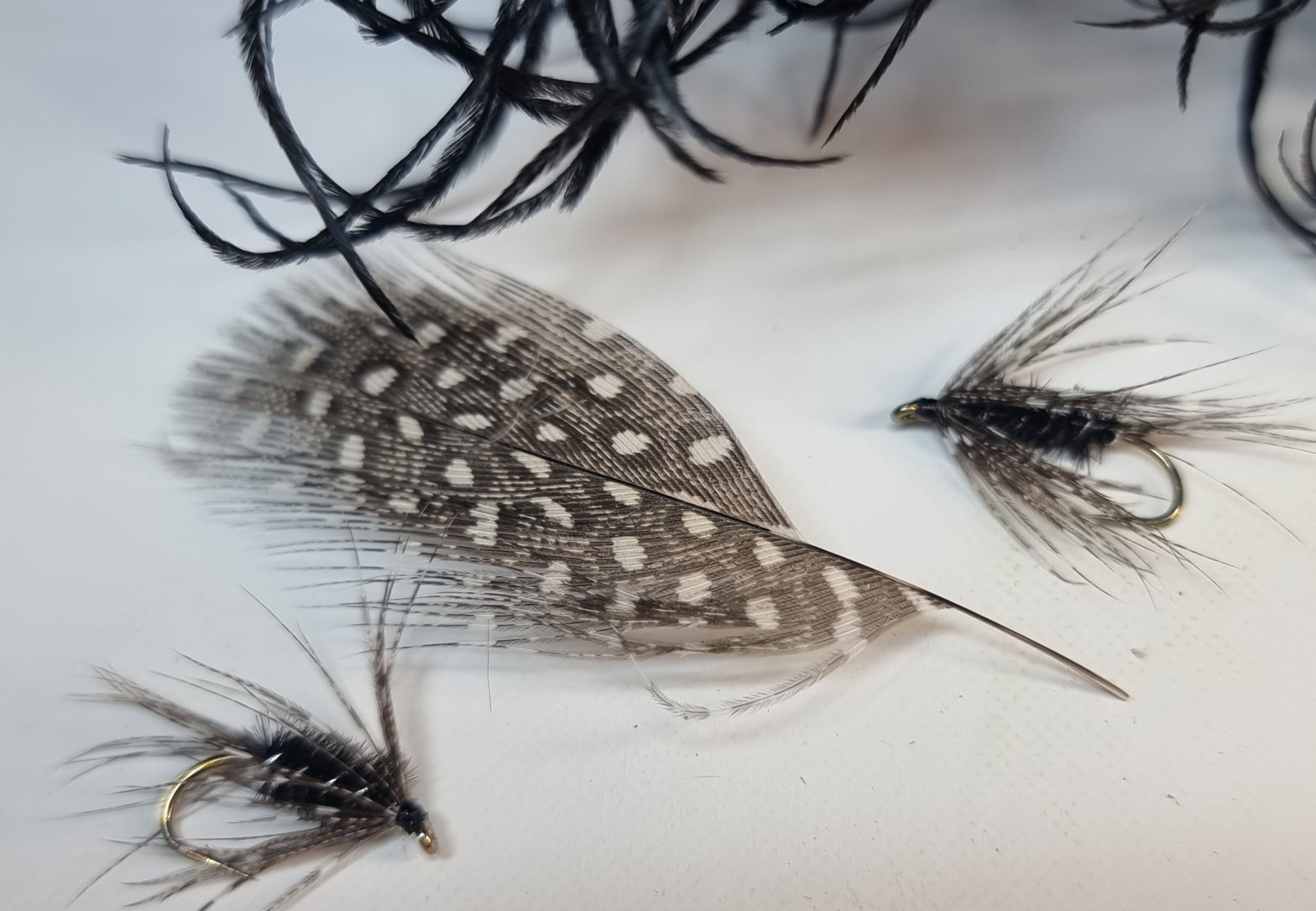
I am willing to bet very few of you have ever heard of this fly. It was in the second volume of ‘Fifty popular flies’ by the Scottish angler and writer Tom Stewart published away back in 1964. These were fabulous wee books, written by a guy who fished all over Scotland and even strayed across the North channel and fished here in Ireland too. My late uncle Charlie gifted all four volumes to me one Christmas and I still have those well thumbed paperbacks in my angling library. I still reach for them when checking the details of old patterns or sometimes just to read again the wise words therein.
The Black Nymph is more of a wet spider than a true nymph. Apparently it was invented by R.C. Bridgett who was himself a legendary angler on Scotland’s lochs and rivers. A prolific writer, Bridgett had a lot to say for himself and you can still pick up his books on the secondhand market for not much money. Very dated now, they are never the less interesting and show us how good the angling used to be and the inventive nature of fishers in those days.
Back to the Black Nymph now. This is a very simple fly to tie and the materials are readily available.
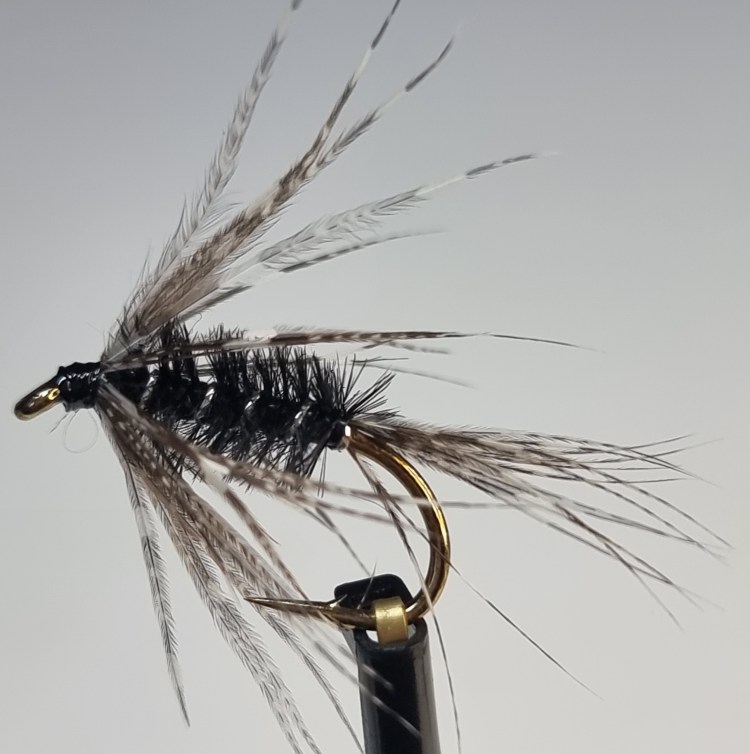
Hook: sizes 12 or 14 wet fly hooks
Tying silk: black, 8/0
Tails: a few fibres of guinea fowl
Rib: fine oval silver tinsel
Body: a single strand of black ostrich herl
Hackle: a small guinea fowl feather wound at the neck only
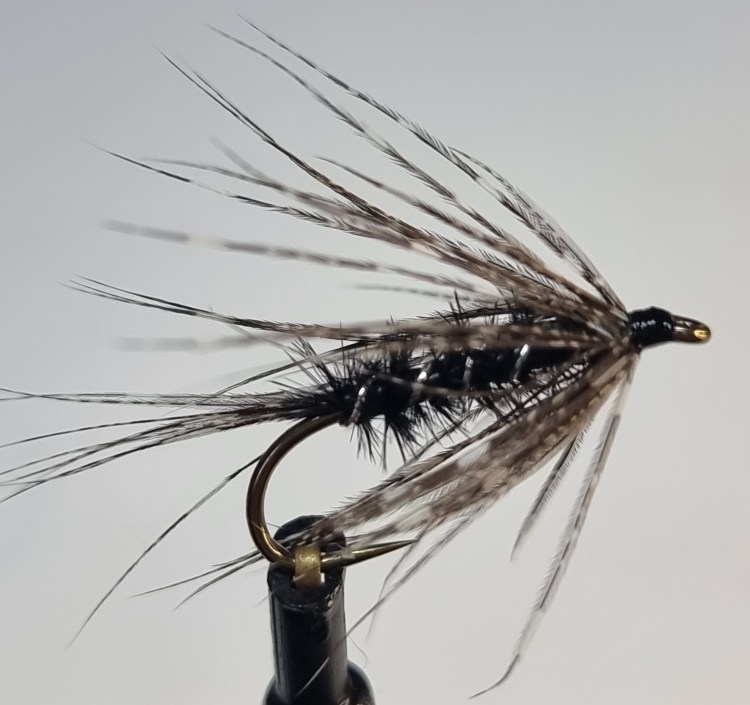
A few points to watch out for when making this pattern. Ostrich herl can be weak so take care when winding the body. The hackle should be tied in by the tip and only one turn is sufficient. The stem on guinea fowl feathers tapers quickly and trying to wind on more turns will cause you issue with a bulky head. Apart from that, this is a lovely wee fly to tie. In use, I would fish it on the tail of a well sunk leader early in the season. Obviously, this is not an exact imitation of any living creature, but the colour and mottled appearance could be suggestive of lots of different insects and crustaceans who live on the bottom of our loughs.
As for variations, you can tie the fly on a longer shank hook, something like the Kamasan B200 for instance. Then again, you could go mad altogether and experiment with different colours of ostrich and dyed guinea fowl. Olive shades would make nice flies for example.
Happy tying!


Hi Colin, Have these pattern books since 1972, and yet never considered this pattern. Thank you for the reminder. Can I propose the Haslam as one of the most successful patterns I found from his books. Well done, a clever pattern. Mike O’Donoghue.
LikeLike
I have tried the Haslam a few times over the years Mike and never caught a thing on it! I even tie it with the correct blue and yellow Macaw ‘horns’ but still the sea trout ignore it when I tie it on cast. Looks good, should work – but it doesn’t for me.
LikeLike
My experience with this specific pattern is quite different from what you described. I noticed a notable variation in its behavior when used on a faster current.
LikeLike