My posts of late have been almost exclusively reports on my various coarse fishing outings, much to the chagrin of my loyal game fishing readers. I am sorry guys, but the trout and salmon fishing has just been appalling this season, meaning I was busy with float and feeder instead of flexing a fly rod. As the days grow shorter I will be gearing up my fly tying posts and this is the start of that switch. I do question my sanity in spending my time making flies when using them these days can be so challenging. In my defence, sitting at the vice on a miserably wet and windy winter’s day is a source of great joy for me.
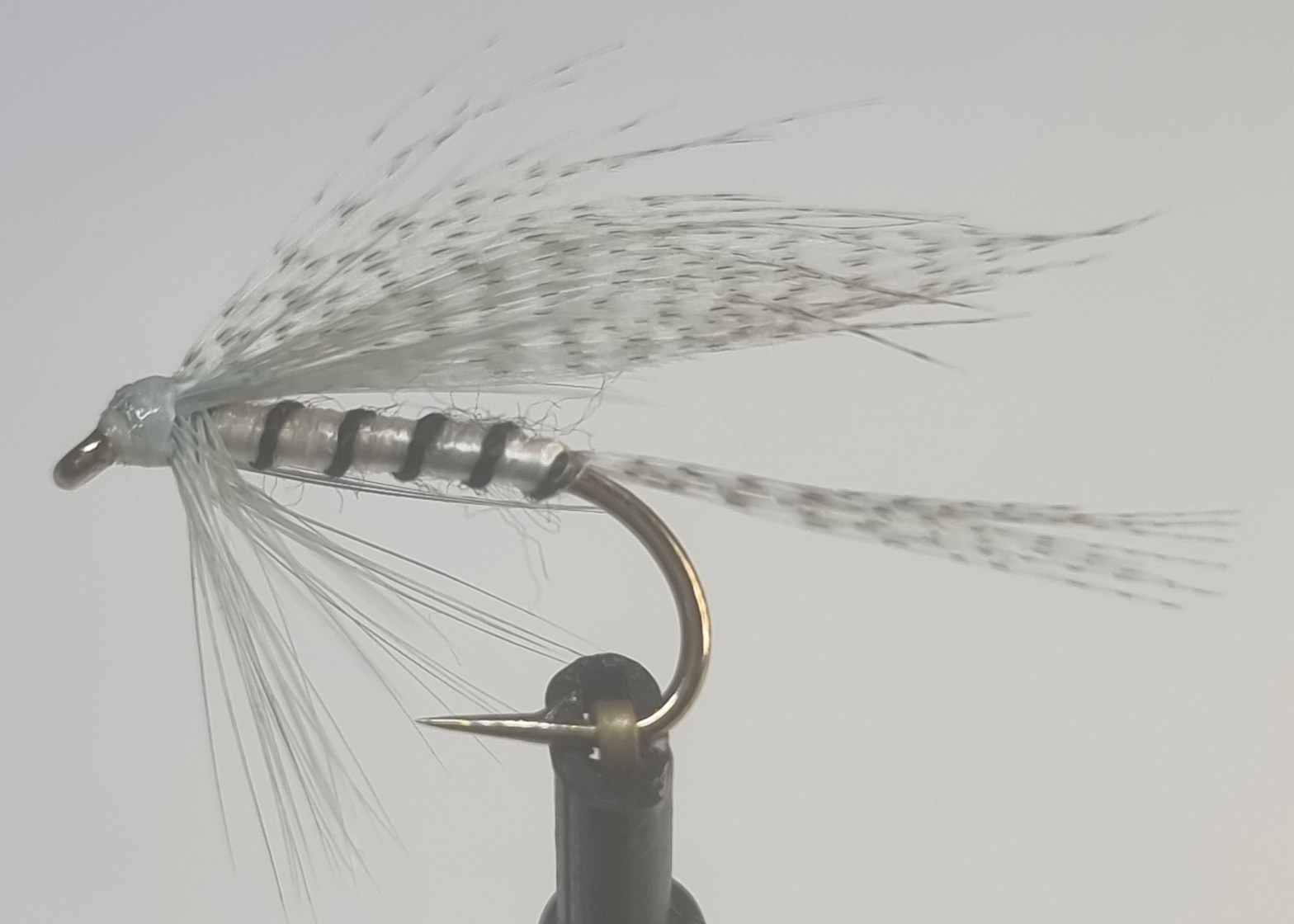
I will confess, I have never been a fan of the Ray Bergman collection of wet flies. These classic patterns were a bit too formulaic for my liking. What didn’t help was endless photos of the various flies dressing on dirty great size 6 or 8 hooks. I get that this allows the tyer to show off their skills by creating perfect copies, but I want my flies to catch fish, not look good in a case. Then there is the question of hackles, Ray favoured beard style hackles, something I dislike intensely. Here in Ireland we use wound hackles in general, and use beards only as an accent. That movement created by wound hackles is a vital in suggesting life in Irish flies while in general beards are pretty static. OK, that’s enough ranting from me, here is one of the redoubtable Ray’s patterns which I do like, the Grey Drake.
So why have I singled out this, one of the least flashy of the whole tribe, for use here in the west of Ireland? The answer is simple, this is a damn good wet fly to try when the mayfly is hatching. Of course I have made an alteration or two, but it is basically the same fly. We use a number of predominately grey patterns here, with flies such as the grey wulff, grey gosling and grey rollover being ever presents in western anglers boxes. It is not great surprise then that this pattern works too.
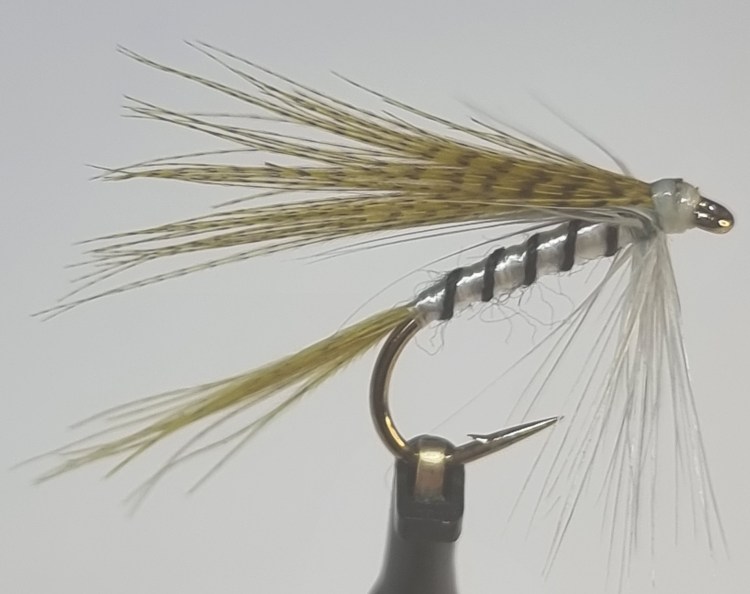
Hook: the original was tied on normal shank wet fly hooks, but I also dress some on long shanks, sizes 10 or 12
Tying silk: I deviate from the original here. Black tying silk was specified but I like to use fluorescent white, 8/0
Tail: a few fibres of grey mallard flank
Body: white floss silk
Rib: I think the original was ribbed with black floss silk, but that splits up far too easily in use for my liking, so I use a strand of black flex-floss or thick black thread instead
Hackle: a grey cock or hen hackle wound only at the throat
Wing: grey mallard flank. Use left and right slips as in the original tying. if this is proving too difficult (and mallard flank is not a forgiving material), cut a wide section form the feather, line up the tips and then roll the wad to form a wing which will be much easier to tie in.
Head: black in the original, but I use clear varnish on the white tying silk to give a nice bright target for the trout
There is nothing complicated about tying this fly. Floss silk frays when you wind it sometimes but don’t get too hung up about that, the trout won’t mind a bit. Mallard flank can be a bit of a pain to work with sometimes but if you can find best quality feathers they make the process much easier. Other than that, this is an easy fly to tie. In use, I fish this as a point fly on a wet fly leader in May and June.
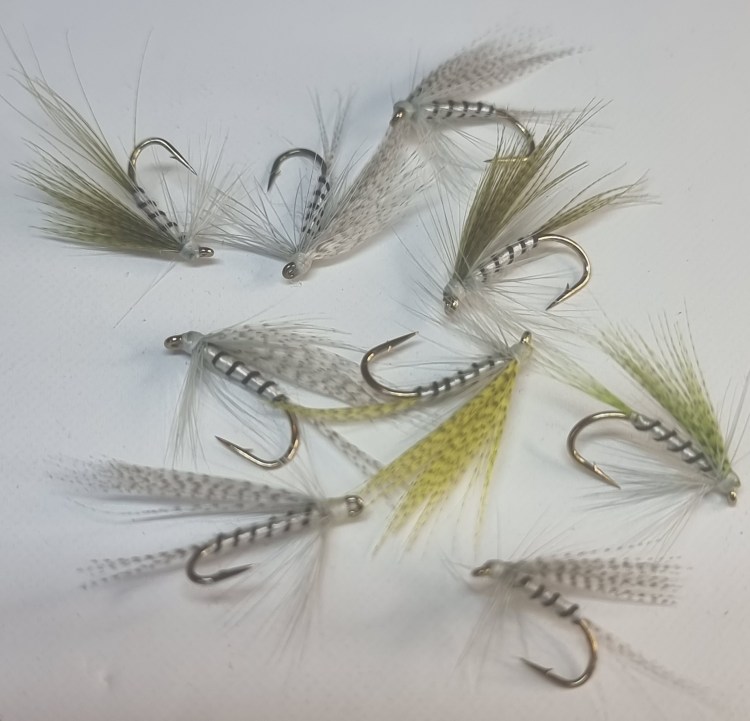
You can of course create a host of variants by simply changing the natural grey mallard for the same feather but dyed different shades. Yellow, green, olive and golden olive are all good options.
NB – You will see I spell ‘Grey’ with an ‘E’, unlike our transatlantic cousins who use an ‘A’ in similar positions. I think it is fair to suppose the trout are not going to be negatively influenced by this linguistic digression.


Hi, would not be aware of this pattern without you, and it seems important. The Us patterns seem “dead” and not wild enough. Well done.
LikeLike
it is a handy wee fly. the body looks very realistic when wet, so maybe that is what the trout see in it.
LikeLike
That’s a great looking fly there, but unfortunately I can’t elaborate further as I know zero on the subject. I have however acquired a few flies over time in joblots etc, but haven’t a clue as to what they are. But maybe one day.
LikeLike
Sure, I was was the same with coarse fishing tackle until a few years ago! Never too old to learn.
LikeLike
Great post Colin, Salmon and trout has been very poor hopefully we get some more water in the last few weeks. I like yourself have been out with the coarse gear more. I remember seeing a fly very similar to this a few years back now, being fished for sea trout on a estuary in Donegal for sea trout with good results.
LikeLike
Rain again last night in Castlebar, so the rivers are still rising around here. With mixed weather for the rest of this week we might just salvage something before the end of the season! I can well believe a similar fly would do the business with the sea trout, it has a nice look to it.
LikeLike