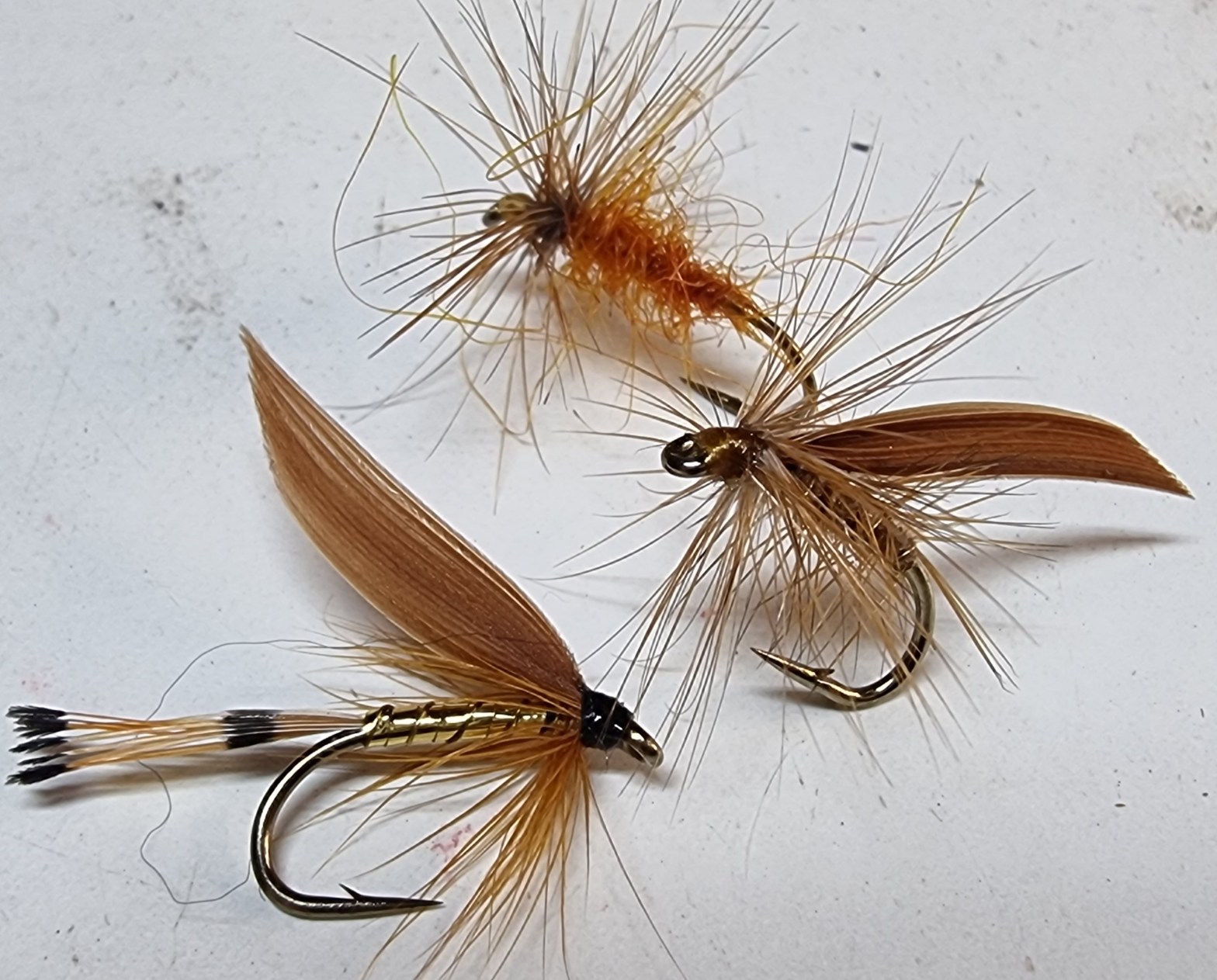
No, not the spice. The colour, and more specifically, the use of cinnamon materials in fly tying.
I first became aware of cinnamon as a young angler and fly tyer back in Aberdeen. Back in the ’70’s and 80’s, the east of Scotland rivers all supported huge runs of sea trout, wonderful hard fighting fish which would test any anglers skill. While most of the UK regarded sea trout fishing as a night time sport, the east coast sea trout could be tempted to take a fly during daylight. In place of the large flies which were the staple of nocturnal fishers, we used much smaller hooks, typically sizes 14 or 16 and usually doubles. Fly patterns were limited to a handful of tried and tested favourites, and the queen of them all was the Cinnamon and Gold.
While I still turn to the Cinnamon and Gold on the odd occasion these days, it was rarely off my sea trout leader 40 years ago. Confidence in this fly was always sky high, it rarely let me down and if it did you could bet there were extenuating circumstances. The only downside was the boredom of tying them up for other anglers; it was immensely popular and I was constantly hunched over my vice tying them up in batches of a dozen at a time, which was pretty tedious. A simple fly to tie, the issues which caused me problems were material related. This was before mylar tinsels were on the market, so I was using flat metal tinsel which cut the gossamer thread on a regular basis. Then there was sourcing cinnamon hen quills for the all important wings. These were always in demand and frequently unavailable, leading to disappointed customers. Even these days, I sometimes struggle to find good quality cinnamon hen quills and tend to buy them if I come across them just in case I run out. While my preferred quills are natural cinnamon coloured ones there are dyed hen quills also available, but the shade can vary a lot so it is a case of buyer beware. Another source of cinnamon quills is the side feathers from a partridge’s tail. These are a lovely colour but are hard to work with as they split easily when handled.
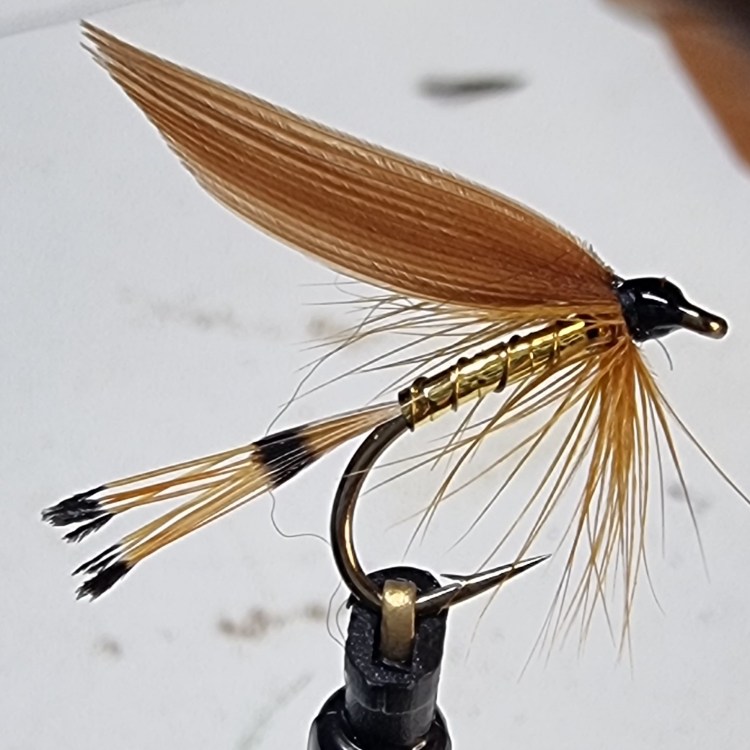
Why the Cinnamon and Gold should be so attractive to trout is not clear to me. It looks like nothing in nature, so maybe the flash of the gold body is what the sea trout like. It is not only sea trout who love it, brownies fall for it’s charms too and I have done well with it in the middle of a wet fly cast on summer evenings. One common variation is to tie the fly with a thick, prominent tail made of yellow silk instead of the usual tippets. This is a very popular loch fly back in my homeland of Scotland.
Of course, there are a lot of other variants on the go. The Cinnamon and Silver is probably the most common variant and it is a good fly for a bright day. Just swapping out the gold tinsel body for a silver one is all you do for this fly. With the huge amount of newer mylar tinsel now available to tyers you can produce a wide range of variants by just changing the body. Holographic tinsel in gold looks really well with the flat cinnamon wings, they somehow compliment each other to my mind. I’ve found that a Cinnamon and Pearl is a good fly for rainbows.
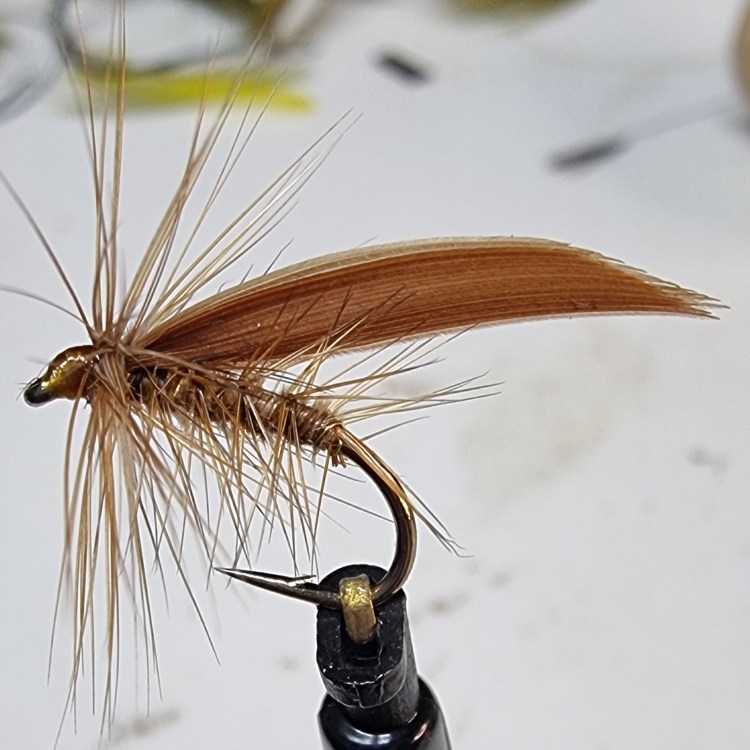
Arguably even more popular than the Cinnamon and Gold is the Cinnamon Sedge. A fair copy of the natural, this is a lovely fly to tie. The body is usually made from seal or other fur these days but I still use cinnamon turkey herls. You can use turkey for the wings too but I like to use hen quills and save the turkey just for the bodies. Normal tying is herl body ribbed with fine gold wire and a body hackle consisting of a palmered ginger cock hackle. Cinnamon quills for the wings are tied long and low over the back and a head hackle the same as the body hackle but a bit longer in fibre finishes off the fly. The natural cinnamon sedge is one of the more common species here in Ireland, so an artificial is pretty much essential for both river and lough anglers. You can go as big as a size 10 for the lough but a 12 or 14 is much better on running water.
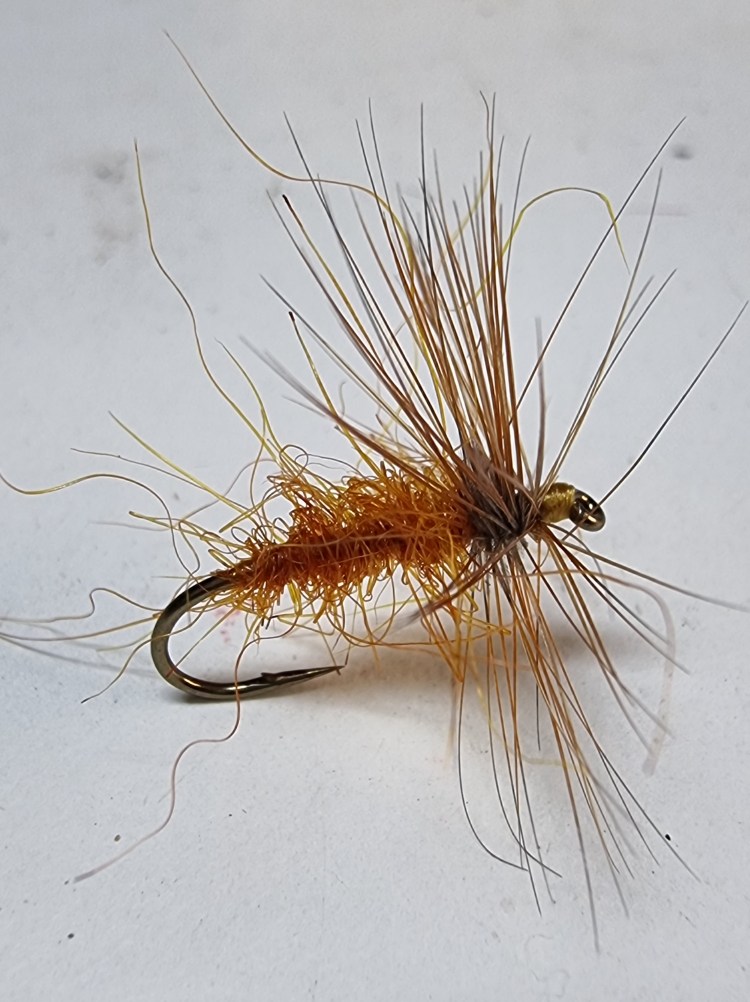
One last use for the colour cinnamon is Bob’s Bits. Like many of you, I tie and fish ‘the bits’ in many colours, but cinnamon is a consistently good shade for me. Ultra easy to tie, it is just a cinnamon dyed seal’s fur body with a couple of turns of a ginger hackle which is clipped underneath, on a size 12 hook. Despite the crude nature of this dry fly it is reliable for those difficult calm summer days on the lough. I have a suspicion the trout might take this as a hatching sedge, the rough outline and messy profile might be like the confusion of legs and body parts as a caddis struggles on the surface. Whatever they take it for, a Cinnamon Bits is a cracking dry fly. You can tart it up a bit by adding a few legs made of knotted cock pheasant tail herl or a wing of yarn to help you see the damn thing on a choppy day.
Addendum
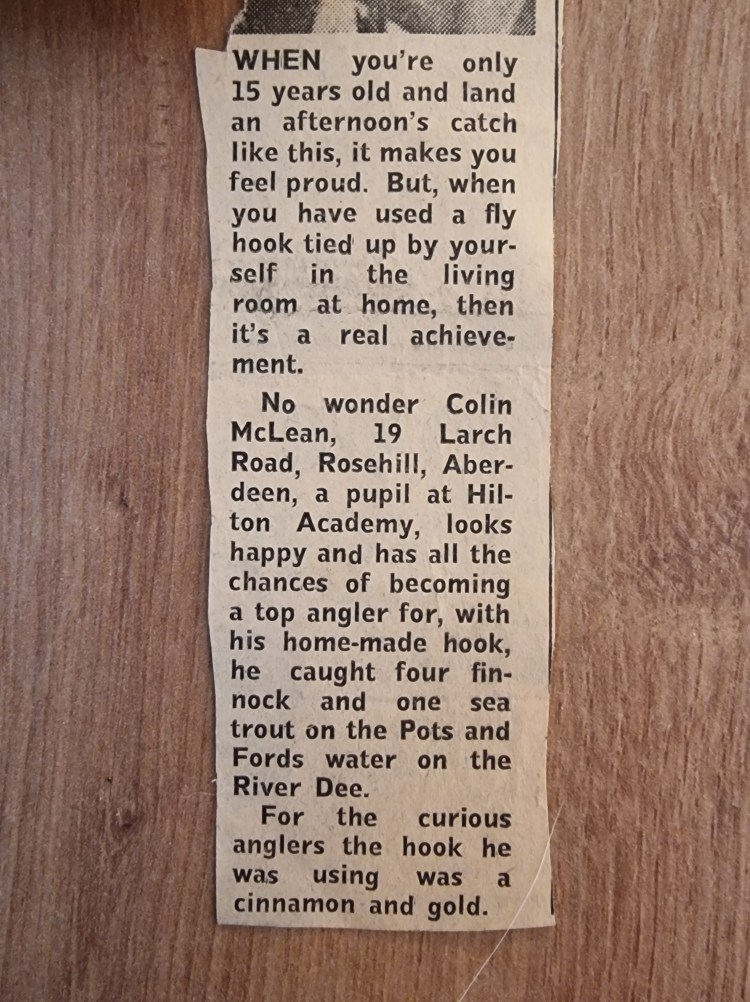
When I was in Aberdeen last week my mother gave me some old photographs which were gathering dust in a drawer. In amongst the usual embarrassing pictures of me as a long haired teenager was one taken of me and published in the local paper. It was taken when I was 15 years old and featured a fresh-faced me is holding up a catch of sea trout beside the river Dee. The photographer wanted me to hold up the fish but I could not keep the slippery trout in my hands so I strung them on a stick. I caught those sea trout on a Cinnamon and Gold!
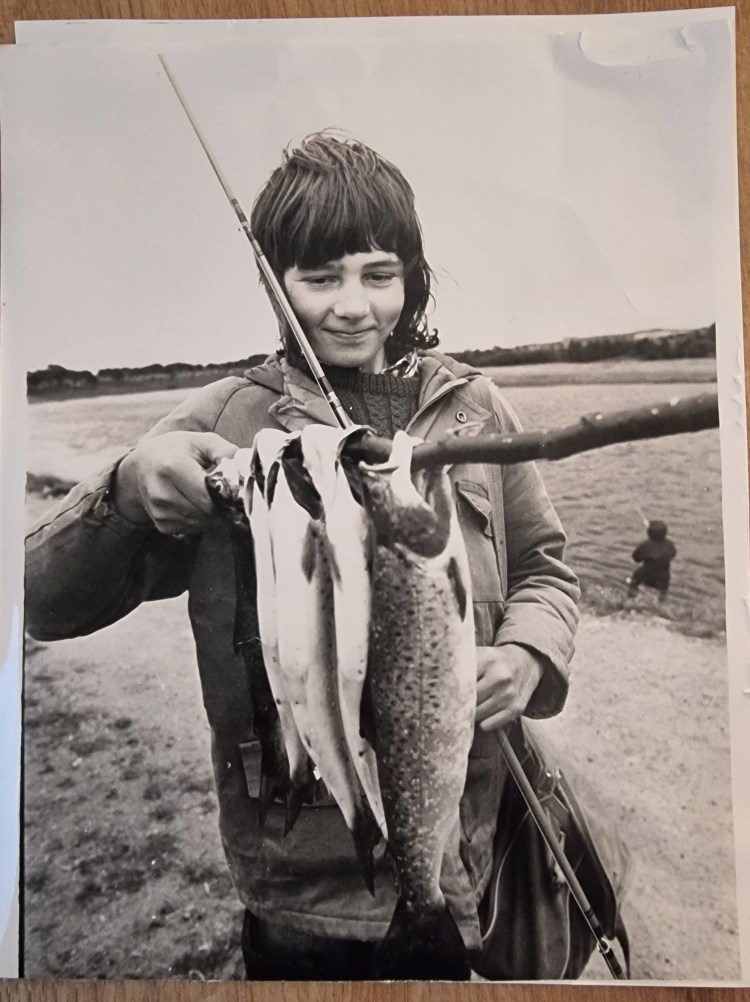
Dear Lord! Look at the state of me back then. That parka was too small for me and I wrung a few more seasons out it after that. The jumper was green and knitted by my mother. The wonky fringe suggests she had cut my hair too! The rod was a nine foot six fibreglass and the bag on my shoulder held my sandwiches, a flask and my one and only fly box. The biggest trout would have been around a pound-and-a-quarter, the finnock were all less than a pound in weight, typical for the Dee at that time. It is a cliché, but they were very happy days.

 Claretbumbler
I believe fishing jackets kids had were not allowed to be the correct size.
LikeLike
I certainly was not the only youngster on the bank in an ill fitting jacket back then.
LikeLike
Great photo Colin, it captures the time perfectly
LikeLike
Literally a lifetime ago! Part of the magic of our fishing is the memories we carry with us. Fish landed (and lost), great company, stunning countryside – we are very lucky to have all of this in our lives.
LikeLike