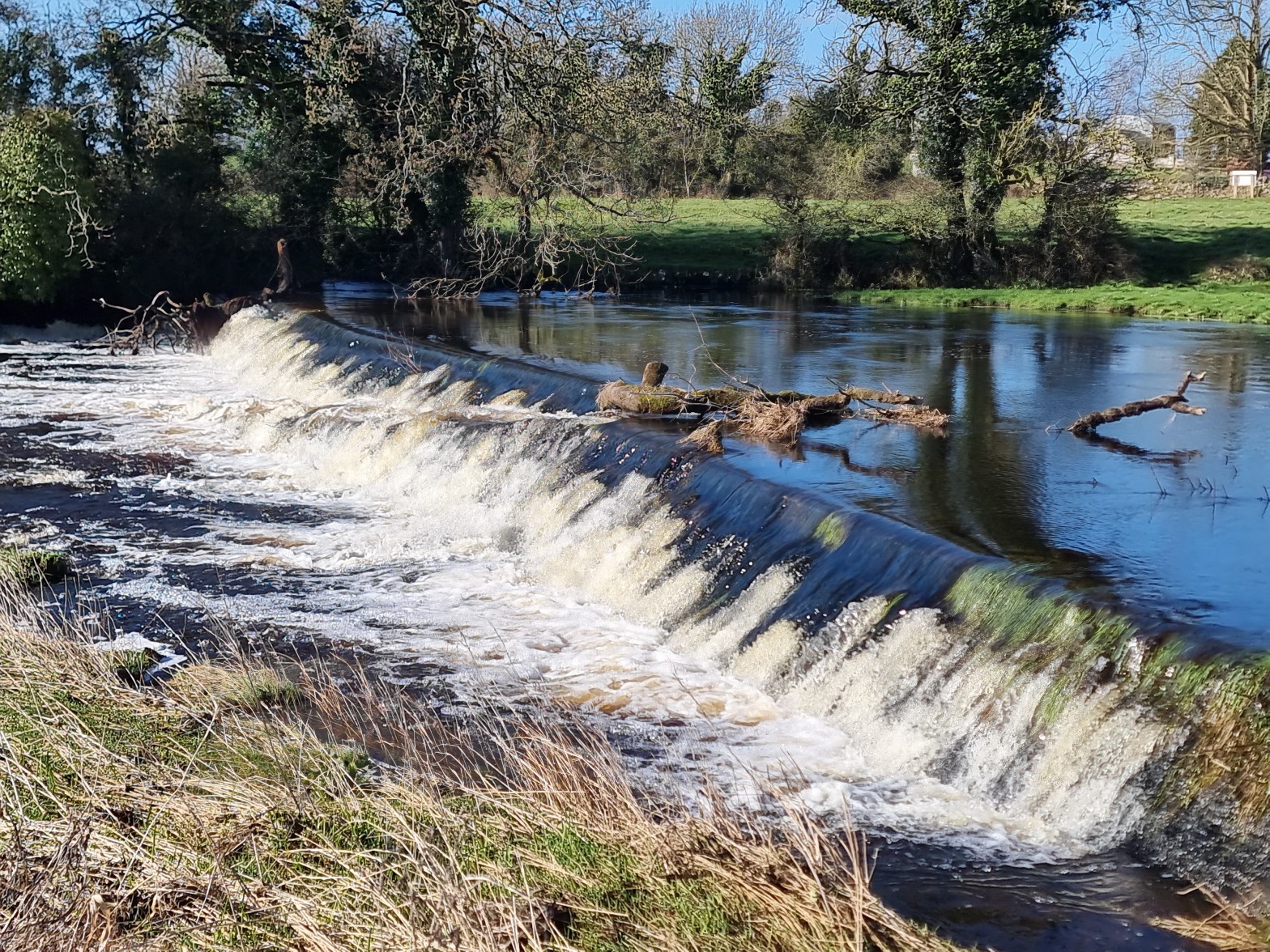
The river Robe opened for trout fishing on Sunday but it was a yet another day of incessant rain. Monday was supposed to be a dry day but the cold wind brought in more rain from the south in the form of squally showers. I baulked at getting soaked and so delayed my first outing of the year with a fly rod by 48 hours, hoping things would have dried up by Tuesday morning. After a frosty night, the day dawned clear, with blue skies and a light wind. It was time to be about my business!
These early season forays are rarely hugely productive. With little in the way of hatches to tempt them up in the water, the trout are usually found in quieter lies and hugging the bottom. Even knowing I was likely to catch little or nothing I still badly wanted to get bank side once again. Last season was pretty disastrous for me and I feel a strong urge to get back into my angling in ’26. So it was that I had spent part of the weekend rooting out my gear, sorting out fly boxes and tying up a few spare leaders in preparation for the next dry day.
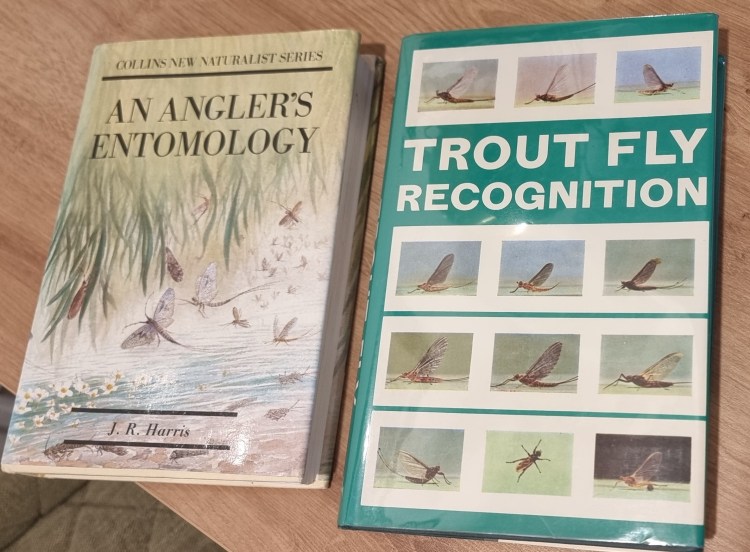
Early season on the Robe means wet fly and nymphs for me. The most significant hatch is the early brown stonefly and the trout do seem to love these ungainly creatures. I have always side stepped entomology, mainly because I can’t speak or read Latin, but I thought I would do a bit of research on the Early Brown. I waded through ‘John Goddard’s ‘Trout fly recognition’ and J.R. Harris’s ‘An anglers entomology’, but by far the most detailed source of information was a study of Irish Stoneflies written by UCD which I found online, here is the link: https://biodiversityireland.ie/app/uploads/2021/11/stoneflies-of-ireland-atlas_web.pdf
The early brown (or Protonemura meyeriis to give it its Sunday name), is fairly common across Ireland, so it is an important species for us river anglers. There is a smaller species which hatches out a bit later, but this is a fly of the small upland streams. It is the early emergence of these these stoneflies which makes them particularly significant. In the summer the trout can pick from a veritable smorgasbord of insects and crustaceans, but in the early spring pickings are lean so any fly life is welcomed. Their four large wings makes them easy to identify in flight, but they can be hard to spot in poor light conditions when they are on the water. They hatch out in fast, streamy sections of the river. Although they look big in flight, I have found over the years that a size 14 hook is best for artificials. Lots of patterns are available to match this fly, but my all time favourite remains the plover and hare’s ear spider. Rarely off my leader for the first two months of the season, it is rivalled only by the partridge and orange for efficacy.
The five weight Orvis is my go to rod for early season river trouting. An old rod now, I like the length which makes mending line during a downstream swing much easier than with a shorter rod. It also gives me that little bit more control on the rare occasions when I euro nymph. Yes, a modern 2 or 3 weight would be better but I have no intention of spending big money on a rod which would only make a marginal difference to my enjoyment on the river. The reel is a Pflueger of uncertain vintage and the five weight floater has seen a few seasons at this stage. I’m a great believer in giving your fly lines a regular clean to stop them getting sticky, and this line was cleaned after the last time I used it. Ok, so I don’t have to cast far but I still like my fly lines to be slick.
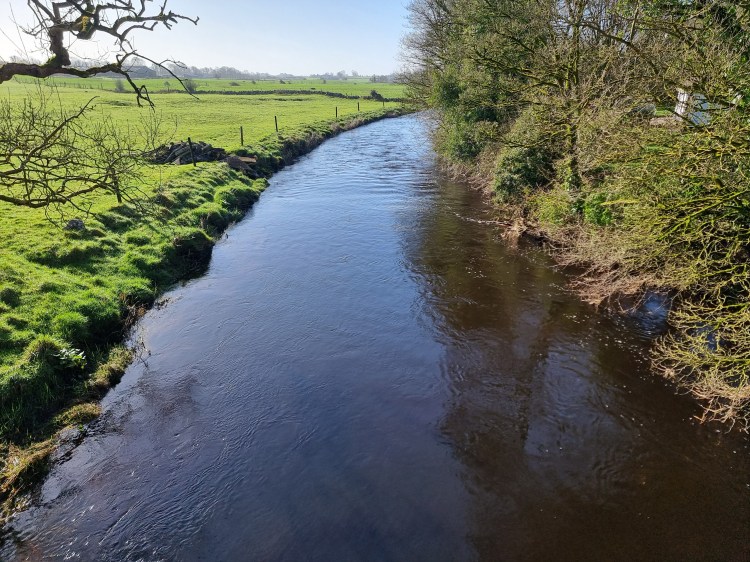
I toddled down the familiar road to where a bridge crosses the Robe between Claremorris and Ballinrobe. Tackled up, I peered over the bridge to find the river swollen after all the rain we have endured of late. I reckoned there was a couple of feet of water over summer level and the brown water roiled and surged below me, a sight which did not inspire much confidence. Regardless, I marched down to the bank and started to fish. Flicking the floating line out and trying to judge where to stop the cast so the flies did not tangle in the branches from the opposite bank is cunningly difficult. The bright sunshine did not help matters either and I had a couple of close calls when the tail fly wrapped sycamore or alder twigs, but I pulled it free on both occasions.
The river flowed past me at breakneck pace, with the familiar holding spots washed out for now. Even the tails of the pools were too fast to fish properly but I persevered anyway, simply enjoying being out in the sunshine for once. A Polish lad stopped to speak as he headed off down the river armed with a spinning rod. I worked my way downstream, casting into any small pockets I could find and using every trick I knew to prevent the flies being whipped away in the current. With no pulls forthcoming, I switched tactics and mounted a heavier leader with a black bugger knotted to the end. Thus armed, I fished one step per cast and varied the retrieve through the muddy water.
To cut a long story short, nothing worked for me and I decided to call it a day after covering the best pools on the stretch without so much as a pull at the flies. In my experience, the river Robe does not fish well in very high water, so I am not too downcast at my failure today. There are trout there though. As I walked back towards the parked car I stopped to watch the Polish lad for a minute. He was flicking a small gold spoon upstream and as I stood behind him as he hooked a nice trout, but the fish threw his barbless single hook right at the bank.
Back at the car I took the rod down and stowed everything away neatly. This is me trying to turn over a new leaf and be more organised at the end of a session. Too often I chuck all the gear into the car in one unholy mess, then am surprised when stuff gets lost or broken. Today such niceties were easy under the warm sun, will it be a different story on a rainy day in a howling wind when all I want to do is get inside the car asap?
So I blanked. Not for the first time, nor for the last. I could have gone to a different stretch where there was less flow and possibly a better chance of a trout, but today was really more about just getting out for a short while after being cooped up in the house for so long. The ground here is saturated, with standing water in many fields and every tiny stream flowing like a miniature torrent. It will take many dry days for the rivers to drop to levels more conductive to trout fishing, so I will have to be patient. In the meantime, I might try a bit of coarse fishing to see if there are any roach around.


You tried, but the fish didn’t cooperate. Nice to get the casting arm waved about a bit ready for the next attempt.
LikeLike
Yeah, anything was better than being stuck in the house again and it was a cracking day to be beside the water, even if the trout did not want to play.
LikeLike