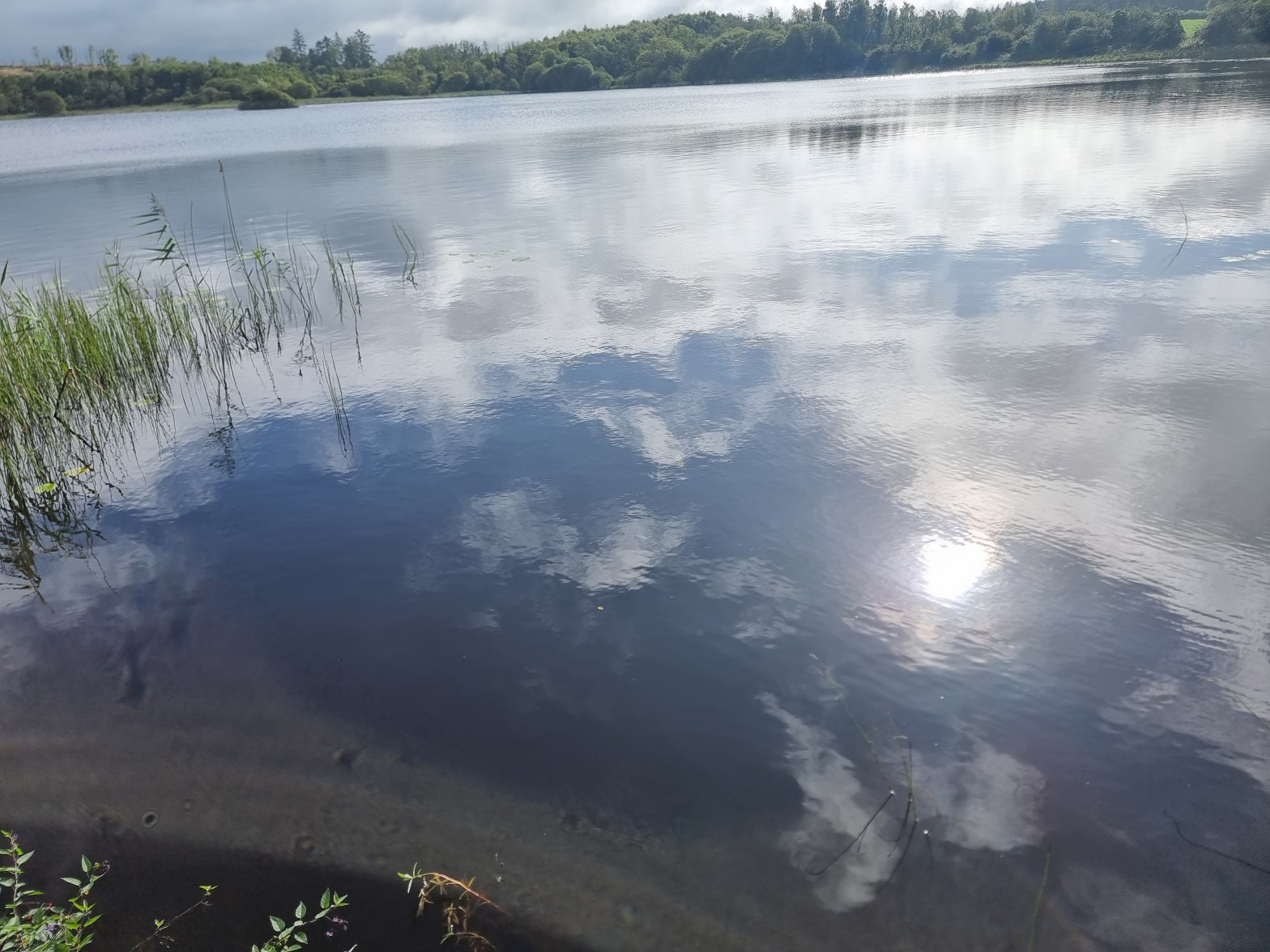
There is a lough which hides in a fold of the land, a lake I had heard of but never seen. A lake which, rumour had it, was an excellent place to catch all manner of wild fishes. If I could find it, that is. I knew roughly where this mysterious body of pea green water was situated, I could even find it on a map. But this is Ireland and things like directions or coordinates on a screen rarely achieve much beyond adding to one’s perplexity. I asked my fishing buddies if they had ever fished Shanballybaun, the name of the lake in question, but none had. In retort they wanted to know why didn’t I just fish one of the many easily accessible lakes in that area instead? A fair point, but at the same time somehow that was the whole reason for trying to fish there.
The day started as they usually do, rise, feed the 5 cats who live indoors with us, eat a little breakfast and drink a copious mug of strong coffee. Pack the old car with what I hoped would be all the tackle I’d require for the day then head off for an hour or more on the road east by northeast. With little in the way of coarse fishing close by, I have to travel some distance to access loughs, rivers or canals with cyprids in them. First order of the day would be a stop in the pretty little town of Carrick-on-Shannon to buy bait. I am a well-known face in the shop over the stone bridge, not that I add much to the profits there. In Ireland, as in the UK, we buy our maggots in old fashioned pints, none of your newfangled decimal measures when it comes to immature insect larvae. Steve, the owner, hails from Liverpool and he arrived here much the same way as I did. Lured by the then wonderful fishing, he swapped Merseyside for Leitrim and never looked back. We chatted about the fishing, the weather and where I was planning on fishing today. Maggots and worms purchased, then I hit the road again, this time north through Leitrim Village, wipers swishing the desultory rain from the windscreen, a dampness which was forecast to increase as the day progressed.
Over Battlebridge, and into county Roscommon, then hard left and on to little more than a track. I crawled along the narrow road to try and find the lost lake. Past deserted farms sulking behind rotten gates, new houses, big and sort of out of place in this remote agricultural area. Dry stone walls enclosing ancient fields, now turning greyish brown as the summer fades. Turning into a track on my right, I edged along until I found the neglected boreen I was looking for. Pulling up before the slippery track which dipped steeply down to a ruined building, I parked up and took a look around. I could make out the lough through thickets of trees and bushes, only a few hundred yards away. Time to get the waterproofs on, sort out what gear to take with me, then head down to find one of the supposed stands where I could fish from.
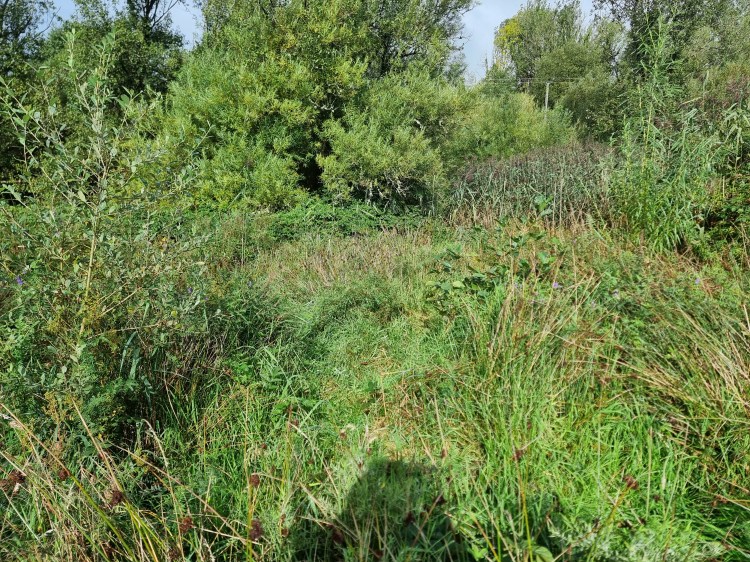
I am not that steady on my feet these days and the rough ground made just walking a bit of a test for me. Once I was down at the bottom of the slope the real fun began. Into the thickets, pushing through the sallys and nettles while watching where I was putting my feet. I was feeling like Stanley cutting his way through the dark heart of Africa in search of Livingston! Then I came to the ten foot high reeds which barred my way until I forced a path through them. Tussocks and hidden holes made progress slow, but I eventually appeared on the water’s edge right at an old double stand. Brambles and other plants were growing through the boards, but it was fishable, so I set up the gear in the drizzling rain.
The last swallows of summer wheeled overhead, calling loudly to each other as if excited to be journeying so far before the months end. The joy of seeing the first swallows in April is tempered by days like this when the small birds are feasting on the flies above the lough before leaving our skies for the winter. They bookend our summers, harbingers of the fine weather, our winged talisman of the long days, only to flee before the north winds scour the November land. Many will never see Ireland again, victims of natures cruelty as starvation, predators and disease decimate their numbers. Hopefully, sufficient survivors will make the long trek back here again and next spring I’ll find them once again hawking, screeching and wooshing across the pale sky as winter losses its grip.
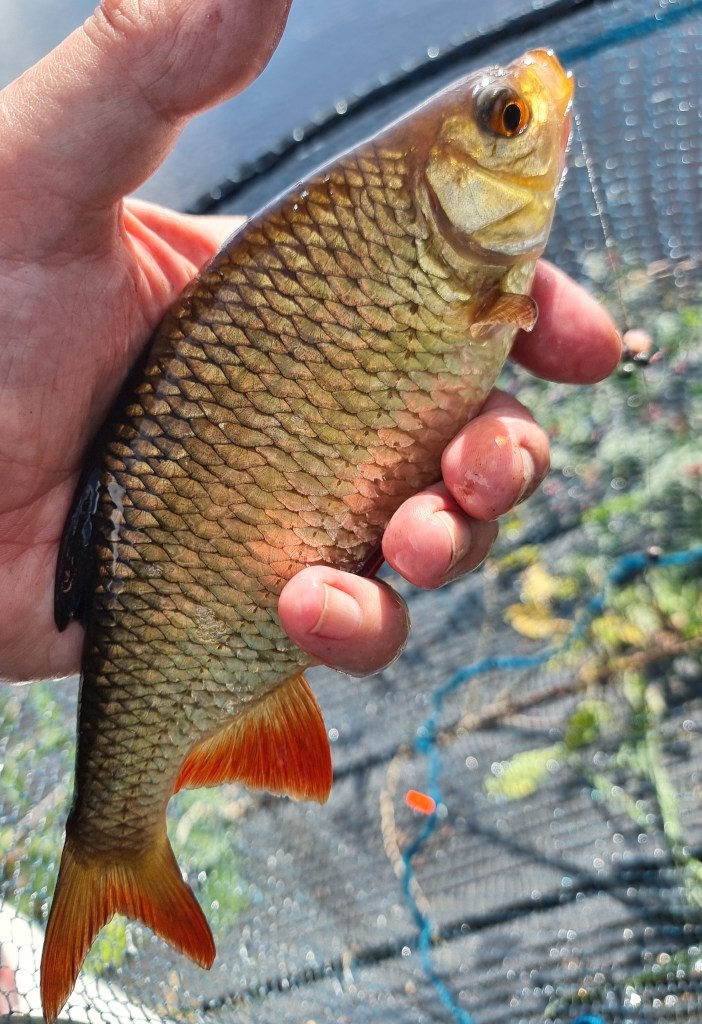
I set up a heavy waggler as the wind was blowing directly in my face. Reeds on both sides of me stretched out about ten yards or so, and I figured I needed to be beyond that distance to find fish. Setting about plumbing up, I found a drop off about 20 yards out, and by going another ten yards I found another significant change in depth. Even still I could only find about 6 feet of water far out and 4 feet over the first drop off. Deciding to go for broke, I aimed my casts 30 yards out from the stand. The rod could cast that distance with ease; my problem was seeing the tip of the float at that extreme range! I kept this distance casting up for a while but there were no offers (or at least I did not see any), so I thought I would change things around. Maybe I could pull fish closer to me? I mixed up some ground bait and fired three balls into the first drop off, followed by regular loose fed maggots. At last, I started to get some bites and soon after my first fish of the session, a pretty wee rudd, replete with flaming red fins.
The fine misty rain had eased off to nothing, and the sun came out from behind the thick grey clouds. With the upturn in the weather came a flurry of action as first some small roach, then some skimmers took up station over the ground bait I had thrown in so lately. None of these were big fish, but the float was barely getting time to settle before something on the bottom dragged it under. I did hook what appeared to be a decent one, only for it to throw the little size 16 after a few head shakes. An odd hybrid spiced things up, not big fish but scrappy little buggers. The roach must have moved off as I was left catching mainly rudd for a large part of the late morning and early afternoon. Apart from a ten minute quiet spell the fishing kept going at a brisk pace. Maggots were working, but would I do better if I changed to a worm?
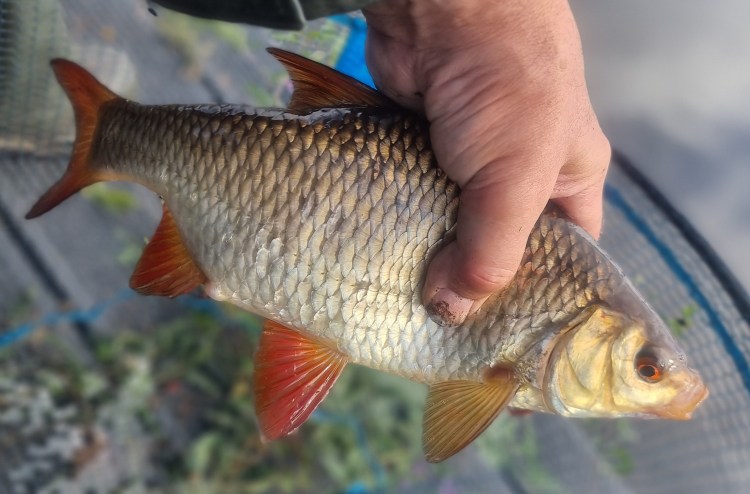
I cast out again with a pair of medium sized worms on the (too small for the bait) size 16. I know I should have swapped it out for a size 10 or 12, but I lacked confidence the worm would work. The small skimmers liked what was now on the menu and I began to rack up a good few of the silvery razors. A fussy, wibbly-wobbly sort of bite was greeted with a firm strike by me, and with that the rod hooped over and reasonable fight ensued. Only the second fish of the session requiring the use of the net, this turned out to be a lovely hybrid of better than two pounds. Hoping a shoal of similarly proportioned fellows were now in the swim I re-baited and cast again, only to foul the tree on my right. It took me ages firstly to free the line and then replace the whole of the rig. I took off the big waggler and put on a smaller, self cocking one in its place. This would work nicely in the relatively shallow water where I was now concentrating my effort. Of course, the shoal of big hybrids were long gone by then.
This new set up worked a treat and the fish responded with gusto. Skimmers, the odd roach, a sprinkling of hybrids and a host of rudd found my worms, fished hard on the bottom, irresistible. A pole would have been a much better way to handle this level of silvers but I plugged away with the waggler rod and did great execution under the warm September sun. I was bringing yet another small skimmer in when the rod was nearly ripped out of my hands, and mr. pike thrashed the water in rage at my feet. The battle went of for a few minutes and just as I had him tired out, he made one last desperate lunge for the roots of the tree at the side of the stand. There was nothing I could do to stop him and he snagged me good and proper. As much pressure as I dared was applied but of course it all ended with a sharp ‘crack’ as the four pound hook length parted. I could see the pike in the water before he swam off, and he was only about 5 pounds or so, but it would have been nice to land him.
After that excitement I returned to the rudd bashing. Switching to corn made no difference, they swallowed that just as greedily as the maggots or worms. A few skimmers manged to muscle the rudd out of the way so they could eat my worms and between them there was rarely a cast which did not result in a fish. Time was wearing on and there is only so much joy you can wring out of catching wee rudd, so I called it a day around 4pm. The jungle-like undergrowth was just as challenging on the return journey and the steep, wet slope back to the car was tiring, but I made it back without a single trip or fall (that is good for me) and I was quickly on the road back to Mayo.
Final totals were 47 rudd, a few in the 8 to 12 ounce bracket but most were smaller than that. 27 roach, none of them any great size and a few were very skinny for some reason. 16 skimmers, not one of them would have tipped a scale at a pound. Half-a-dozen hybrids, most small apart from that good solid two pounder. A solitary tiny perch made up the grand total of 97 fish for the 5 hour session. It had been a lovely few hours and I thoroughly enjoyed the whole experience. Shanballybaun may not be at the top of my list to fish again, but I am glad I sought it out.


My experience with remote areas suggests such hidden spots often lack reliable access.
LikeLike
At least it was worth it in this case.
LikeLike
Your efforts justifiably rewarded Colin! Well done
LikeLiked by 1 person