Lord only knows how often I have driven past Lough McNean. A lifetime of journeys to the north or onwards to a ferry bound for Scotland entailed crossing the border between Northern Ireland and the Republic at the bridge over the river which joins upper and lower Lough McNean. The road passes along the north shore of the lower lough and the south shore of the upper lough, giving tantalising views of these beautiful waters. Always in a hurry, I never stopped to fish there but it was somewhere I fancied to wetting a line.
The border between the Republic of Ireland and Northern Ireland is convoluted, to put it mildly. It describes a serpentine path through the middle of Upper Lough McNean, bending south of both Innishkeen and Rosscorkey islands, before lurching to the north of Garrow Island. Between the lakes, the slow flowing loop of the Tuam river marks the border, then in a bizarre cartographic dance move, the border line heads dead straight due east for about 200 metres out into Lower Lough McNean. From that unmarked point in the lake, it executes a near 90 degree turn to the south, shooting off across farmlands and bogs for a few miles. This means that the whole of the lower lough is in the UK, except for that odd corner in the south west. From an angling perspective, there is the opportunity to get things wildly wrong and find yourself in bother as there are totally different rules and regulations on each side of the border. On the Republic side, you don’t require a licence or permit to go coarse fishing, but on the British side you require both. Also, basic rules like how many rods you can use vary a lot, so my advice it to arm yourself with a DAERA licence and permit before fishing. They are not expensive and give you the freedom to fish on both sides of the border on the McNean loughs. Incidentally, the water out of the lower lough flows down the slow moving Arney river which then enters the river Erne near Derrylin. The Arney can be very good for roach in the early months, but I digress…
Both loughs hold stocks of bream, roach, perch and pike. Indeed, the pike reputedly reach massive proportions. I am not a pike angler though, so my interest was in the roach, bream and hybrids. As a side note, a small head of brown trout also live in the loughs, but on this particular trip it was the coarse species I was interested in. Maybe I could return sometime with the trout gear and try for a big brownie, but today was all about silvers.
It is the better part of a two hour drive for me to the banks of Lough McNean, and being perfectly honest I drive past some much better venues on the way. But as most of you will already have gathered, sheer numbers or size of fish are not what motivates me to go fishing. A day out on a new water, seeing different sights and trying to figure out how to catch something (anything) from a strange lough really floats my boat. I drove up there via Carrick-on-Shannon where I picked up fresh maggots, then on through Drumshanbo and Dowra to Glenfarne. Showers came and went and road side trees swayed ominously in a strong-ish wind.
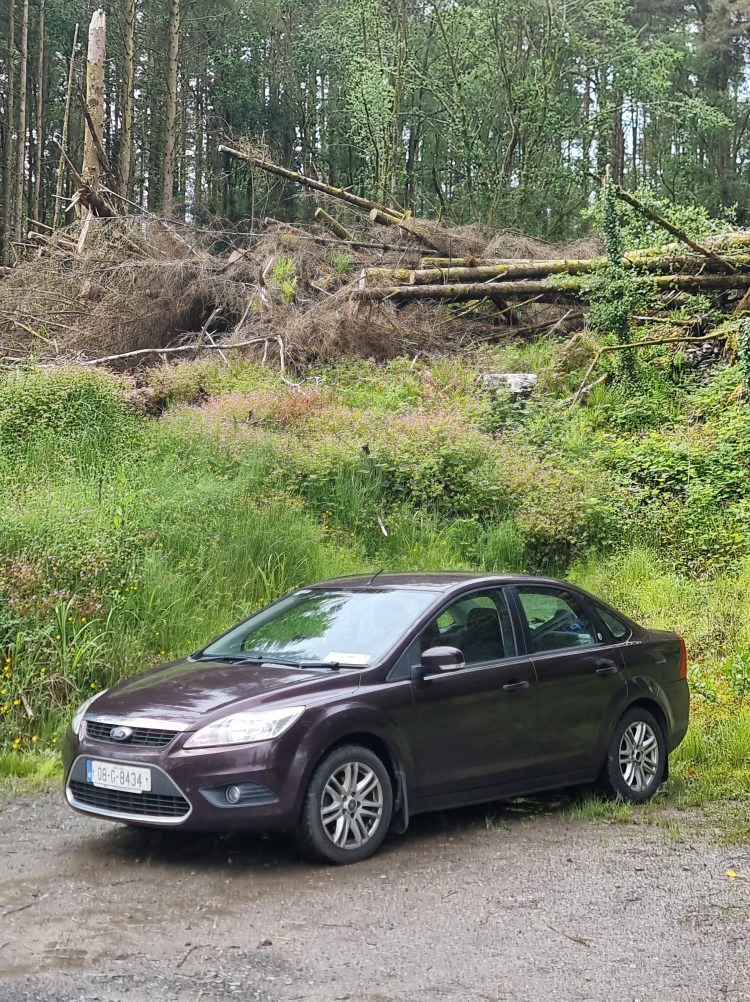
I was heading for a very specific spot on the Upper Lough. Coillte (the Irish state body responsible for forestry) owns a large plantation on the shores of the lough which has been developed for different uses. As part of that development, there are a pair of concrete stands for us anglers on the west shore. While there are spots around both loughs where open bank fishing is possible, I like the comfort of a nice, solid stand under me, so I was bound for these structures hidden in the trees on the rocky edge of the lough. What else would I be doing on a breezy June morning? Once off the main road I picked my way along a narrow, rough track through the forest. Many trees were fallen, victims of the gale of 2024, a stark reminder of that terrible night when so much damage was done right across the country. Backing the old Ford into a convenient parking spot, I decanted all the gear and set up on a concrete stand perched about 4 feet above the waves. I felt weary already I had not even set up my rods!
My plan was to fish the waggler close in, targeting roach and hybrids, while punting the feeder out into deeper water in search of bream. This can be done on the Irish side of the border but when in the north you can only use one rod. I brought an 11 foot float rod but went all out on the feeder and fished with the 14 footer. As with all large loughs, the trick is to find the fish, or at least to attract some into the swim. Choice of running line is important on the big Irish loughs. Since the arrival of invasive zebra mussels the ecology of most Irish waterways changed for ever. Millions of tiny, razor sharp mollusc shells litter the bottom, meaning you need to use tough, abrasion resistant line if you want to avoid frequent break offs. Braid is perfect for this type of fishing so I was using a reel filled with 50 pound braid. If this sounds excessive I can assure that it isn’t and that many experts use 70 pound in preference.
Here in Ireland, the combination of trees and the close proximity of water mean only one thing – midges. These little pests can ruin a day’s fishing unless you come prepared. Jungle strength midge repellent is required in copious quantities, no matter how smelly and sticky you become through frequent applications. But my biggest friend in the battle against the midges was the weather. A day of heavy rain and gale force winds should keep the little blighters away, or so I hoped. The direction of that wind, now howling like a banshee out of the southwest, would keep me free from midges if nothing else.
With the chair set up I mixed a batch of Sensas black groundbait, mixed in a little crushed hemp and corn, then threw 4 balls into a swim directly in front of me. Next, I set up the feeder rod with a 30 gram cage, filled it with the Sensas mix and baited a size 16 with a pair of maggots before casting 40 yards out. I repeated this 6 times (yes, I did remember to clip up) before turning my attention to the float rod. I had figured the float might not even be required as this was a big lough and it screamed FEEDER to me, but I set up with a medium sized waggler anyway. In what must have been a first for me, my initial guess at depth was spot on and my first lob out with the plumb showed about 4 feet of water three rod lengths out. I fed that swim and fired in loose maggots and some casters too.
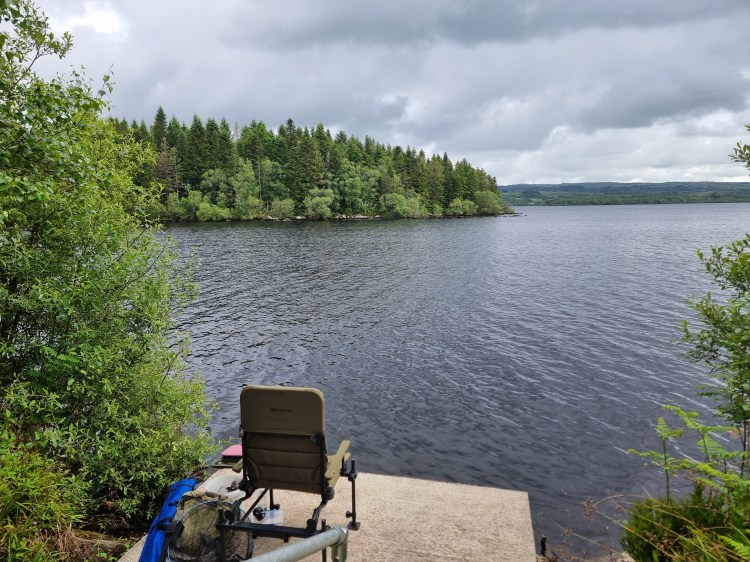
That wind was a nuisance from the get go. It blew across the length of the lough, building waves which rose and fell through the swims. Now I am not suggesting these were the three or four footers I am used to while trout fishing on the Mask or the monsters I love in a big south westerly which stir the salmon on lough Beltra, but even modest waves make float fishing difficult. I started by shotting the waggler as I normally do, just the dot of the tip showing above the surface, but this was impossible as the float went totally under in the waves. I lifted the float a little so more was showing but kept the hook length over depth. I did this so the maggots would remain fairly static on the bottom, lifting them up would mean they would rise and fall with the float in an unnatural manner. Swapping the original waggler for a fine insert tip version did little to improve the situation and in fact made it worse as seeing the fine yellow tip proved to be too hard for me. I went back to a normal waggler in short order. Despite all this faffing about I never did get it perfect and I felt too much of the float was sticking up, but it was the only practical way to fish in those waves.
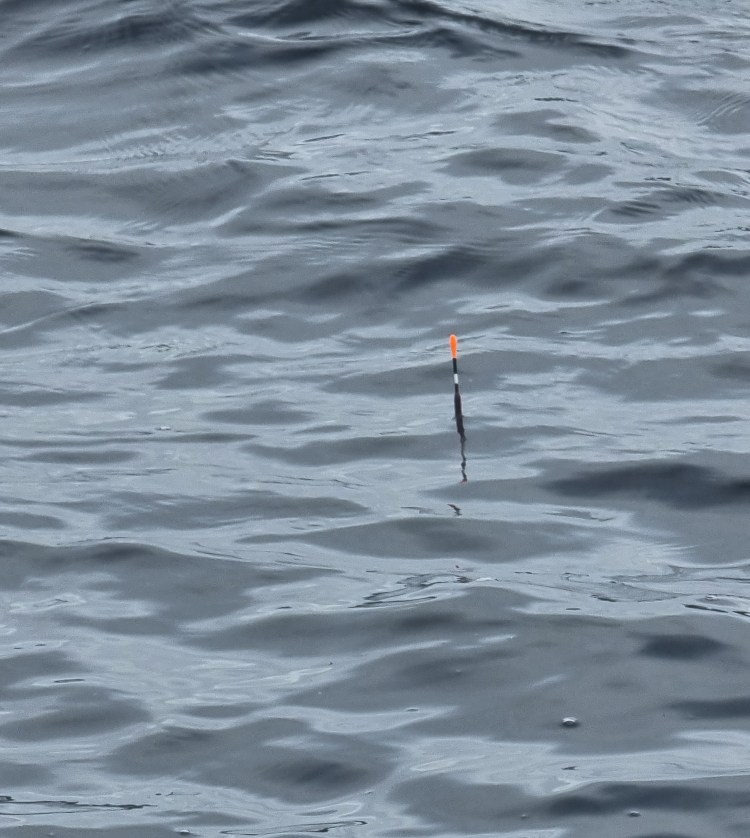
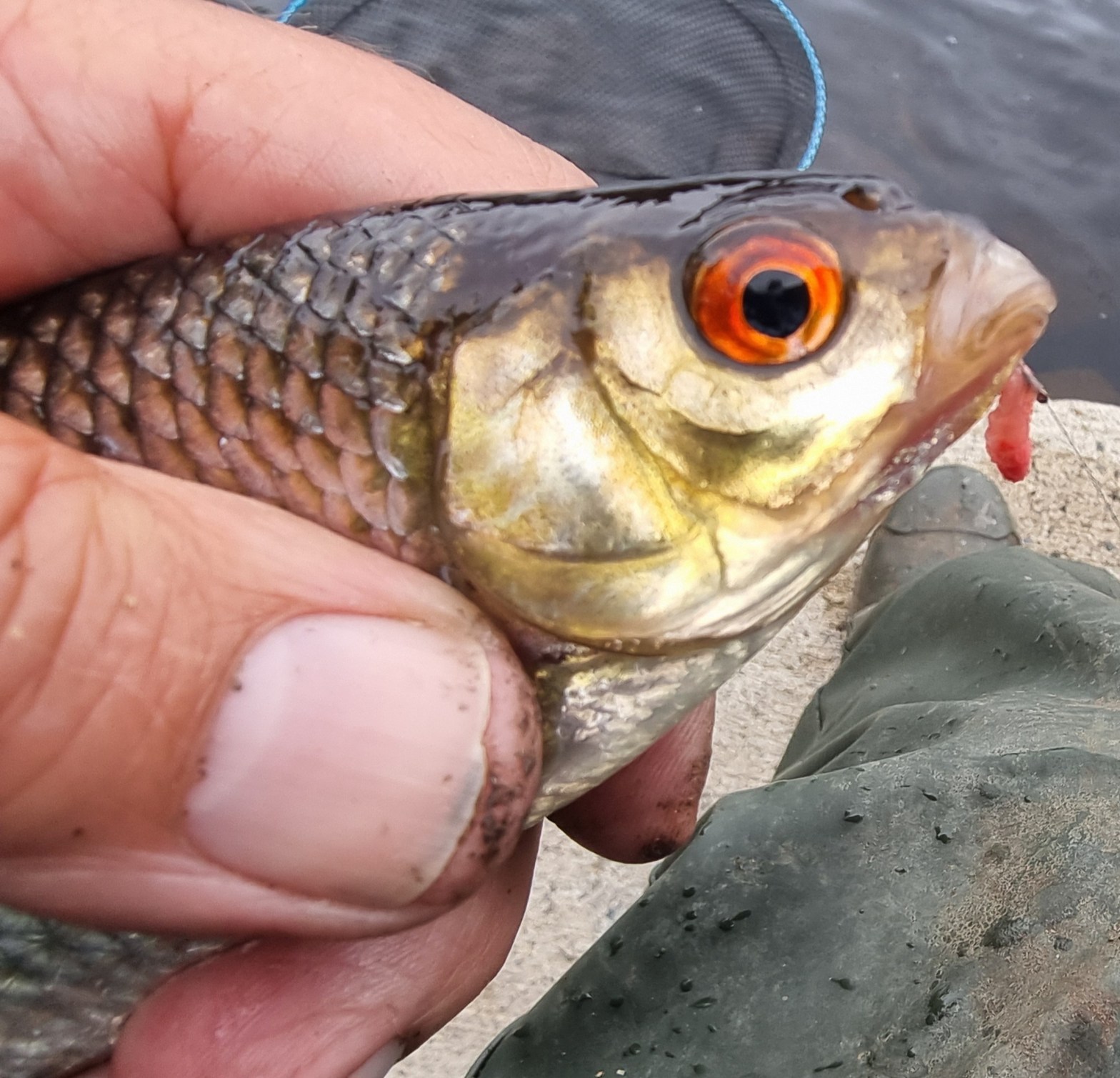
My main focus was on the tip of my feeder but here too I was struggling in the wind and waves. Was that a bite? No, nothing there. Was this a bite, no I don’t think so – reeling in I found well sucked maggots! Between the missed bites on the feeder and the bobbing float I was having one of those sessions where I could do nothing right. Finally, a positive bite on the float produced a solid hook hold and a small roach swung to my hand. I took a snap, simply because I was none to confident I could repeat the feat. Maybe that first fish settled me or perhaps the bites became more solid, but I rapidly landed a dozen roach of similar proportions before that shoal moved off.
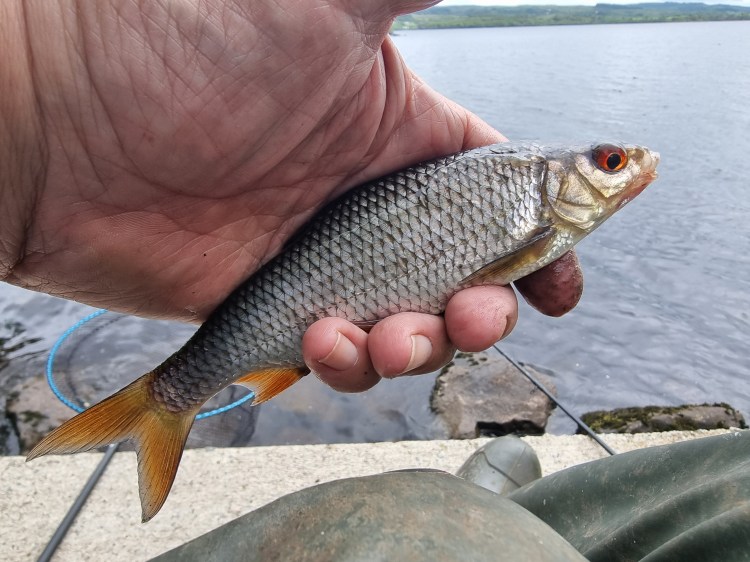
Rain came and went, a soggy dog walker stopped for a chat, the feeder continued to register false bites and the float rose and fell in the waves. I know the fishing was far from hectic but it was lovely just being there on the edge of a lough, bathed in the scent of pine trees. Eventually, I lifted into another ‘bite’ to find a roach on the end of the feeder rod, again no monster but by that stage it was an extremely welcome wee fish. That broke the quiet spell as more roach showed up in the swim a little to my right and quiet close in. I fed it quickly to try and keep them there and a second spell of action ensued, once again with only smallish roach. The wind, which had actually dropped slightly for a while, picked up again and changed direction so it was nearly in my face. By now it was mid-afternoon and the long road back to Mayo was beckoning me. A total of 21 roach had come to hand, not great but better than nothing. My only slight disappointment was the size of the fish, on a big water like McNean I had hoped to find a better stamp of roach. Maybe they are there, but I could not tempt them, and the same goes for the bream and hybrids. Pre-baiting is of course an obvious way forward when it comes to all species on big loughs, especially bream, but that is out of the question for me when I live two hours away.
Would I fish lough McNean again? Yes I would, but only if I was up that area anyway. The distance from home makes it a long day out for me and there are better loughs much closer to me. Having said that, I am glad I fished there yesterday, it is a lovely spot and I can recommend it if you happen to be in that part of Ireland where the border snakes across drumlins, rough pastures and wind swept loughs.


Fishing the wilder shores
LikeLike
Hi Colin the lakes up around there are particularly stunning, I have never fished that part.of the country only ever passing them by when heading to the North. Like you said time and prebaiting would be key to success on Loughs such as that. You had a great day out up there and I’m sure that in true Arne style it’s a case of “I’ll be back”
LikeLike
Andrew, I think we agree that there is much more to fishing than just catching fish and yesterday was such a rewarding session. Stunning scenery, a few bites and time for quiet contemplation made for a day to remember. I am going to try and fish Lough Erne this year too, I hear it has some excellent roach (if you can find them).
LikeLike
Small fish perhaps but that many definitely kept your interest. Also, I appreciated the geography lesson from your trip to Northern Ireland. That area is a very long way from me.
LikeLike
It is a bit of a spin for me but I have wanted to try that lough for a long time so it was worth the effort. Lovely, secluded spot to fish. Another one checked off the list!
LikeLiked by 1 person
I don’t think there are any great solutions to bite detection in those conditions. You just have to hope the fish aren’t too finicky.
LikeLike
Or just pick a calmer day!
LikeLiked by 1 person