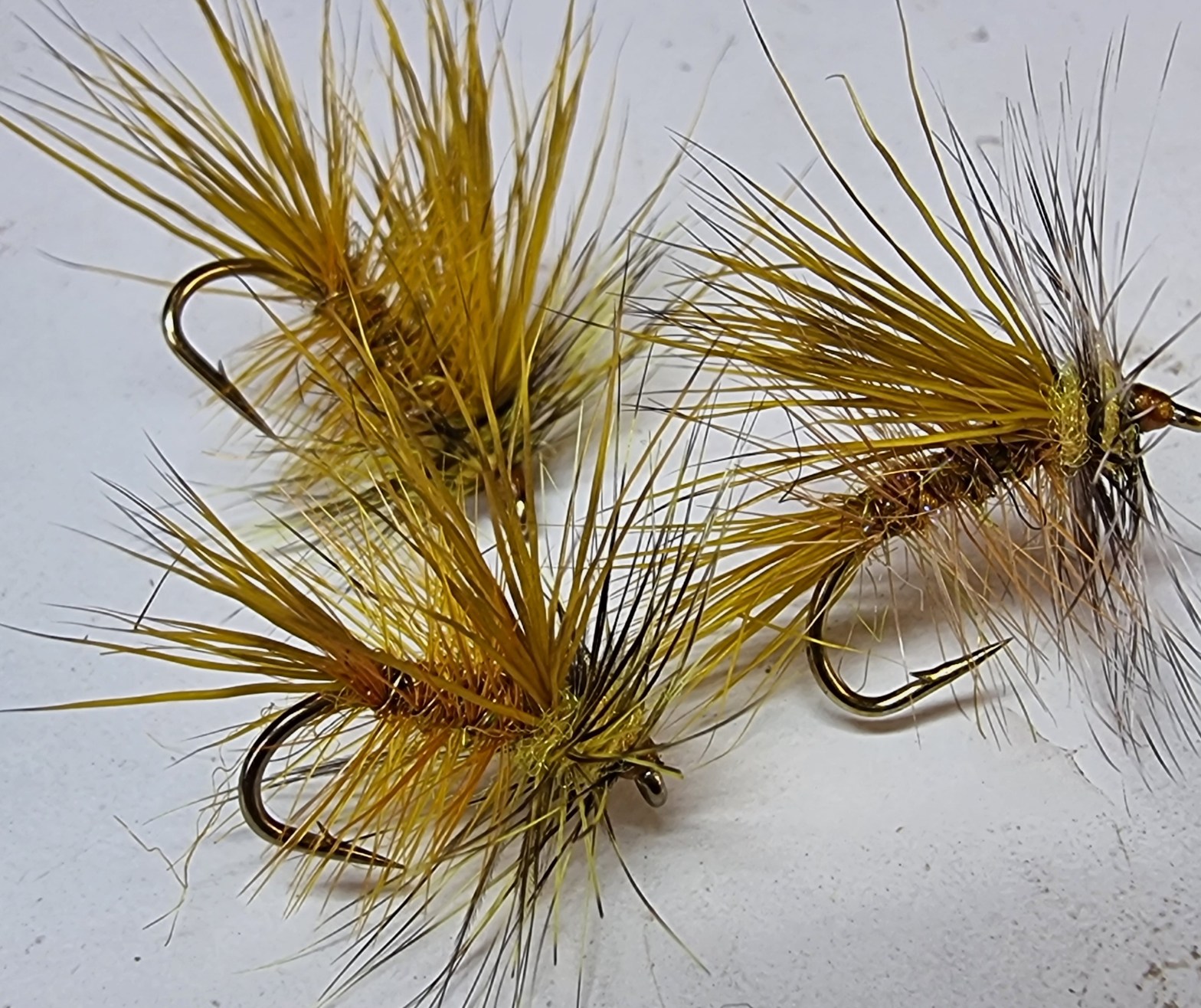
It is here at last – the merry month of May. Everything is a bit late this season, but mayfly are now beginning to hatch out on the western loughs at it is high time we fishers were about our business. While we all love our dry fly fishing, the good old wets have their place as well, so here is my dressing of a Yellow Stimi, a good producer on all the local lakes at this time of the year.
Hook sizes are the usual 10’s and 2’s with the Kamasan B175 being my personal favourite. Tying silk can be yellow or golden olive in 8/0 and I start the silk near the bend of the hook, winding it up the shank in touching turns to provide a base for the rest of the tying. Run the silk back down to a point about one third of the hook shank from the eye. Now take a small bunch of natural deer hair which has been dyed yellow, remove the fluffy waste from the butt ends and use a hair stacker to align the tips. Aim to keep the tail fairly short. Catch in the deer hair using pinch and loop then wind the tying silk down the shank, catching in a length of fine gold wire on the way. Cut off the waste ends of deer hair. Your tying silk should now be hanging at the end of where the body will be. Give the tying silk a lick of wax then dub it with either pale golden olive seals fur or some of the modern UV blend in a similar shade. Wind the dubbed silk back up to where you had tied in the tail and there you catch in a pale ginger cock hackle. Wind the hackle in open turns down the body, then secure it with the wire and counter wind that through the wound hackle and tie it down. Helicopter off the waste end.
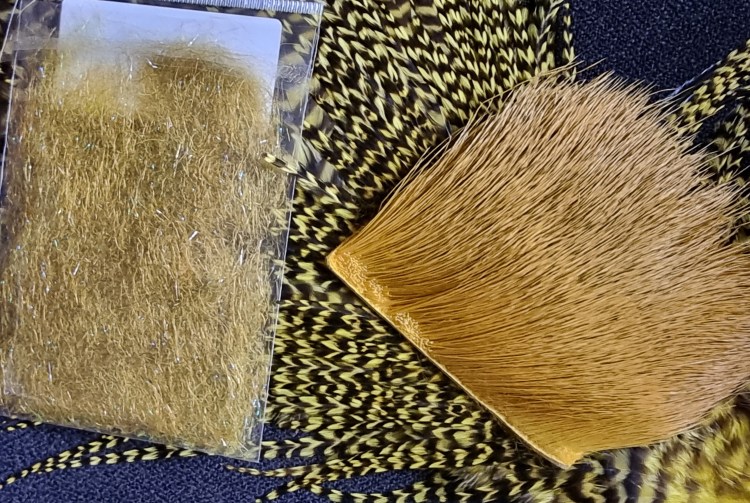
The wing is made from the same hair as the tail, but this time the bunch should be a little bit thicker. Tie it in so that the tips of the wing are ever so slightly shorter than the tail, then cut of the waste ends of the hair. Select a grizzle cock hackle which has been dyed yellow and tie it in at the root of the wing before dubbing the waxed silk with bright fluorescent yellow fur or synthetic dubbing. Use this to form a thorax, covering up the untidy cut ends of the wing. Wind the grizzle hackle over the thorax, about three turns is right. Tie in the end of the hackle, remove the waste and form a neat head with the tying silk. Whip finish and varnish in the usual way.
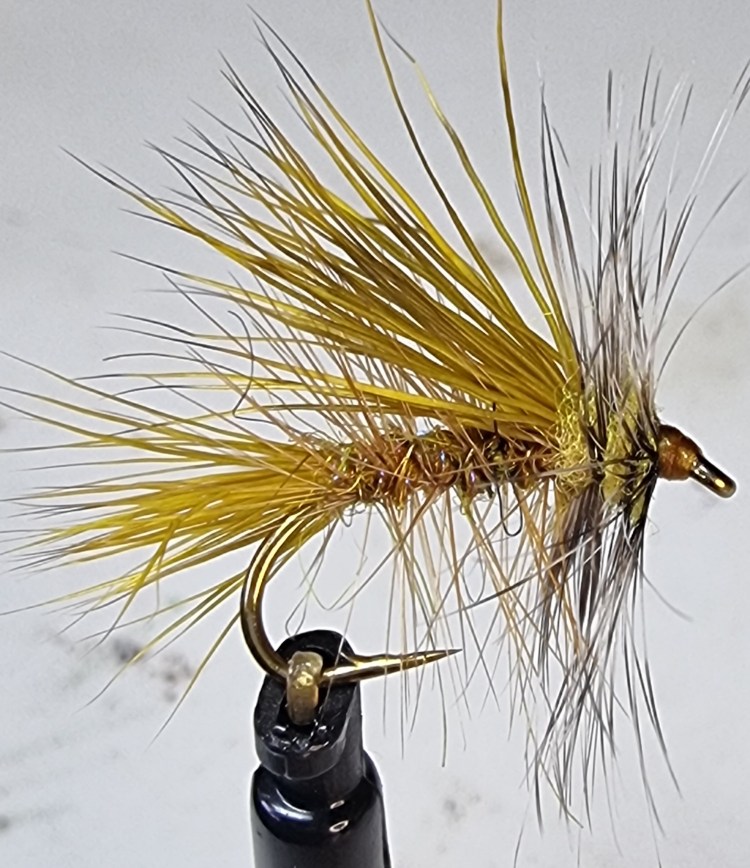
Stimi’s are easy enough to tie once you have mastered handling deer hair. I’m afraid that simply comes down to practice! The only guidelines I can give are to watch that you don’t try to make the tail or wing too thick, use pinch and loop, and when tightening up on the hair lift the bobbin up so you are pulling vertically upwards while holding the hair tightly (this reduces the tendency for the hair to roll over to the far side of the hook).
For this pattern use natural hair which has not been bleached before it is dyed. The unbleached hair retains the markings near the tip which help to give this fly its natural appearance. As a variant, you can use red fur for the thorax instead of the fluorescent yellow.
A fly that works on any position on your leader, but it is probably best as a bob fly. It works from now right through to the end of the season.

 Claretbumbler
Hi Colin. Many thanks for your mail, do not have contacts in your area for mayfly news, I will not be able to be there, but dressing flies for it for friends who will be going.Also appreciate an effective dressing for a mayfly stimulator, and also for your wetfly patterns that you consider effective at that time on the lake. One thing has me confused- why are std length hooks being used instead of 2x strong hooks for general mayfly patterns? luckily I have a range of such hooks and dressed them over the years for mayfly, instead of std hooks, std gape. Kind Regards, Mike.
LikeLike
Hi Mike,
Hooks for mayflies are personal choice I guess, but we find here that fly sizes have decreased over the past couple of decades, especially for mayfly imitations. The hatches of naturals are much smaller than before, so the need for a big fly which will stand out in a dense hatch. We still use very large flies for dapping, such as size 8 or even 6 standard shanks. Long shank hooks (typically 2 x) are sometimes used for Gosling patterns but even that style of dressing is not nearly as popular as it used to be.
The Yellow Stimi in the post is a good fly when the natural mayfly are hatching out. If you look on the page on this blog entitled ‘patterns from Irish Mayflies’ you will find some good patterns which I learned from an old book by Patsy Deery.
Colin
LikeLike
hi Colin, I’ve been reading your blog for years, I find your posts so interesting and inspirational at times. It certainly helped keep the juices flowing during Covid. You tie the most amazing flies. Would you mind if I emailed you that you might tie a few dozen some of those Mayfly patterns for Corrib? Happy to pay whatever you ask – they are works of art! Many thanks – and thanks for all the thought and effort you put in to each blog. Niall
LikeLike
Hi Niall, no problem. I can make up a mix of wets and dries if that suits? €1.50 each plus P&P, just let me know how many you would like and send me an address to my email colinmclean2005@hotmail.com
LikeLike