The car has thrown a wobbly and has been off the road for more than a week and is still not fixed. What started out as a regular bearing problem escalated faster than Trumps botched invasion of Iran and it will be late next week before the ancient Toyota is back on the road. Sourcing parts for old cars in Ireland is not for the faint of heart! With no access to fishing I have been back at the vice once again. I thought I’d share the tying of a newish wet fly which has a bit of a reputation on lough Mask.
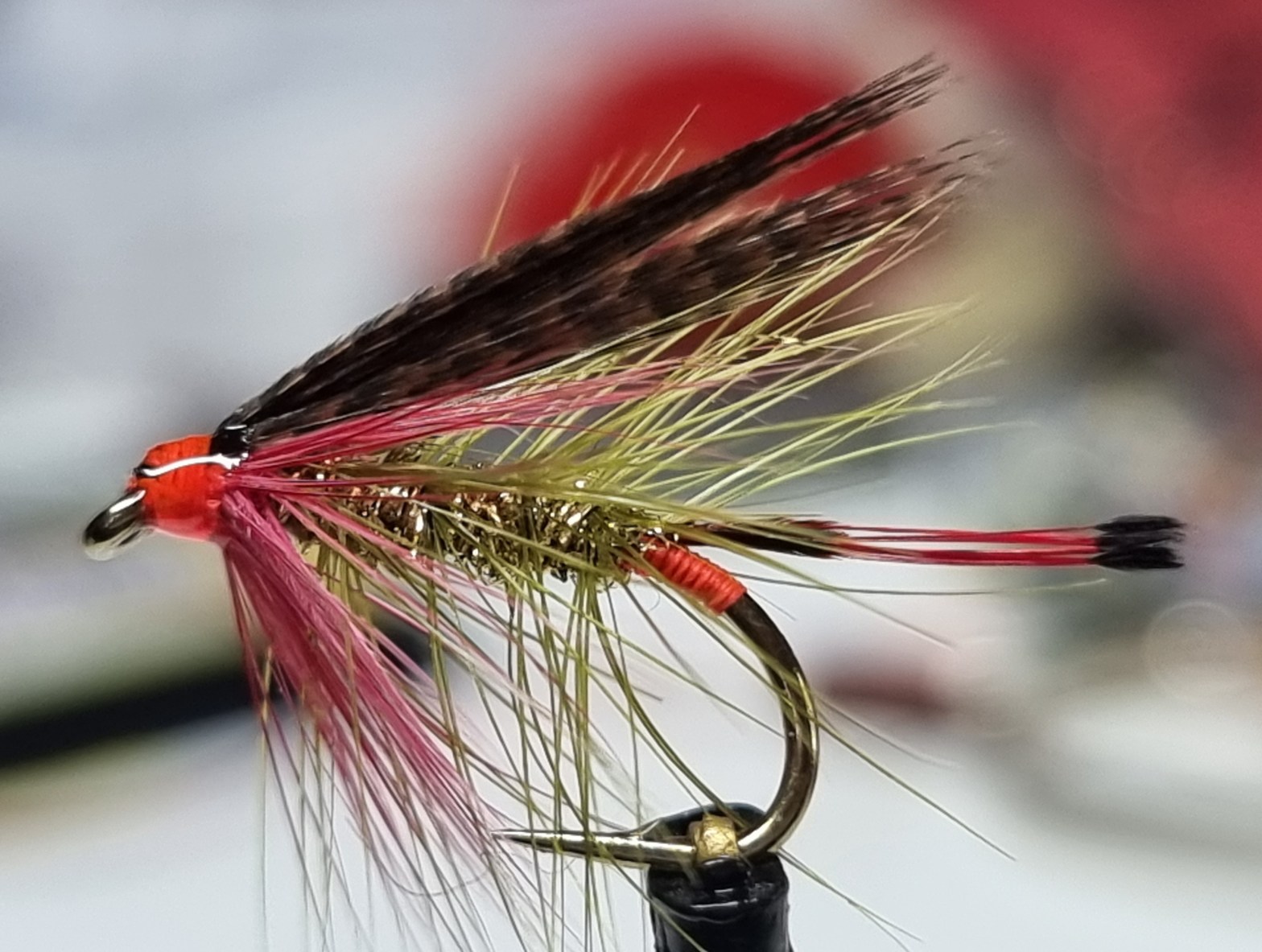
The Blood Olive
Tying silk – 8/0, Fire Orange
Tail – Golden Pheasant tippet, dyed red
Rib – fine oval gold tinsel
Body – gold Lite Brite
Body hackle – a cock hackle dyed olive
Throat hackle – a cock hackle dyed deep red
Wing – bronze mallard
Obviously this is a very easy fly to tie as it follows the basic proportions and tying techniques of your bog standard Irish lough flies. Hook sizes are 10 and 12 with the Kamasan B175 (or equivalent from other manufacturers) being preferred. The use of fire orange tying silk is important as the head is varnished with clear varnish. I go one step further and make a wee tag of the tying silk under the tail fibres. There is no reason you can’t tie this fly dabbler style by replacing the traditional wet fly wing with a cloak of bronze mallard to give you a subtly different profile.
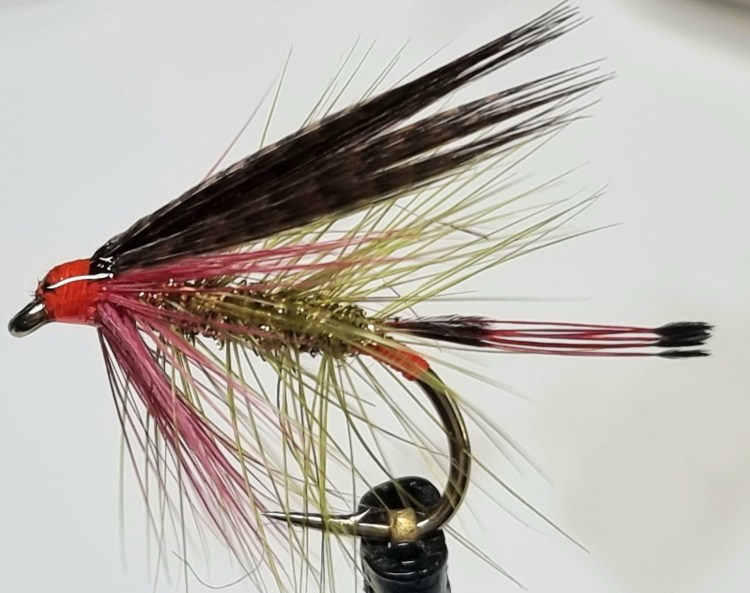
Regular readers are no doubt fed up of hearing me banging on about using natural materials and berating synthetics, but plastics do have their uses and the Lite Brite body does have a lovely bling to it. There are lots and lots of similar products on the market so if you like this fly there is near endless scope for trialling other colours and textures.
In use, the shape lends this fly to use on the end of a three fly leader, but I have tied up a few on size 12 hooks to try out as a middle dropper pattern for lough Conn. I think it might do well as an attractor when the trout are being dour, even bringing fish to the tail fly if it does not catch them itself. The colours suggest perch fry to me, and given the huge stock of perch in that lough it just might be a winner during those tough days in June when the brownies concentrate on the baby perch.

 Claretbumbler
An interesting looking pattern Colin. Thanks for sharing. Hope you “get your motor running” soon!
LikeLike
An interesting looking pattern Colin. Thanks for sharing. Hope you “get your motor running” soon!
LikeLike
‘and get out on the highway’. Yes, it has been successful for some of the lads I know when fishing the deeps on Mask, but I think it could have other uses too.
LikeLike
‘Obviously this is a very easy fly to tie’, it’s all relative to skill I suppose but I’d find it a wee bit fiddly! Beautiful tying as always Colin.
oh and re car ‘looking for adventure’ of course!
LikeLike
Good to see there are still some of us around who appreciate music from the golden age!
As with many things in life, fly tying is all about practice. Controlling the tension on the tying silk, handling those devilishly difficult slips of bronze mallard, dubbing springy seal’s fur and the rest are all difficult to start with but the more flies you tie the easier it all becomes.
LikeLiked by 1 person