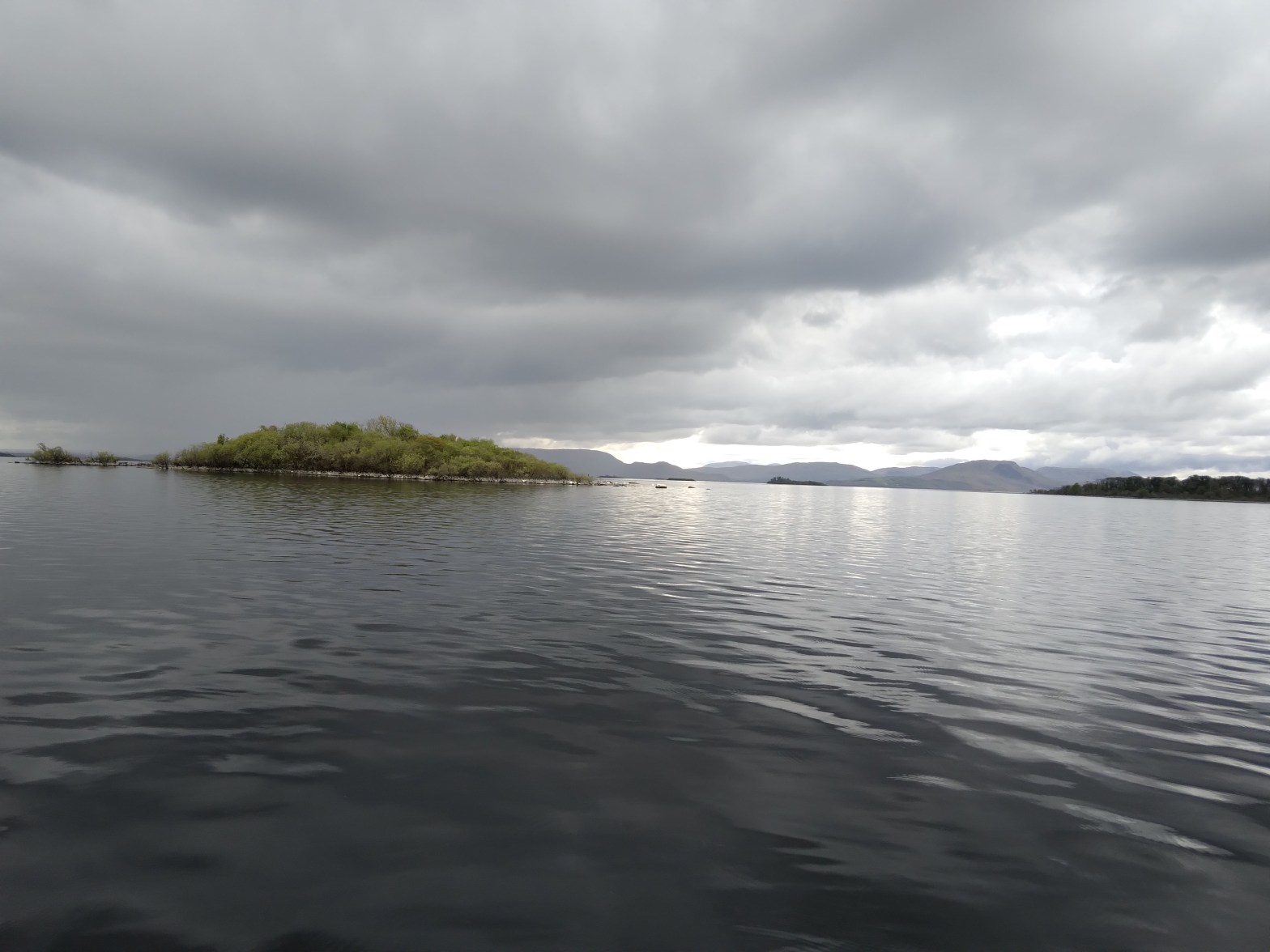
Today I am going to take a look at a simple fly which is used in very specific circumstances, the Balling Buzzer. Here in Ireland we see huge hatches of chironomids on our large loughs. Hundreds of individual species share these lakes, each with their own season and preferred habitat. Of course, these small creatures are high on the brown trout’s menu, hence the plethora of buzzer, wet and dry patterns we anglers use across the whole season. Size, colour and design of pattern as well as how we present them are crucial for success. The Balling Buzzer is an outlier, very different to the rest of our artificials in both design and use, so let’s take a look at phenomenon of the balling buzzer.
The life cycle of the chironomid has four stages, egg, larvae, pupa and adult. Obviously, the minute eggs are far too small for us anglers to have any interest in. The larvae, usually referred to as Bloodworms, are generally hidden in the detritus on the bottom of the lake and are thus very difficult for us to imitate, even though they are an important food source for the fish. Once the insects turn into pupa, start to become active and rise to the surface, it is a different story. We now have hundreds and hundreds of buzzer patterns and an ever increasing number of methods of presenting them to the trout during this phase. The same goes for dry flies to match the adults as they hatch out on the surface. As you can see, we have the major phases of the chironomids life pretty much covered, but there is one other part of their life we need to be aware of, and that is when the insects return to lay their eggs. This is when the balling buzzer comes in to its own.
As I said, there are hundreds of different species of buzzers, and so there are many different variables when it come to their season, preferred depth of water, breeding habits, etc. One common characteristic is that they often mate in the late evening and into the darkness, forming huge clouds of insects which rise and fall as the sun goes down. Copulation takes place on the wing, then the females deposit their fertilised eggs on the surface of the water where they sink to the bottom. Both males and females die once they have mated. The interesting bit for us anglers is a phenomenon where in a mating frenzy numerous insects gather into living balls which roll across the surface of the water in the darkness. I have only ever witnessed small balls, but I have read of them reaching the size of a golf ball on Lough Sheelin. This is a tempting target for trout cruising just under the surface picking off flies as they mate, lay eggs and die.
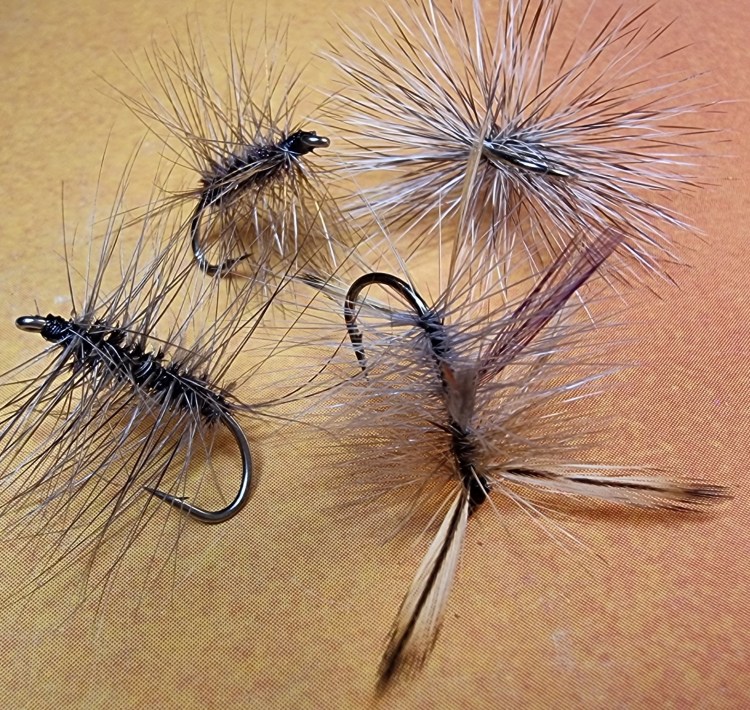
So how do we imitate this writhing mass of insects? The answer is quite simple, we load a strong hook with wound hackles and fish it as a dry fly. Over the years there have been different dressings developed, all very simple and just variations on the same basic theme. One widely used pattern consists of a size 10 hook, black tying silk and a body made from two strands of peacock herl dyed magenta or red. The hackle is wound all along the body in tight turns and is a dun shade.
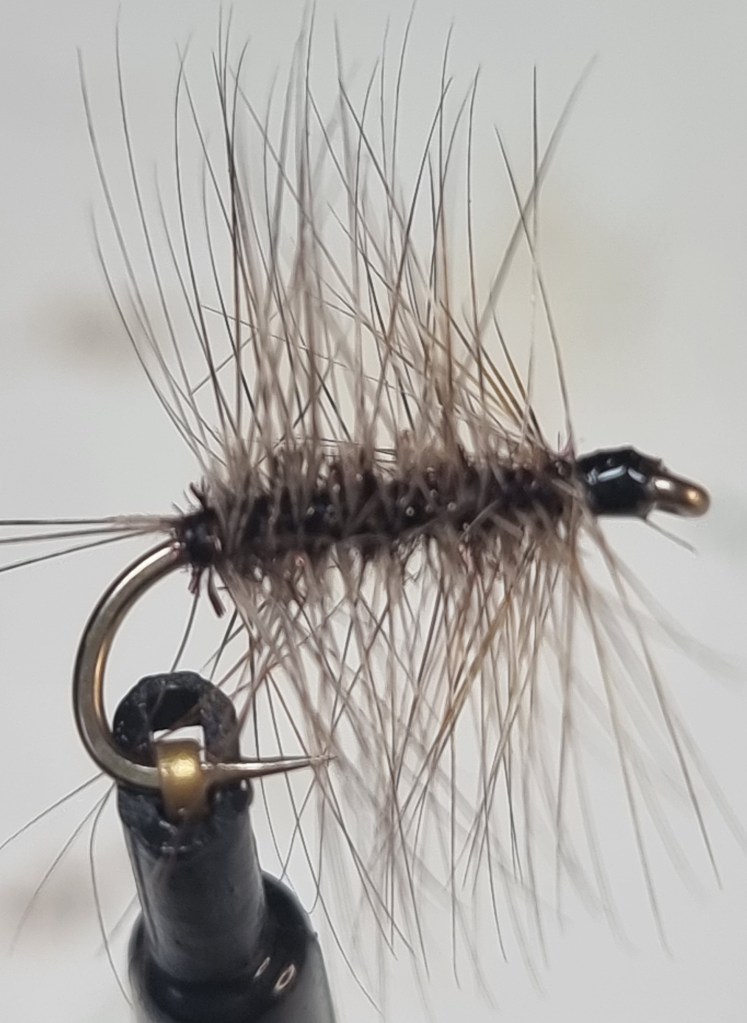
I make up a balling buzzer which uses lots of hackle tips. I save up hackle tips which are waste left over from body and head hackles. Black, grey, white, badger, cree or grizzle, I don’t mind which of these I use for this fly. A size ten hook is secured in the vice and some black silk started and the head. I then tie in a number of hackle tips at odd angles as I wind the tying silk down towards the bend. These should be as random as possible. Now catch in a grey or dun coloured cock hackle and wind this up the shank in touching turns through the hackle tips. Wind the tying silk through the hackle to the eye and form a small head then whip finish.
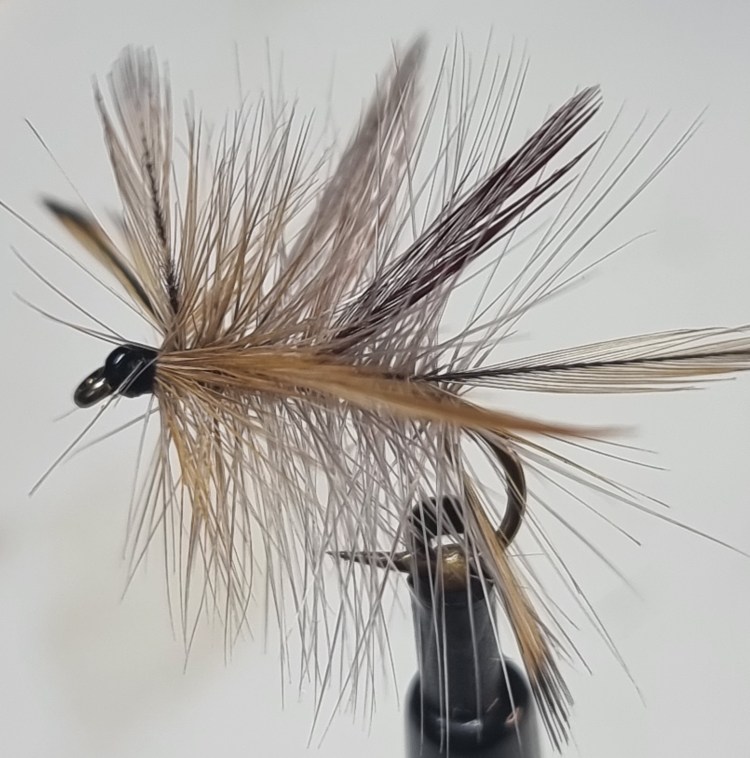
Another pattern is the one in Peter O’Reilly’s book, and this is probably the best know one of the three in my box. Again, this is a very simple pattern that consists of just long fibred badger or grizzle cock hackles wound up the shank of a B170 or B130 hook in sizes 8 or 10. You can also use a mix of badger and grizzle hackles if so desired.
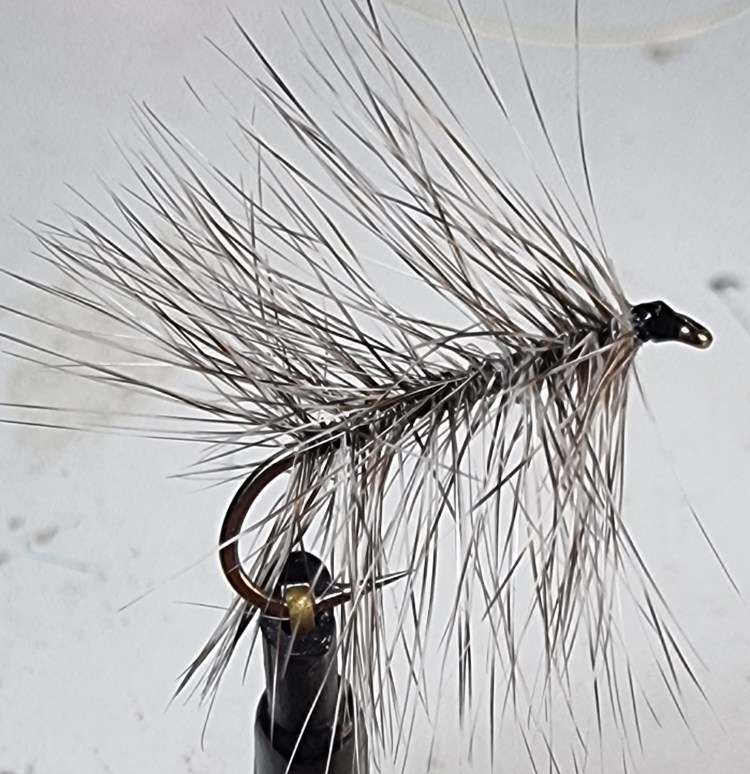
A word on hooks for these patterns. Some of the biggest trout in the lough feed on Balling buzzers, so you need to use good quality hooks. Obviously there is a balance between the weight of the metal in the hook and the need for it to be light enough so the fly you have tied on it will float. A B170 is a good compromise in my opinion. Do not be tempted to go for light weight dry fly hooks, such as the B400 for example. You are courting disaster if you hook a heavy trout in the dark on such fine wire hooks.
Enough about the patterns, how do you fish these flies? Summer months are when to use this technique, May through to early September. Warm weather is preferred as cold evenings seem to put the midges off mating. Timing is critical, I have never seen balling midges during the day and it seems to be a late evening/night time activity. I know of it on the Corrib, Sheelin and Carra, but there is no reason for it not to happen on other loughs. A bit of wind seems to be a factor, but that is just my own observations and it may well be that balling happens even during flat calm conditions. Look for heavy localised midge swarms over open water. Spotting this in the dark is pretty much impossible, so when the light has gone completely be guided by noisy rises by big fish. This can easily be confused with trout slashing at hatching murroughs, but if there were a lot of midges in the air as the light was fading then you can suspect they are balling and being eaten by the trout. Cast at rising fish if you can see them or aim by the sound of a noisy rise in the dark. You can fish the balling buzzer static but I think it is better if it is twitched so there is some disturbance on the surface.

 Claretbumbler
Some of these look a lot like a pattern called the Griffith’s Gnat over here in the US.
LikeLike
Yes, very similar patterns. Biggest difference is the size. We use the Griffiths Gnat here on our rivers for wild brownies, but in small sizes, rarely bigger than a size 16. The Balling Buzzers are big flies, sizes 8 or 10 (and sometimes even bigger).
LikeLike
I’ve used flies like these in Finland on the lakes. Can’t remember the name at the moment but it translated as Cluster Fly. They’re tied on heavy gauge hooks, size 8-10, but with hackles 3-4 times the gape of the hook. The takes are ferocious. As it doesn’t really get dark in summer you can see the clusters of flies. I’ve not seen any much bigger than a marble though. The Griffith’s Gnat was originally intended to imitate the smaller clusters. Though it does very well at imitating all manner of small ‘black stuff’.
LikeLike