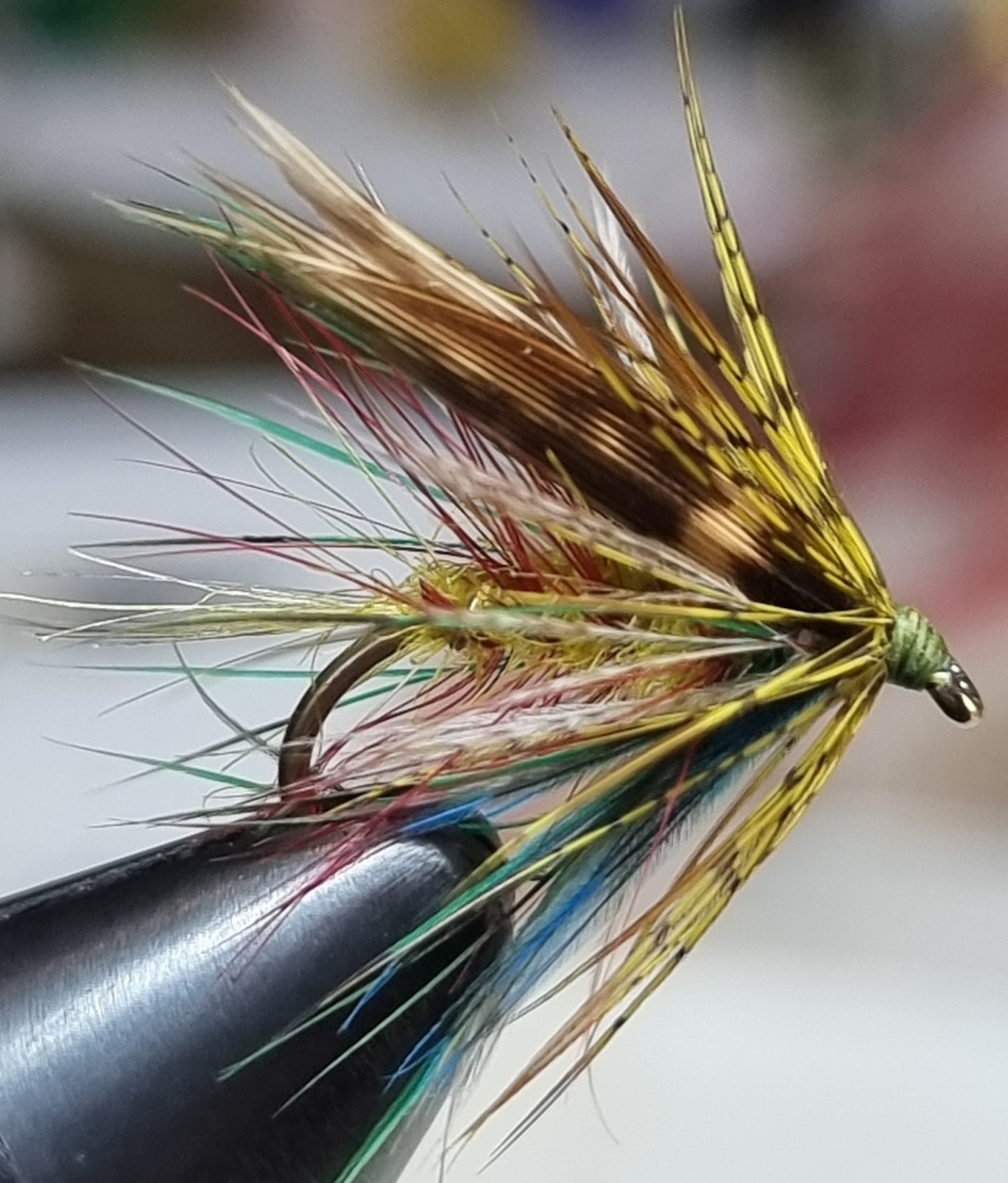
This fly seems to strike fear into the heart of fly tyers so I thought you might like to see how I make the Raymond Variant. It is a good wee fly to have in the box for the mayfly and it catches fish when tied on the bob position and fished in a good wave. Designed by Galway’s Murt Foley, most people are aware of it because it was included in Peter O’Reilly’s seminal work ‘Trout and Salmon flies of Ireland’. While Peter listed the materials he did not go into the detail of how to tie the fly. There is only one aspect of the pattern which could cause an issue, and that is the use of five hackles. What I am going to describe is how I personally tie the fly, I am not suggesting that Murt tied it like this, but it works for me.
The pattern.
Hook: sizes 8 down to a 12 according to Peter, but in reality, cramming all the materials on to a size 12 is not really going to work, so stick to sizes 8 and 10. Peter also recommends the Partridge L2A hook, but use whatever you want.
Tying silk: olive. Use a fine thread, I like 8/0 but you could go down to a 12/0 or 14/0 if desired. Remember to wax the silk thoroughly.
Rib: fine oval gold tinsel
Tail: a golden pheasant topping
Body: yellow seals fur
Body Hackle: a cock hackle dyed crimson
Hackles: one turn of a french partridge hackle dyed green olive, followed by an turn of grey mallard in front and then blue jay ‘at the throat’
Wings: hen pheasant secondary
Front hackle: one and a half turns of a grey partridge hackle dyed lemon yellow
Tying instructions.
There is absolutely nothing to be frightened of when tackling this fly, there is one rule you need to follow and all will be well. You MUST leave sufficient space for all the hackles and wings to be tied in. Now this sounds like common sense but failure to leave a BIG space for the hackles and wings will cause you grief, and that space is probably larger than you think.
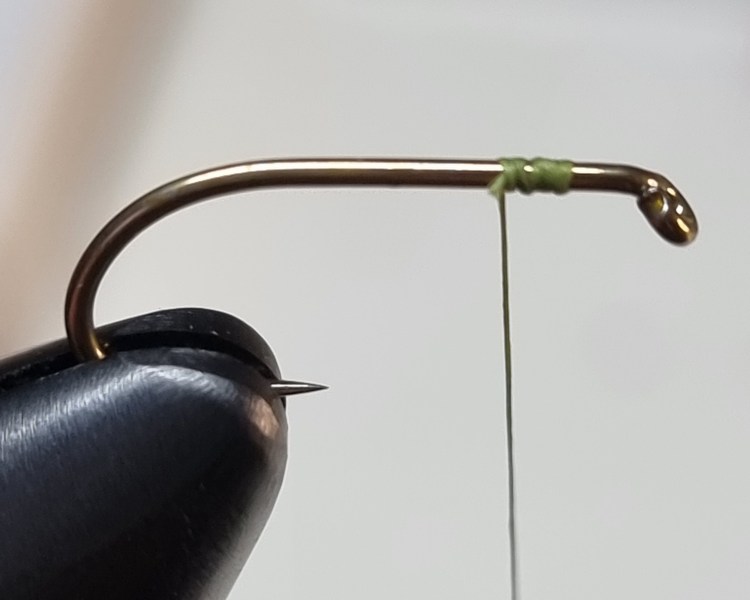
Start the tying silk a few millimetres behind the eye. There will be a lot going on close to the eye so don’t fill it up with tying silk, leave a bit of a gap there.
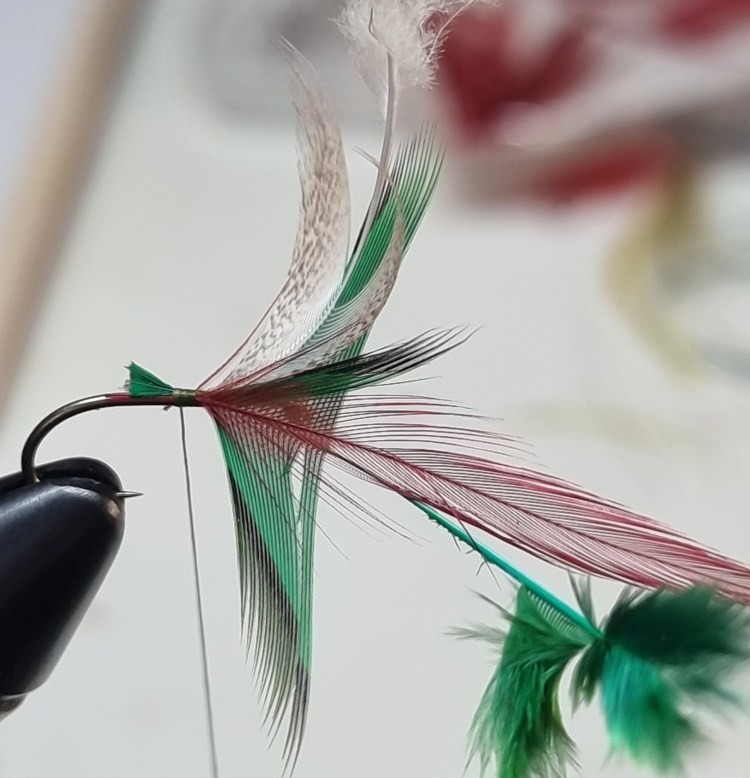
This is the important step – where you tie in the hackles. Take a few more turns of the tying silk to where you will catch in three of the hackles. This should be about one quarter of the way down the shank. Now tie in the grey mallard feather by the tip. Before tying it in stroke the fibres back and out of the way for now. Next, tie in the french partridge hackle in the same way. Then it is the turn of the crimson cock hackle, which is tied in by the butt
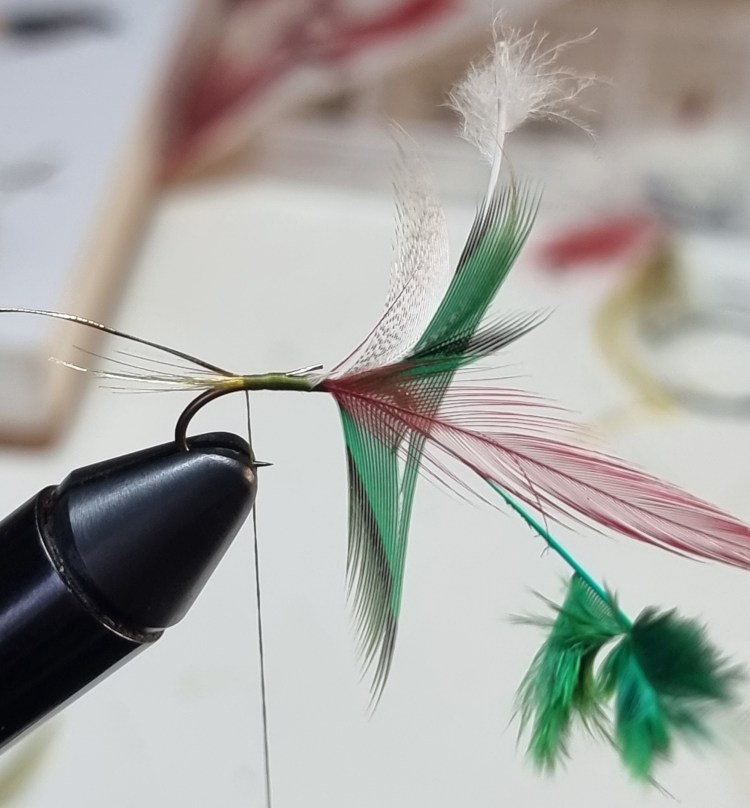
Start to run the tying silk down the hook shank, catching in the topping and then the oval gold tinsel on the way.
Dub the waxed tying silk with the yellow seals fur and wind it on to form the body. Murt was very clever here, by using olive tying silk the yellow seal’s fur allows the olive to show through, giving a lovey pale olive shade to the body. Grab the tip of the crimson hackle in your pliers and take four open turns down to the tail where you secure the hackle with the oval tinsel, which you counter-wind up the body and secure with the tying silk. Remove the waste end of the crimson hackle.
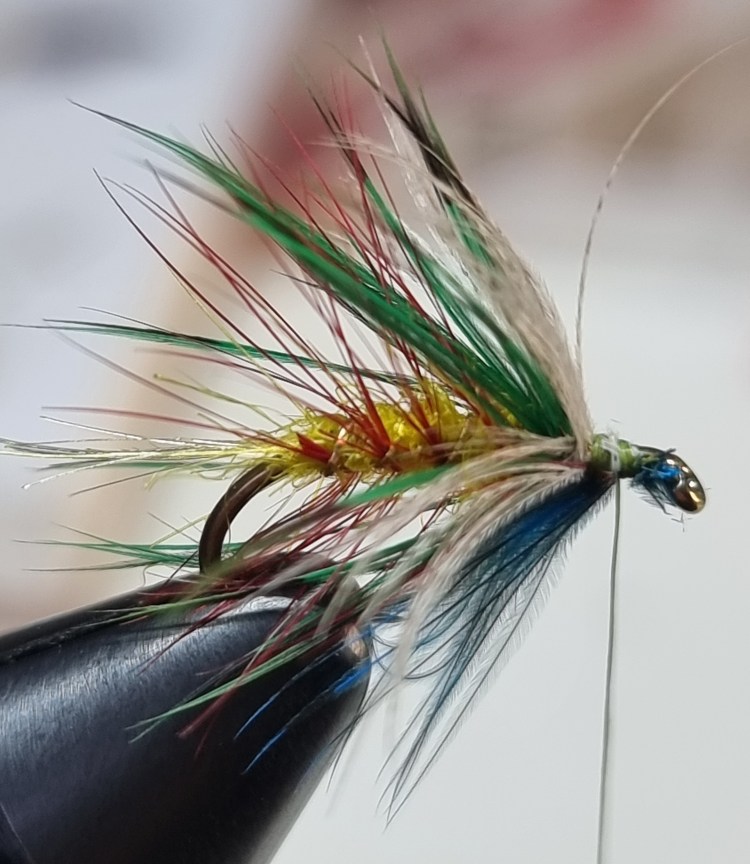
Take the butt end of the french partridge feather, stroke the fibres to one side and make one full turn before tying in and cutting off the waste. Do the same with the grey mallard feather. Remember, just one turn of the hackles, no more.
Invert the hook in the vice. Tear off a small bunch of fibres from a guinea fowl feather which has been dyed blue and tie them in as a false hackle. Remove the waste ends. Put the hook back into the vice the right way up. You should still have a space left for the wings.
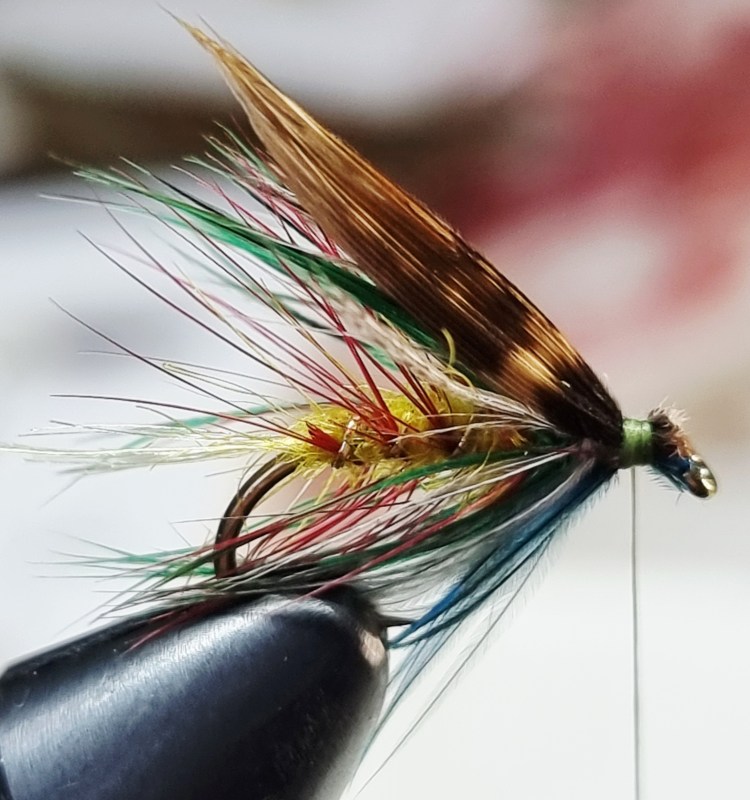
Make a pair of wings as normal and tie then in, before cutting off the waste ends by lifting the ends and cutting them at an angle.
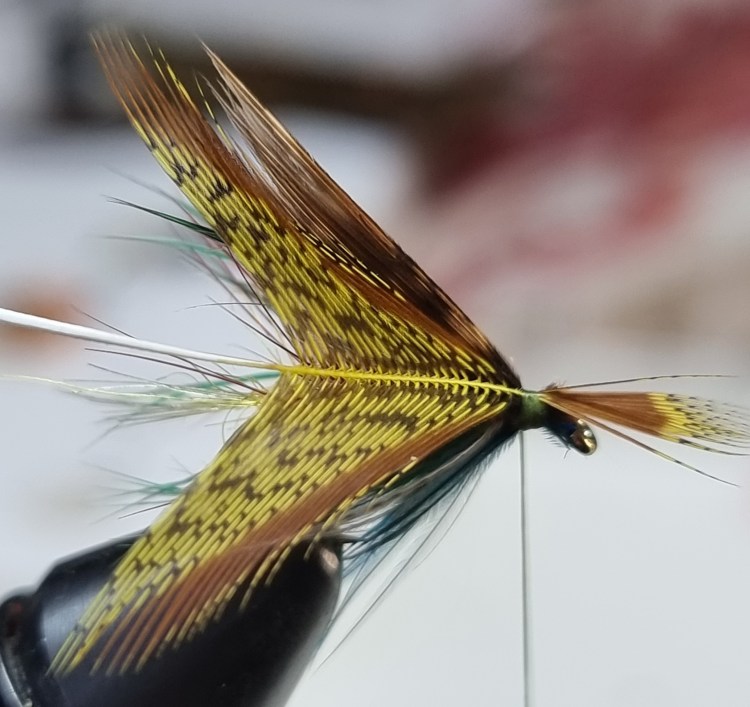
Now all you have to do is stroke the fibres of the yellow partridge feather back, tie it in by the tip, cut off the waste and make one and a half turns. Cut off the waste butt end of the feather.
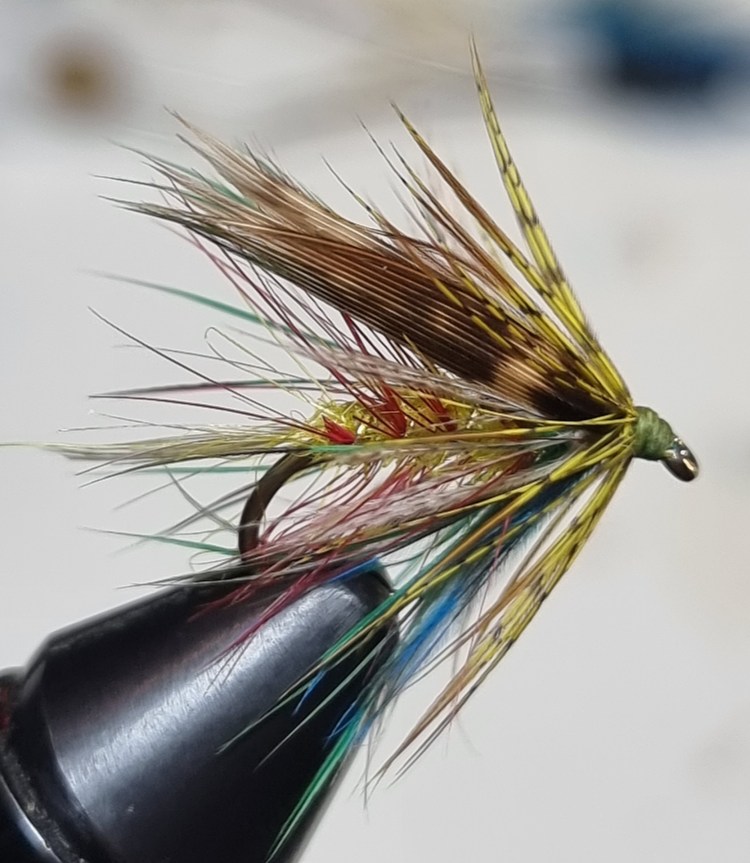
Form a neat head with turns of the tying silk and whip finish before varnishing.
To recap, the salient points are:
1. Only one turn of each hackle.
2. Leave plenty of space at the head, roughly a quarter of the hook shank.
3. Make every turn of the tying silk count, no extra turns to ‘neaten things up’.
As I say, there is no right or wrong way to tie this fly (or any others for that matter), but this way has worked for me for many years. Happy tying!
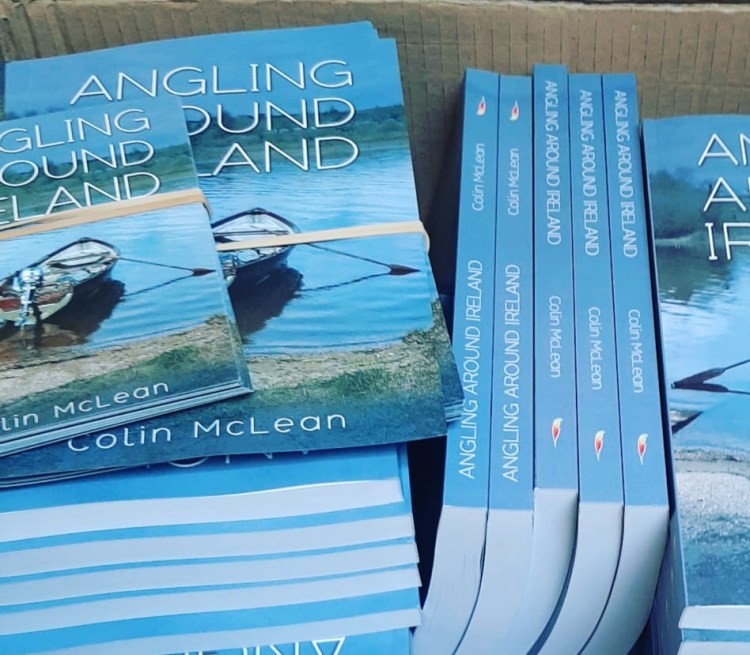
A quick reminder that you can buy my book ‘Angling around Ireland’ from good books stores and the usual online retailers.

 Claretbumbler
very nice.
great looking fly
LikeLike
Cheers Gavin! It used to be quite a popular fly over here but I rarely see it used these days. Worth a try this coming May.
LikeLike