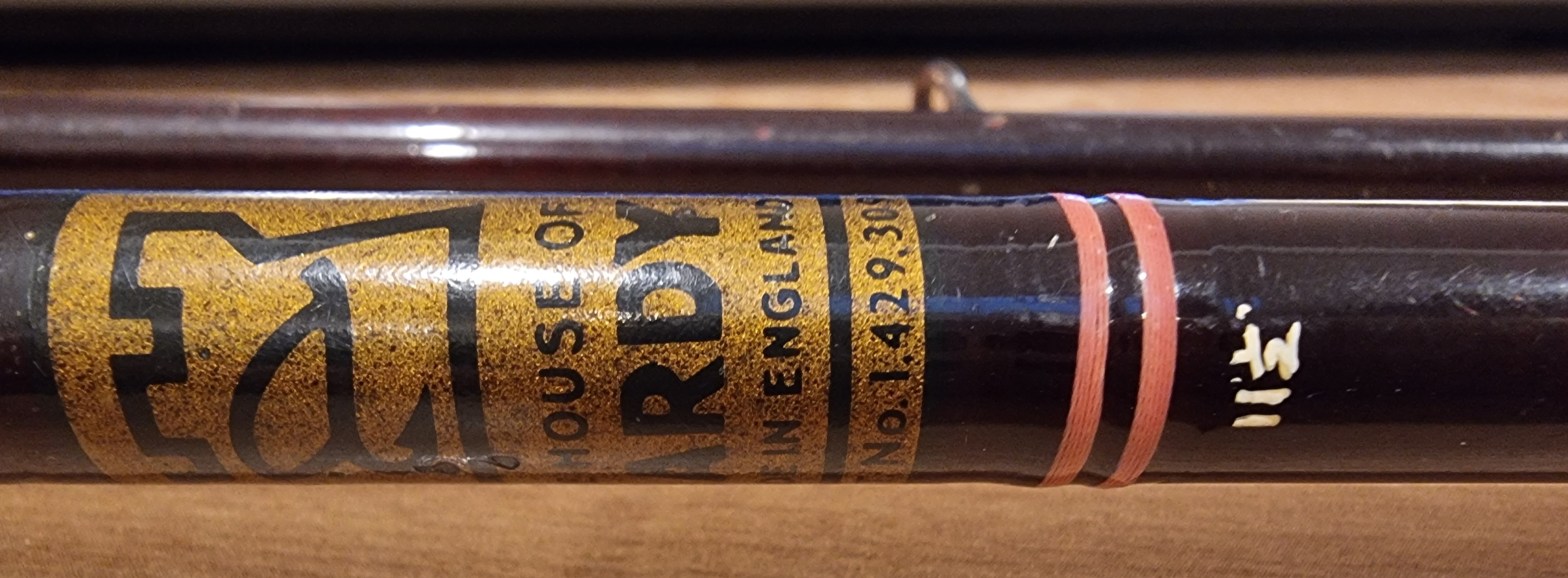
My failing memory was brought sharply in to view when I started to write this post. The story of my favourite fly rod began so long ago that it took me a while to figure out when and how it all started. As near as I can recall, I purchased the Hardy back in 1978 or ’79 from Somers tackle shop in Aberdeen. ‘Young’ Jim owed the shop (he must have been in his late ’50s at that time) and his by then frail father who has started the business only dropped in by the shop occasionally. Horace, his assistant, was a fount of knowledge and helped this young angler with endless information and advice. I haunted that tiny shop in Thistle Street, spending all my pocket money when at school and later, a sizable chunk of my wages when I started working in the mills. It is hard to quantify just how important those visits to the wee tackle shop were to me in that golden age before the internet. The help and advice I received from Jim and Horace shaped my fishing in so many ways. While I rarely spent more than a few pence each time I went there, I did occasionally break the bank, and this fly rod was certainly one of those occasions.
I had learned to fish on rivers and my fly rods, 2 in number, were a nine footer for dry fly fishing and a softer actioned nine-and-a-half footer which I mainly used to fish wet fly for the sea trout, both rated for AFTM 6 lines. About that time I started to fish stocked lakes for rainbows, either small put-and-takes around the city or by travelling to the hugely popular lochs in the central belt such as Fitty and Butterstone. Summer holiday trips to Ireland were becoming a feature of my fishing, where my puny 9 foot toothpick was of little use. I was reading books by the likes of Bob Church and realised that I needed a new rod for lough and reservoir fishing. So my requirements were discussed in Somers one day and I was pointed to the rack of expensive Hardy rods on display by the door. Protesting my poverty, Horace explained they were having a sale and some rods were reduced. Indeed they were, and my eye fell on an eleven-and-a-half foot deluxe which was damn nearly half price. I wish I could recall exactly how much I paid for the new rod, but all I can remember is that it cost considerably more than the rusty Ford Cortina I was running about in at the time. Mind you, that wreck only set me back £60!
This rod was a Hardy Stillwater, eleven-and-a-half foot, rated for AFTM 6/7 lines. By modern standards it is heavy for a carbon rod, I presume due to the advances in materials and technology since this rod rolled off the production line in Alnwick. It is also a very soft rod meaning timing when casting has to be adjusted to compensate for the through action. I loved this rod but most other anglers who tried it hated how ‘sloppy’ it felt. It’s length meant it was perfect for dibbling a bob fly through the waves and it excelled as a lough style rod. Having said all that, I slayed rainbows fishing lures on sinking lines of varying densities on it too. I was so used to its action that I could cast accurately with it, even up to about twenty yards. After that though the rod ran out of steam pretty quickly as it simply was not designed for distance casting. It would roll cast beautifully though, something which came in very handy at times and probably helped me when I progressed to spey casting double handers (and yes, I have a couple of old Hardy salmon fly rods too, a fifteen and a sixteen footer, but that’s another story).
That Hardy went on to be catch me thousands of trout, a great many salmon and even assorted sea fish. My twenties and early thirties saw me fishing multiple times every week and that rod was usually in my hand. By the early nineties the handle was cracked and missing chunks of cork, while both joints were worn out. I sent the rod back to Hardy bros. in Alnwick, asking them to rebuild it, a service they provided back then. The rod was gone for about three weeks, but when it came back it was like new. The blank and reel seat were original, everything else had been changed. Each ring had been replaced with new ones and the previously clapped out claret whippings were restored to perfection. I was overjoyed and the rod gave me many more years of service. Sadly, though hard use by me over the following years meant it was showing signs of wear again, and by the early 2000’s I had newer rods which replaced the faithful Hardy. Banished to the far flung recesses of my parents shed, it spent years amongst the garden tools and bags of compost until I retrieved it and brought it back to Ireland with me about ten years ago. I always meant to get around to fixing it up but never had the time or dedication to do the work. Until now.
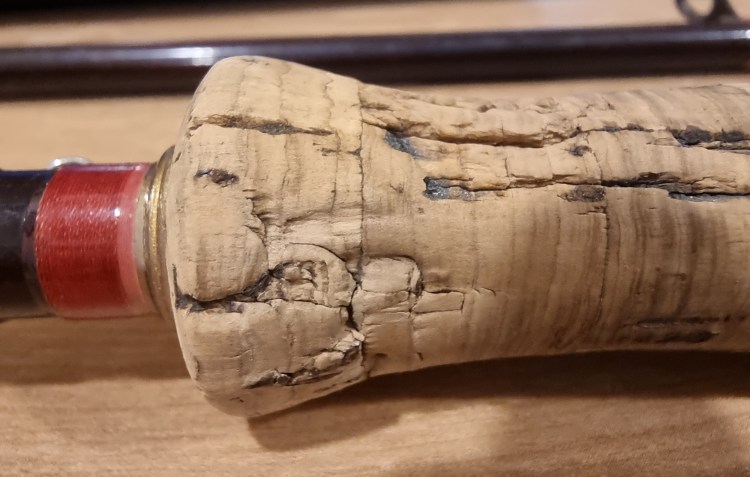
It’s winter and, with little fishing to be had, I am busy at the vice tying flies or faffing about maintaining/repairing/upgrading my tackle. The notion of fixing up the old Hardy had been floating around my head since the summer and now it was time to crack on with it. So how much work and expense was this project going to require? Just how bad was the old gal? Let’s just say it wasn’t pretty. The cork handle was in very poor condition, one of the joints was loose, she was missing a couple of rings and a lot of the whippings on the rod were frayed. On the plus side, the reel seat was in good condition and the blank itself had no major damage. My plan was simple, replace the two broken rings and fix the sloppy top joint. Then I would fix the handle up.
The original whippings in claret thread tipped with gold were just too fancy for me to replicate and I could not lay my hands on threads the right colour. A decision was required, do I aim for perfection and hold out to find the right colour of threads? Or do I use what I had at hand and accept the old rod would look rough but be perfectly good to fish with? I chose the latter, looks don’t matter too much to me and I just wanted to get the rod fit for use. In one of my many boxes of fishing paraphernalia there is a container full of old rod rings. These have accumulated over the decades, mainly salvaged from old rods which have broken or some were bought for projects but not used. Just occasionally I find a use for one or two of them. Sure enough, a rifle through the mele of assorted rod eyes produced a suitable tip ring and a single leg Fuji which would fit the Hardy. Perhaps I had bought them purposely for this very job and had forgotten about them (quite a realistic scenario) or maybe they were for another rod that I did not get around to fixing up. Anyway, they would do admirably and so with a bit of fiddling, I whipped on both rings using some thin pale gold thread. The way I deal with single leg rings is to cut a this piece of sticky tape and bind the ring in place by placing the tape hard up against the bend. This leaves the end clear and I start the thread the usual distance away then run it up on the foot of the ring. Once I get a few tight wraps in place I remove the tape before continuing to wind up the foot and finishing it in the usual way. Single leg rings are a pain to whip on but they look good once in place.
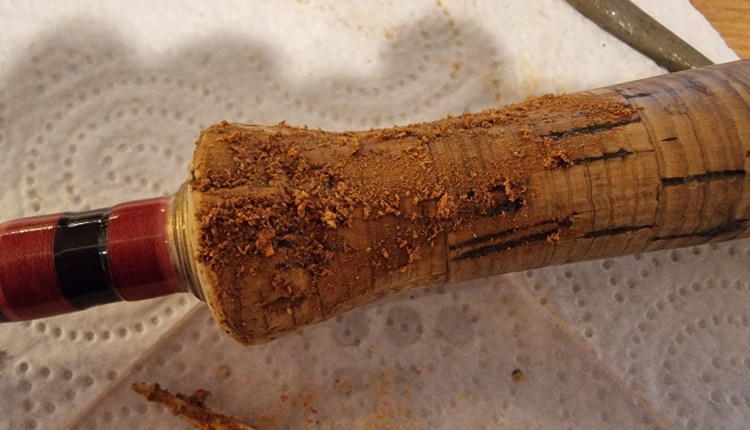
Initially I thought the top two corks on the handle would have to be replaced, but after some poking about at them I decided they could probably be filled. At least I can try this and if the filled corks are not working out I can go and replace the corks another time. I made up a ‘putty’ from the dust I filed off a wine bottle cork mixed with some wood glue. This sticky mess was then pressed into the holes and crevasses in the handle and allowed to dry. The next day I sanded the handle smooth and called the job a good ‘un.
The loose joints should probably have been replaced completely, but that is a bit of hassle for someone like me. Instead, I sprayed them with liquid carbon. Very messy stuff to use, I went out to the shed and covered the bench with newspaper . Masking off the rest of the rod section, I then sprayed the black liquid on to the male joint while rotating it to try to get it as even as possible. This stuff dries quickly tot he touch, but I like to leave it over night to harden then I sand it back to get a nice tight fit. The final, and very important step is to wax the male joint as this adds considerably to the longevity of the repair. I’ve used this trick many, many times over the years and while it is far from perfect, I generally get another one or two seasons out of sprayed up joints before the job has to be repeated.
All that was left to do now was to clean the rod and apply multiple coats of varnish to the new whippings and also give the old ones a few coats too. In particular, the whippings on the blank ends were given plenty of coats so they had a bit of protection from hard use.
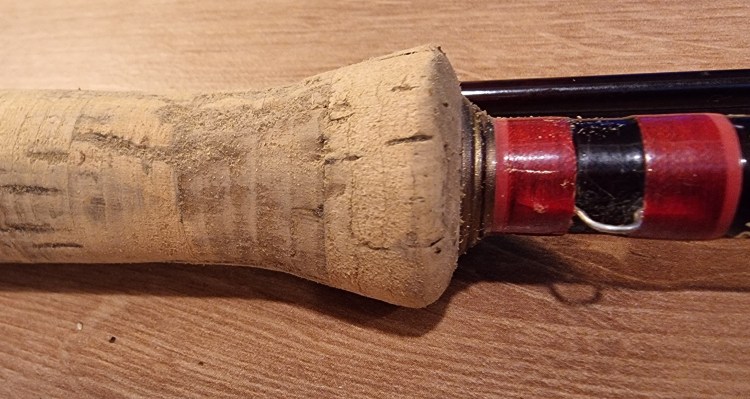
Job completed, the rod is ready for use this coming season where I hope it will add to its already enormous tally of fish. That 7 pound rainbow which took an Ace of Spades fished hard on the bottom one day in May while drifting on Butterstone loch. Those October days when the sea trout, as fresh as paint, ran through the Macher Pool on the Ythan and the Hardy bent into solid three pounders. The lively grilse from a tight bankside lie on the Bunowen river, my first Irish salmon on the fly which I caught while on holiday one August. I doubt if I will be able to replicate those achievements but if I can winkle out a trout or two on the Hardy while drifting the shores and islands of Conn or Mask I will be exceedingly happy.
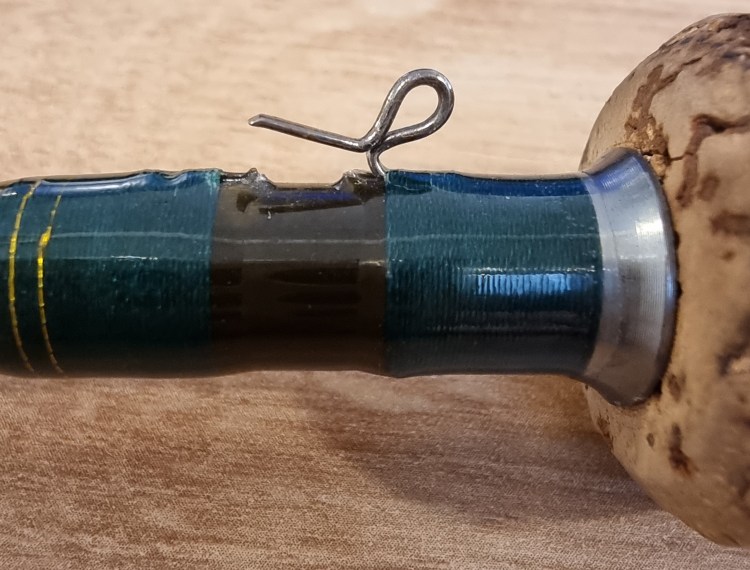
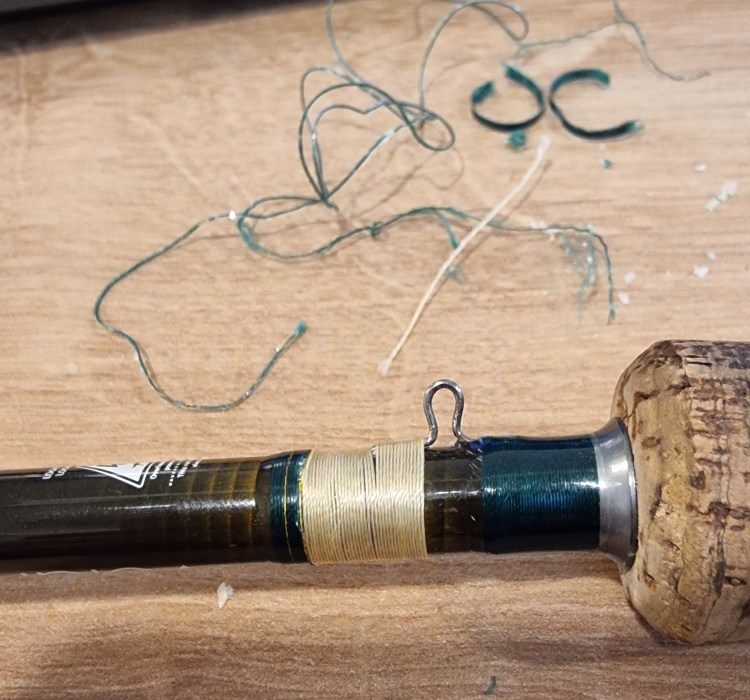
While I had all the gear looked out I also had a wee repair to do on my 11 foot 7 weight Leeda fly rod. I don’t know how it happened, but the fly keeper ring at the handle was twisted out of shape and had come out of one of the whippings. On close inspection, I figured I could bend it back into shape without the need to replace it. I cut off the old top whipping, carefully scraped the hard varnish off with a sharp knife and then straightened the wire keeper. Of course I didn’t have the right colour of thread so I used the same pale gold I used on the Hardy. It was the work of only a few minutes but at least that is one more job out of the way. I know my whipping is not the tidiest but as long as the rings etc stay put I am happy. The odd coloured whippings actually look OK to me, like healed battle scars. They add a touch of character to these old rods.
Everything is coming together nicely now. Fly boxes are full, rods and reels are ready for action and the only job I have yet to tackle is to replace the wooden keel on the boat. There is always something to be done!

 Claretbumbler
I sometimes think making repairs obvious is better than trying to hide them. It looks like somebody cars about the rod rather than worrying about the resale value.
LikeLike
My thoughts exactly. That rod is 40+ years old, so why try to make it look like it has just come out of the shop? My only regret is that I did not fix it up sooner.
LikeLike
Fishing is very much a full time hobby in that there is allways jobs to be done outside of the actual doing of out on the bankside etc. It’s great that you resurrected that old fly rod, sounds like it’s your lucky rod and I’m sure you will do well with it this coming season. Those single legged rings are hard work alright, I had great fun on Sunday night replacing a minute little ring on a quiver tip – I got there in the end and the second coat of varnish is drying as I write.
LikeLike
Phew, those tiny eyes on a quiver tip must be a nightmare! I suspect angling is different to other pastimes, such as golf. We fishers have so many little bits of tackle to maintain, compared to a golfer who has a bag of clubs and some balls, badminton players don’t make their own shuttlecocks, etc (OK, maybe an over simplification but you know what I mean).
LikeLike