
I have been busy tying flies over the past few weeks, dabblers and bumbles pouring off the vice as boxes are filled and the overflow chucked into a receptacle a a sort of back up for next season. Of course, I don’t really need any more flies, thousands are already in my collections of trout and salmon patterns. I tie these days just for the enjoyment of creating the different artificials rather than out of necessity. As I was tying earlier today I mulled over the importance of the flies in trout fishing here in the west of Ireland.
My own near sixty years of fishing has taught me many lessons, but none of us ever knows all the answers (I guess that is why we fish). Some basic truths have become obvious to me though, so bear with me as I pass on my own thoughts on how to be a reasonably successful fly angler on the Irish loughs. Note that I am being specific here, I know nothing of most other forms of fishing across the world, just a little bit about my own back yard. Take these observations for what they are worth, just my own views and they may diverge greatly from your own or from the perceived wisdom of others.
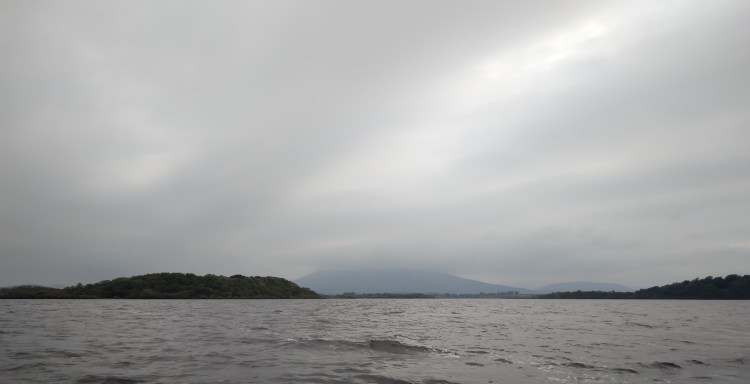
Despite my predilection for tying lots of different fly patterns, I rate fly choice as a minor component when it comes to catching fish. Yes, some days certain flies are more effective than others and on occasion the trout can be very picky, but in general other factors are much, much more important. For me, the biggest factor in determining of you are going to catch fish is finding feeding trout. Put simply, unless you are close to the fish then it does not matter what you tie on your line. On smaller waters finding the fish can be easy, you simply look around for signs of the fish or failing that, fish the obvious places like drop offs, near weed beds, where you observe flies hatching or fry shoaling. It gets much more difficult when you are confronted by big Irish loughs. Mask for example covers about 20,000 acres, is dotted with numerous islands, has miles of fractured and rocky shores, and has depths to nearly 200 feet as well as vast shallows. The trout don’t stay in one place, they move around depending on a host of factors such as time of the year, food availability, spawning urges and many others influences, many of which we humans have no conception.
Annoyingly for visitors, the only way you are going to be able to build the detailed knowledge required to have a chance of locating feeding trout on the big loughs is through experience or tapping into local knowledge. Yet, I would contend that the ability to confidently fish in certain areas because you have a good idea there may be trout in the near vicinity is, by far, the most important skill in your armoury.
After that, the next most important skill is the ability to cast well. OK, so that is obvious I hear you shout! Well maybe it is, yet I see many anglers fishing who cannot put out what I would consider an acceptable length of line. In my personal opinion, if you cannot put or 18 to 20 yards in most conditions, lift off cleanly every time, switch direction with the minimum of false casts and deliver your flies accurately to a rising fish, then you are a huge disadvantage. Don’t get me wrong, short lining has its place and can be lethally effective. Anyone who has shared a boat with me will testify that, in the right conditions, I simply roll a short cast out and hang the flies in the waves. But, when required, casting a good line is an absolute must. Allied to distance is accuracy. The ability to present your flies in front of a feeding fish is at the very core of the sport, so time spent practicing is time well spent.
Also more important than fly choice is the retrieve. I have touched on this many times in previous posts, but when drifting in front of the wind you have to be able to retrieve the line faster than the boat is drifting. Failure to do that leaves your flies looking dead and lifeless. Wind strength will dictate how fast you need to pull the line in, as does the types of flies you are using. Buzzers need to be retrieved at a glacial pace while muddlers fished in a big wave need to be hauled in at a fair old lick. When I compare retrieve speed of successful anglers I fish with with those who catch less fish, I can see faster speeds are at least part of the reason for their larger catches.
Then we come to methods. Wet fly or dries? Buzzers or dapping? Sinking line, floating line or one of the myriad of new fangled intermediate/ghost/midge/triangle jobbies. A lot comes down to personal preference. Some anglers are happy to fish dry fly in most every conditions and accept this is limiting them but it is worth it for the visual takes when they do occur. Others switch between methods frequently, sometimes to great effect. The best anglers I know usually carry a couple of rods, one rigged with a floating line, the other with some form of sinker. That way, they can switch rapidly between them. I used to do that and only stopped because I just can’t be bothered with lugging more gear in my already crowded boat. At any rate, your choice of method and, if fishing a sunk line, your line sinking speed are, in my opinion, more important than fly choice.
All of the above may make me sound like a ‘know-it-all’, something I can assure you that I am not! All I am saying is that learning where the fish are, being able to cast well and be aware of retrieval rates do play a much bigger part in succeeding on the big loughs than fly selection.
Enough pontificating, I am going back to the vice to make even more flies I’ll probably never even tie on the end of my leader.
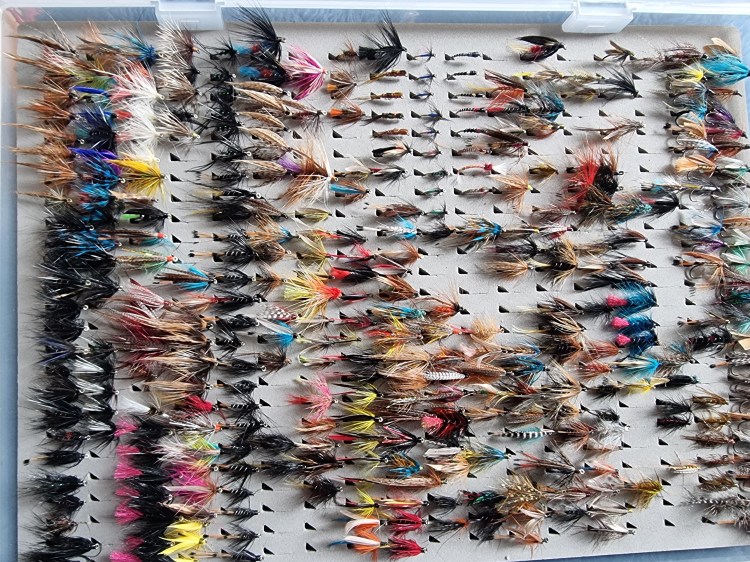

 Claretbumbler
Hi Colin
That made interesting reading despite me never having cast a fly in my life! I’m rather embarrassed to admit it despite living in Co. Mayo for the last 28 years and having Beltra lake in view from the house. I’m hoping that will change next year as I bought a nice fly rod second hand recently do I need to find somewhere that’s free and relatively easy to catch from to learn how to fly fish
LikeLike
Hi Andrew,
The big loughs, like Mask and the Corrib, are daunting places to fish even for experienced anglers. I would suggest you learn the basics by fishing from the shore of one of the local hill loughs. Once you have got the hang of casting and retrieving then try a day out on a boat with an experienced angler or ghillie. Conn and Cullin are close by for you and would be good options. Beltra is a tough lake to fish. It requires a strong wind and resultant big wave to fish properly, tough conditions for novice fly fishers!
Colin
LikeLike
I fish small becks and rivers in the main. Most of the time a Sedge, DHE, or Griffith’s Gnat will work, but some days they’re locked into uprights where the pattern doesn’t matter but size does.
LikeLike