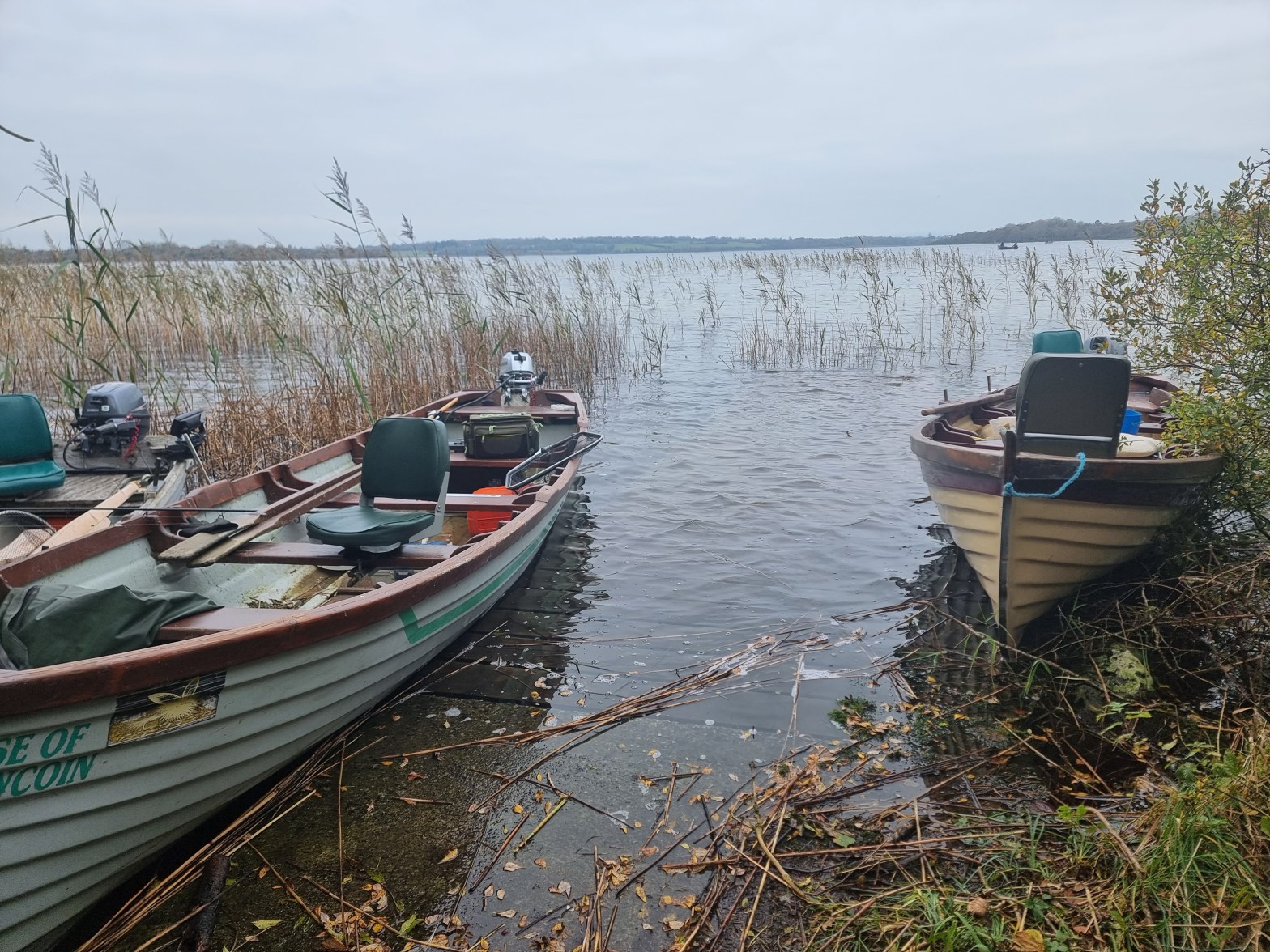
It has been a while since I posted anything here, so this is a bit of a catch up. That storm a couple of weeks ago did some minor damage to the house, meaning I was up ladders again making repairs instead of fishing. ‘Amy’ gave the west of Ireland a good battering, bringing down trees, flooding roads and disrupting power suppliers to large chunks of the north west. While I had taken my own boat off lough Conn the previous weekend, the Glenisland Coop boats were still tied up to the pontoons when the storm hit, sinking some and seriously flooding the rest. Members gathered on the Sunday after the storm and we set about baling/re-floating all the boats and getting them safely ashore for the winter. It was hard work but we got the job done. Back at home that afternoon I warmed myself in front of the fire then retired to make some flies for what was left of the day.

Buzzer fishing is a branch of the sport I have never really enjoyed. I know some anglers absolutely love it and would happily fish buzzers to the exclusion of all other methods, but I lack the patience required. However, the changes in the ecology of our loughs mean that the humble buzzer becomes more and more important to fly fishers here with every new season and I do more buzzer fishing now than I used to. I recently cleared out a lot of old buzzers, making space for some new patterns, or at least newer versions of old favourites. That Sunday I sat at the vice for a couple of hours and churned out fly after fly, heavy buzzers on B110 hooks, lighter patterns on B100’s and some hatching buzzers on B170’s or B405’s. I don’t stress too much about exact patterns, I tend to stick to simplistic tyings in black, claret, brown, olive and red. Once the varnish had dried on them I popped them into a fly wallet which I’ll dedicate to just buzzers for next year.

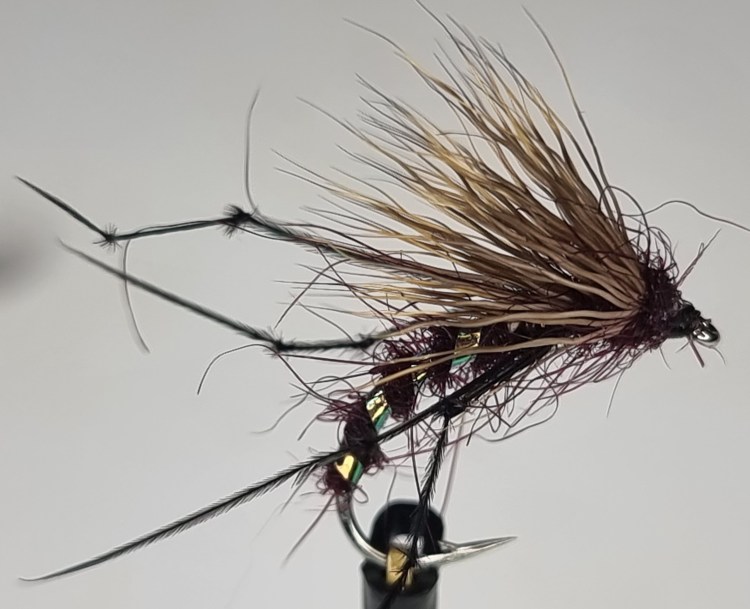
I managed short tying sessions most days during the week that followed. After the buzzers I turned my attention to half hogs. This design of fly has been very popular with lough anglers for many seasons now but I only use them occasionally. For me, if the trout will come to a half hog they will most likely take a deer hair hopper just as well. Anyway, since I have very few half hogs in my boxes I sat down to tie some as I am frequently asked for them by other anglers. Beginning with clarets, I worked my way through golden olives, medium olives, sooty olives and then bibio half hogs. I make them in two different types, ones with hackles and ones without.
I had to leave the vice the next Sunday to take part in the annual Carra club pike angling competition. Liam and I were out together again, this time trolling baits in search of big pike. I brought my engine to give it a run as it has hardly been used this year. It took a few hard pulls to get the old girl going and she smoked a little once she was running, but the Honda purred like a kitten all day as we cruised up and down the lough. Part of the reason I joined the club this season was to get me back into fishing the lough more often and these competitions do exactly that. The pike grow big in Carra so there is always the chance of a good fish, but in general this competition throws up a few jacks and maybe one or two bigger pike each October. The winner is decided by the combined total length of all the pike you catch, so for example, three small forty centimetre pike will beat one good fish of a metre long.
Few of the club members are dedicated pike anglers, most of us just troll around the lough for the day and hope for the best really. A couple of the boats bucked that trend though and could be seen slinging plugs or dead baiting from anchored boats. Personally, I favour trolling either a big silver spoon or a paddle tail soft bait, but what do I know? My pike gear usually consists of an old ABU rod and multiplier loaded with 30 pound braid ending in a heavy mono leader tipped with a short wire trace does for tackle.
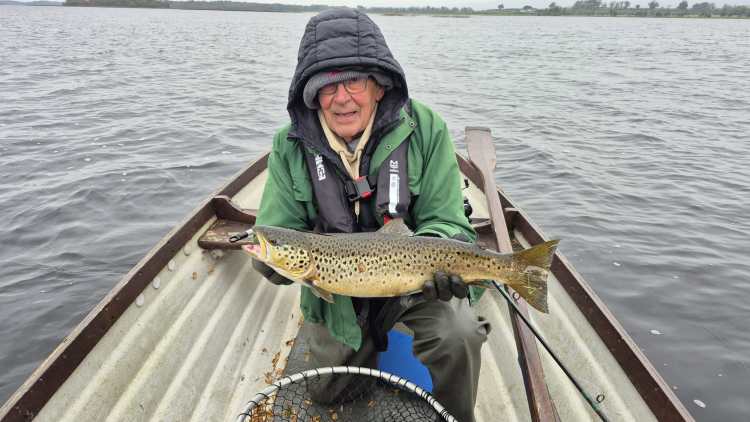
We set off from Castleburke since that is where Liam keeps his boat. The day was dry and not too cold for the time of year, the only snag being a damn east wind which is never good for the fishing. We trolled for hour after hour with the only offer coming to a copper spoon I was trailing behind the boat, but even that one fell off after a couple of head shakes. Different baits were tried, the usual hot spots subjected to numerous runs and in general we did our very best, but without success. We came in early as it started to get a bit cold and the fishing was rubbish. I heard later that the Moorehall side of the lough fished better with about a dozen pike boated over on that side while one solitary fish was landed from Castleburke. That’s fishing for you! A very large brownie was boated over on the other side, and being out of season it was of course gently returned to the water. We saw a similar sized trout jump very close to our boat, so it is heartening to see there are still some big trout in lough Carra. A couple more pike competitions are on the horizon, on Lough Conn and Bilberry Lake, so I’ll make the effort to take part. Who knows, I might even catch one!
And so it was back to the vice again for me on Monday and Tuesday of this past week. Butchers in various guises are a staple of mine for the smaller loughs around here and they were a bit thin on the ground in my boxes. Is it me, or are flies like these old Butchers falling out of favour these days? Normally I favour crow secondaries for butcher wings, but I seem to have accumulated a large number of mallard wings so I used up some of the blues on this batch of variously coloured butchers. I started off with Canary Butchers, the lads with a yellow hackle. Since I had most of the materials on the bench now I went on to do some Bloody Butchers. I love the bloody Butcher, it has always been a great fly for me when fishing for sea trout. A few of those were added to the by now bulging box and then I went over on to Daddies.

The Silver Daddy is hugely popular here in Ireland and between the ones I use and the ones which find their way into other anglers’ boxes I always seem to be short of them. A scatter of size 10’s were soon tied up and I kept on making daddies, this time my green bodied version. I was going to tie some of those lovely blue bodied ones too but I couldn’t lay my hands on my last spool of flat blue tinsel, so they will have to wait for another day. By now I was running low on knotted legs and really lacked the desire to make any more. I know most tyers buy pre-knotted feathers but they are expensive and I can’t justify buying them when I have time on my hands to knot my own.

Next on my list (yes, there is a list of flies I require) was Stimulators. Fiery Brown ones (of course), then some Clarets and finally Black Stimi’s. I have an on/off relationship with this style of fly. It has been good to me on Mask but I can’t catch a fish on it to save my life on Cullin or Conn. I have a sort of golden olive variation which I was given by a lad who said it was lethal during the mayfly but it has not worked for me so far. I suspect this is another example of how important having confidence in your fly is. Anyway, I stuck at it and rattled off a good lot of Stimi’s.

It was time to start on river patterns and I began with one of my favourites, a Beaded Hare’s Ear. This fly can be fished upstream as a nymph, or Euro style or even swung down and across on the tail of wet fly leader. Once again, my fly boxes were pretty much devoid of these versatile flies so I spent a few hours making them up. Some were made with gold 2.8mm beads for the thorax while others sported copper beads of the same size. I tie a variant which requires the hackle to be dyed brown olive, but I am clean out of those so I’ll wait until I have dyed up a new batch of partridge before tackling them. These are flies with a short life span. Fished close to the bottom when nymphing they get snagged on rocks and weeds, while their role on the tail of my wet fly leaders means they are frequently lost in overhanging branches.

Getting back into the fly tying over the past couple of weeks has been nothing short of a delight for me. There have been periods in the past when I was unable to make flies so the hiatus earlier this year was not unusual for me. Still, after 9 months when I could not spend time at the vice I was nervous that I my enthusiasm might have waned. As it turns out though, nothing could be further from the truth and I am loving my few hours most days tying flies. I set myself a target of making one thousand flies this winter, a number which sounds far too big. I’ll have to revise that target though in light of the last three weeks of tying, as I already have 200 + flies tied! While this might sound impressive, it is not. I generally make simple patterns which do not take long to whip up.
There you have it, what with baling boats, fishing (unsuccessfully) for pike and lots of fly tying, it has been a busy period for me even if I have not been catching any fish. Ahead of me are reel maintenance, rod repairs, dying materials and a whole pile of fly tying. An anglers work is never done!
Patterns for the flies above:
Grey boy emerger
Hook: 14 to 10, curved or straight shank
Tying silk: black, 8/0
Abdomen: natural heron herl
Rib: fine oval silver tinsel
Wings: a pair of badger cock hackle tips tied in a ‘V’ over the back of the fly
Thorax: peacock herl
Hackle: a badger cock hackle
Sooty Half Hog
Hook: Kamasan B100, sizes 10 to 14
Tying silk: black, 8/0
Abdomen: seal’s fur dyed sooty olive
Rib: medium red tinsel under medium pearl tinsel
Legs: 4 x double knotted cock pheasant tail, dyed black
‘wing’: roe deer
Thorax: more sooty olive seal’s fur
Green Daddy
Hook: heavy wet fly, sizes 8 to 12
Tying silk: black, 8/0
Body: flat green tinsel
Rib: fine oval silver tinsel
Legs: double knotted natural cock pheasant tail fibres
wings: a pair of dark red game cock hackle tips
Hackle: dark red game cock
Claret Stimi
Hook: Kamasan B175, size 10 or 12
Tying silk: black or wine, 8/0
Tail: well marked roe deer
Rib: oval gold tinsel
Abdomen: medium claret seal’s fur
Wing: well marked roe deer. Tips should align with the tail fibres.
Thorax: red seal’s fur
Hackle: red game cock wound over the thorax
Beaded Hare’s Ear
Hook: 12 to 16 wet fly hooks
Tying silk: olive, 8/0
Bead: 2.8mm gold or copper
Tail: a few fibres from a large brown partridge feather
Rib: fine gold or copper wire
Body: a 50/50 mix of hare’s ear and hare body fur
Hackle: a brown partridge hackle
Tying – thread a the bead on to the hook. Start the tying silk behind the bead and for a dam of silk, leave enough space in front of the bead to wind the hackle. Tie the tail, rib and body as usual, then whip finish behind the bead and remove the waste. Start the tying silk again in front of the bead, then catch in the partridge feather. Wind a couple of turns of the hackle and remove waste and whip finish.

 Claretbumbler
In my area of Canada we use Rapalas and Williams Wablers. Orange/ gold for the Rapalas and gold or silver Williams.
LikeLike
Big Rapalas are popular here in the west of Ireland too for pike. The orange and gold is good as so is the silver version. I am going to have to go and Google ‘Williams Wablers’ – I have never heard of them!
LikeLike
forgot to add “5 of Diamonds” another spoon
LikeLike
Is there a reason you don’t tie the hackle first on the Beaded Hare’s Ear then put the bead on?
LikeLike
No reason, I have tried both ways. Only snag I find with tying in the hackle first is some of the fibres can get in the way when winding the body, but that’s all.
LikeLike