I own a copy of a wonderful book called ‘Irish Mayflies, a fly fishers guide’ written by Patsy Deery. Sadly, this book has been out of print for many years and it is next to impossible to find a copy. Under copyright laws it is not possible to copy or transmit any part of the book, meaning access to the huge range of Irish mayfly patterns it contains is lost to so many anglers.
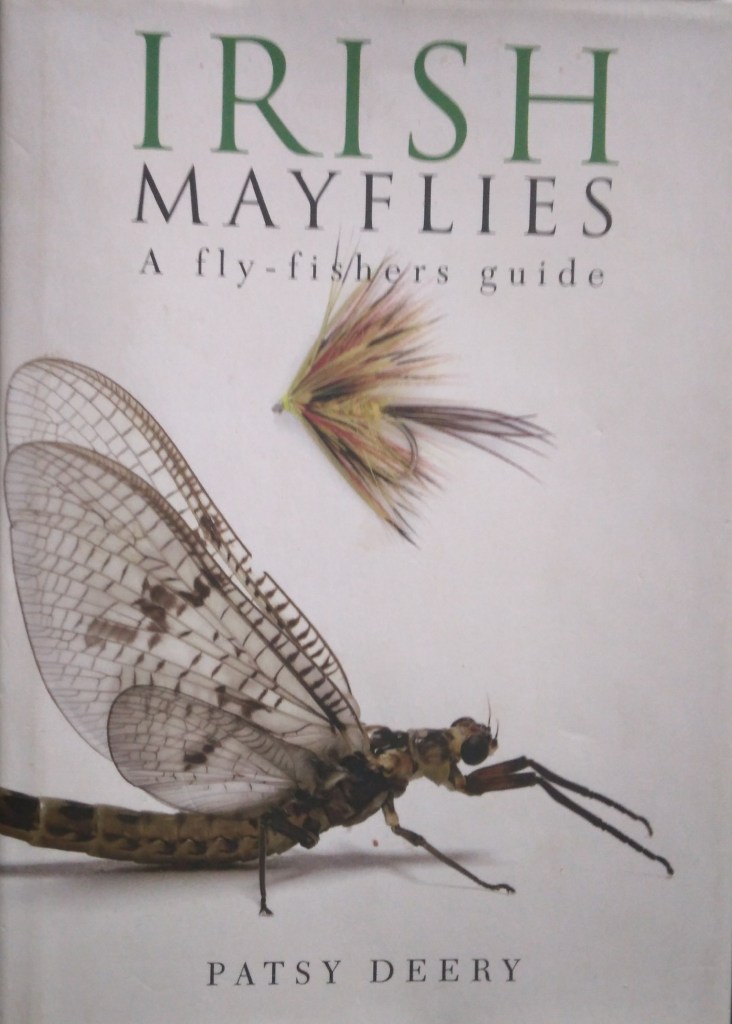
On this page I will simply add my take on the flies in Patsy’s book. I am not going to copy any text, or use any images contained within its pages. All I am doing is tying some of the patterns as described by Patsy and posting photos of the finished flies along with a list of the materials I have used. As there are over 130 flies in the book this will take a bit of time! I won’t do every fly in the book as many of them are very well known to anyone with even a basic knowledge of Irish fishing flies. The golden olive dabbler for example does not require any further notes from me.
A few notes on my tying of the flies on this page. In the book, Patsy never mentions the tying silk used. I will give you the silk I personally prefer for each fly but bear in mind this may differ from the originals. Also, Patsy gave some hook sizes and designs which did not match up with the pictures in the book. Again, I will just give you the hooks I use. I’ll just add to this page when I am tying flies for myself, so they will be in no particular order. Some of the patterns you will already know but there are a few which you will have never heard of! Any feedback would be appreciated.
No1. Melvin Gosling Variant
This has been a very good fly for me and one I can highly recommend. A dabbler style wet fly (despite the name), it works best fished on a fast sinking line.
Hook: a size 10 or 12 heavy wet fly hook
Tying silk: I use yellow or olive in 8/0
Tail: a few fibres of cock pheasant tail
Body: GloBrite floss, no. 11
Rib: GloBrite floss, no.7
Body hackle: a hot orange cock hackle, palmered
Wing: tied dabbler style, mallard flank, dyed yellow
Head hackle: Pasty gives a head hackle of another hot orange cock, but the illustration in the book shows a fly without a head hackle.
The fly below is missing a lot of its wing after a hard day on lough Cullen when it accounted for a big bag of trout!

No.2 French Gosling
A very, very good fly! On the face of it this is a simple pattern but the reality is this one needs to be given a lot of attention for it to work.
Hook: sizes 10 or 12 wet fly hooks
Tying silk: I use olive 8/0
Tail: a slim bunch of brown squirrel hair
Rib: thick brown thread. Cotton sewing thread will be OK. I use some old rod whipping thread that I had lying around
Body: natural raffia
Hackles: a blood red cock hackle under a light olive cock hackle
A few points to look out for – the tail needs to be very slim. Soak the raffia for at least 10 minutes in warm water before using it. Failure to do this will result in the raffia sagging like your grannies drawers the first time it gets wet. The shade of the olive cock hackle is absolutely critical. It’s hard to describe, but think light, washed out sort of olive, not brightly dyed.

No. 3 Phoebe’s Mayfly
A Sam McGowan pattern. Designed with lough Erne in mind but it is now popular across the country.
Hook: usual size 10 or 12 heavy wet fly hook
Tying silk: I use olive, 8/0
Tails: half-a-dozen fibres from a cock pheasant tail feather
Rib: gold wire
Body: olive seal’s fur
Body hackle: cock hackle the same colour as the body, palmered
Head hackle: A blood red cock hackle under a French partridge dyed olive
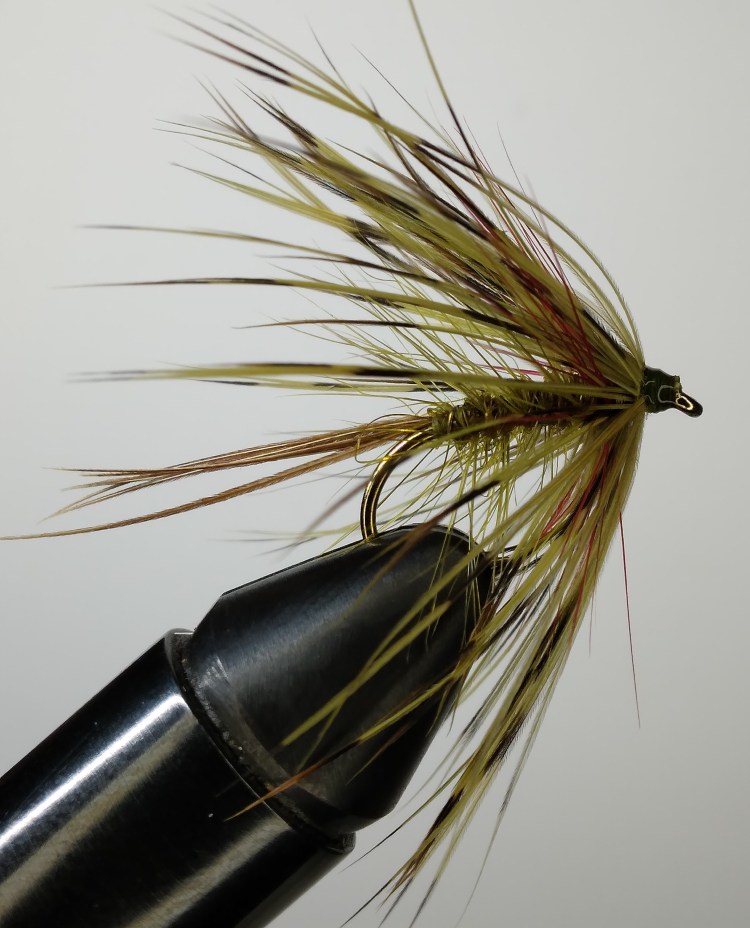
No. 4 Silver Drake
I have written about this pattern before, but it is worth repeating just what a great pattern it is. It will catch trout all season long.
Hook: sizes 10 and 12 heavy wet fly hooks. I also tie this fly on much bigger hooks to imitate fry later in the season
Tying silk: black, 8/0
Tail: 6 or so fibres of cock pheasant tail (I use a few fibres of moose mane hair instead sometimes)
Rib: oval silver tinsel or fine silver wire
Body hackle: dark olive cock, palmered
Head hackles: a dark olive cock hackle under a French partridge dyed dark olive
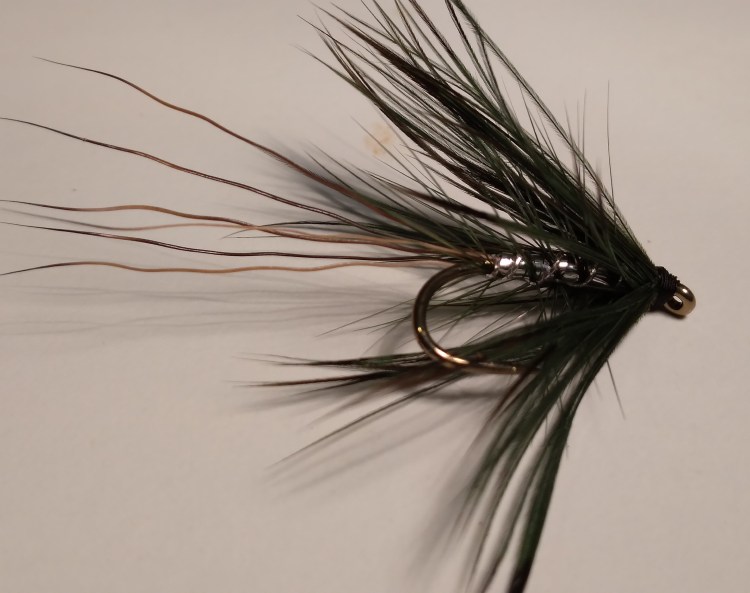
No.5 Claret Bog Fly Bumble
Patsy included this pattern but for me personally it is a fly for the early months of the season, long before the balmy days of May when the greendrakes are hatching. Never-the-less, it is a useful fly to have in the box and certainly claret coloured flies do take their share of fish every season.
Hook: heavy wet fly hooks in sizes 10 and 12
Tying silk: I use black 8/0 for this fly
Tail: GP tippets dyed red
Rib: gold wire
Body: claret seal’s fur with a pinch of red seal’s fur at the thorax
Body hackle: a claret cock hackle, palmered
Head hackles: a blood red cock hackle with an English partridge grey feather wound in front
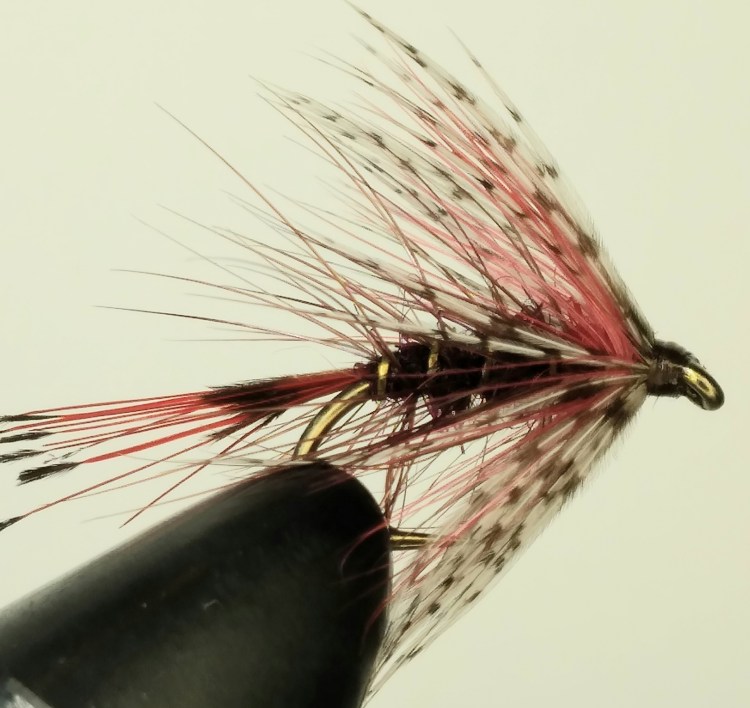
No.6 Peach Nymph
Patsy says this fly was passed on by some Scottish anglers who were fishing lough Erne. Apologies for the poor colour in the photo of this pattern, the body is peach, not that yellowy sort of shade.
Hook: sizes 10 or 12 heavy wet fly hooks (I also tie this on size 8’s too)
Tying silk: I use brown. 8/0
Tails: a bunch of cock pheasant tail fibres
Rib: black flexifloss
Body: Peach coloured wool
Hackle: a red feather from the flank of a cock pheasant

No.7 Mayo Gosling
Gosling seem to have fallen out of favour recently but I have no idea why this should be as they can be excellent flies in the right conditions. By that I mean days of high winds and big waves on the western loughs. There are so many variations of Goslings to pick from and each has its own merits. The Mayo Gosling, so called because of the red and green which match the Mayo football colours, can be a useful fly on Carra in my experience. Here is the pattern from Patsy’s book.
Hook: size 10 or 12 wet fly hooks, but I also tie Goslings on long shank hooks and have done well with them
Tying silk: I use olive, 8/0
Tails: cock peasant tail fibres
Rib: oval gold tinsel
Body: insect green seal’s fur
Hackles: a crimson cock hackle with a mallard flank feather, dyed green, wound in front

No.8 Pippa Green
A popular pattern here in the west but it was invented in the north by Sam McGowan.
Hook: usual size 10’s and 12’s
Tying silk: I use olive 8/0
Tails: cock pheasant tail fibres
Rib: GloBrite no.8 floss silk
Body: light olive seal’s fur
Body hackle: light olive cock, palmered
Cloak: mallard flank dyed dark olive and tied all round, dabbler style

No.9 Jointed Mayfly
An unusual style of wet mayfly.
Hook: sizes 10 and 12 Kamasan B175 or similar
Tying silk: olive, 8/0
Tails: cock pheasant tail fibres
Body: in 2 equal halves. Rear – white plumbers PTFE tape ribbed with brown thread. Front – medium olive seal’s fur with a medium olive cock hackle palmered over it and ribbed with GloBrite no. 4 floss
Head hackle: french partridge dyed picric

no.10 the Dog Wulff
A really good dry mayfly pattern this one. Easy to tie and it uses readily available materials, so what is not to like about it!
Hook: all sizes from 10 normal shank right up to size 6 long shanks. In general, the bigger the better
Tying silk: I use black, 8/0
Wings: grey squirrel tail hair, tied forward and split
Tail another bunch of grey squirrel tail hair
Tail hackle: a short fibred badger cock hackle wound at the end of the body
Body: a 50:50 mix of natural grey squirrel body fur and hares body fur
Hackle: a pair of matching badger cock hackles, wound thickly

No.11 Spent Wulff
A pattern from Frank O’Reilly and a really effective one on the western loughs.
Hook: the usual kamasan B170 in sizes 10 or 12
Tying silk: I use olive 8/0
Tails and wings: grey squirrel tail hair
Body: in three parts, dubbed muskrat fur at the tail, red floss in the middle and more muskrat fur at the front. I find natural grey squirrel body fur works as a replacement for the muskrat if you don’t have any.
Hackles: a red game and a silver badger cock hackles wound together. I personally prefer a grizzle to a silver badger hackle on this fly but that’s just me

No. 12. Red ribbed Nicholson
Hook: 10 or 12 Kamasan B175 or similar
Tying silk: olive 8/0
Tail: cock pheasant tail fibres
Rib: GloBrite no. 4 floss, thin
Body: golden olive seal’s fur
Hackles: a cock hackle dyed golden olive with a natural French partridge wound in front
no. 13. Rally Wulff
Hook: Kamasan B830, sizes 10 or 12
Tying silk: brown. 8/0
Tail: golden pheasant tail fibres
Body: rear third is wound cock pheasant tail fibres, front two thirds is cream or natural seal’s fur
Rib: Patsy doesn’t give a rib but I think there should be a rib of brown thread
Wing: a 50:50 mix of brown and grey elk hair, tied forward and undivided
Hackle: olive cock covering the front third of the body
no. 14 Lemon Grey Bumble
A lovely pattern which works very well long after the mayfly hatch is over. I add a short tag consisting of a couple of turns of flat gold tinsel under the tail, but that was not in the dressing Patsy gave in the book.
Hook: a size 10 or 12 Kamasan B175
Tying silk: black, 8/0
Tail: Patsy doesn’t mention a tail on this fly but it should have a golden pheasant topping as a tail
Rib: gold wire
Body: grey seal’s fur
Body hackles: a lemon and a grey cock hackles, palmered together
Head hackles: another lemon and grey cock hackle, given about three turns. These should be slightly longer in fibre than the body hackles. Wind a cock pheasant rump feather in front

no. 15 Jaffa May
Another Sam McGowan pattern and one which was designed for lough Erne.
Hook: sizes 10 or 12 Kamasan B175
Tying silk: not given in the book, but I use chartreuse 8/0
Tails: cock pheasant tail fibres
Rib: GloBrite floss, no. 3
Body: seals’ fur dyed picric yellow
Body Hackle: a cock hackle dyed picric yellow
Head hackles: a cock hackle dyed fl. orange with a French partridge dyed picric yellow wound in front
no. 16 CDC Mayfly
This one can be fished wet but you can also grease it up and fish it as a dry fly.
Hook: sizes 10 or 12
Tying silk: I use olive 8/0
Tails: cock pheasant tail fibres
Rib: oval gold tinsel
Body: natural seal’s fur
Body hackle: a badger cock hackle, palmered
Wings: 4 grey CDC plumes tied over the back of the hook
Head hackle: a French partridge hackle dyed medium olive
no. 17 Spent Westie
Not a fly I have fished with so far, but it looks good!
Hook: Kamasan B170 in sizes 10 or 12
Tying silk: not given but I would use white 8/0
Tails: either cock pheasant tail fibres which have been dyed black or some badger hair
Tag: a couple of turns of GloBrite no. 4 floss
Body: white polypropylene yarn
Rib: black flexifloss
Wings: well-marked teal, tied spent
Hackle: a short fibred black cock hackle, trimmed underneath

no. 18 Adams Irresistible
This one takes a bit of effort (and usually accidental cutting of the tying silk while trimming the hair body) but it is a high floating dry fly.
Hook: Kamasan B170 in sizes 10 or 12
Tying silk: not given but I would use black 6/0
Tails: a few fibres of a brown cock hackle
Body: spun deer hair clipped to shape
Wings two grizzle hackle tips, tied in split and upright
Hackles: a brown and a grizzle cock hackles wound together
19. Yellow/Green Gosling
A pattern by Brian Stanfield of Newtownards. Apparently highly recommended for lough Conn. I have not used this pattern myself but I have other flies of my own which use the same floss silk body and I can vouch for their effectiveness.
Hook: sizes 10 and 12, wet fly hooks
Tying silk: I would suggest olive, 8/0
Tail: a few fibres of cock pheasant tail
Rib: oval gold tinsel
Body: GloBrite floss, no. 12
Head hackles: a golden olive cock hackle under a mallard flank feather which has been dyed green olive
20. Forde’s May
Hook: sizes 10 or 12 wet fly hooks
Tying silk: not given but I would think olive 8/0 would do fine
Tail: a good bunch of fibres from a cock pheasant tail feather
Rib: gold wire
Body: Light coloured fur from a hare’s ear
Wing: either teal secondary or starling but it needs to be dark
Head hackle: English partridge dyed golden olive
no. 21 Stan’s Pearly May
Invented by Stan McCart, a former Ireland international angler.
Hook: Kamasan b175 in sizes 10 and 12
Tying silk: I would use brown 8/0 for this pattern
Tails: cock pheasant tail fibres
Tag: fine flat pearl tinsel
Body: natural raffia
Rib: fine flat pearl tinsel
Shoulder hackle: a white cock hackle
Wing: bronze mallard, tied small
Head hackle: a natural french partridge feather
No. 22 Pink and Olive Mayfly
Another pattern from Stan McCart
Hook: Kamasan b175 in sizes 10 and 12
Tying silk: I would use olive 8/0
Tails: cock pheasant tail fibres
Body: natural raffia
Ribs: thin GloBrite no.4 floss and fine oval goldtinsel
Body hackle: a yellowish green olive cock hackle, palmered
Hackles: 1 – another yellowish green olive cock, 2 – a cock hackle dyed pale pink, just one turn, 3 – a natural french partridge feather
no. 23 White Wulff
Hook: Kamasan B170, sizes 10 and 12
Tying silk: I use white, 8/0
Tail: white calf hair
Body: white fur or yarn, no rib
Wings: white calf tail hair, tied upright and split
Hackle: badger cock
No.24 White Wulff variant
Hook: Kamasan B170, in sizes 10 and 12
Tying silk: white 8/0
Tail: Grey squirrel tail, dyed yellow
Body: white or natural seal’s fur
Rib: pale green thread
Wings: grey squirrel, dyed yellow, tied upright and split
Hackle: grizzle cock
no. 25 Brown/grey wulff
one more from the vice of Cathal Rush, a dry fly I personally use a lot.
Hook: Kamasan B170, sizes 10 or 12
Tying silk: black, 8/0
Tail: dark red/brown natural squirrel tail hair
Body: natural mole fur
Rib: nylon monofilament line
Wings: same hair as the tail, tied forward and split
Hackle: badger cock
no. 26 Padraic’s Bumble
A fly from the vice Crossmolina angler, Padraic Traynor.
Hook: a Kamasan B175
Tying silk: I use olive but Patsy’s illustration shows that fly was tied with black silk
Tail: cock pheasant tail fibres
Rib: Oval gold tinsel
Body: Green olive seals fur
Body hackles: a yellowish golden olive cock and a green olive cock palmered together
Head Hackle: a grizzle cock hackle dyed blue and given two full turns
no.27 Blue Dun wonderwing mayfly
The wonderwing method has been around for a long time so I won’t go into how to create the wings. This is a complex pattern which requires a few different techniques, making it fun to tie.
Hook: Kamasan B100, size 10
tying silk: I use olive, 8/0
Tail: fibres of the deer hair body
Body: Natural deer hair tied as a detached body on a needle
Wings: blue dun hackles prepared and tied in wonderwing style
Hackle: olive cock hackle, lots of turns
No. 28 Deerys Green
One of Patsy’s own patterns, noce and simple to tie.
Hook: Kamasan B175, sizes 10 or 12
Tying silk: not given, but it looks like black 8/0 was used
Tails: cock pheasant tail fibres
Rib: brown nylon, 6 pound maxima is good
Body: natural seals fur with a little hare’s ear fur mixed in
Hackle: a medium olive cock hackle, tied sloping back
Wing: mallard flank dyed medium olive
no. 29, Lough Ramor Green
Hook: sizes 10 or 12
tying silk; I would use brown, 8/0
Tail: cock pheasant tail fibres
Rib: fine oval gold tinsel
Body: natural raffia
Body hackle: A badger cock hackle, plamered
Head hackle: A good quality grizzle cock hackle dyed medium olive
no.30 Lough Ramor Yellow
Hook: sizes 10 or 12
tying silk; I would use brown, 8/0
Tail: cock pheasant tail fibres
Rib: fine oval gold tinsel
Body: natural raffia
Body hackle: A badger cock hackle, plamered
Head hackle: a good quality grizzle cock hackle dyed yellow or golden olive Both of these patterns can be tied with the head hackles wound full or spent
no. 31 The very yellow wulff
A very simple Wulff pattern from the vice of Frankie Mcphillips.
Hook: Kamasan B170 in sizes 10 and 12
Tying silk: I use yellow, 6/0 for this fly
Tail: a slim bunch of brown squirrel hair
Body: Pearsall’s yellow floss. No rib
Wings: same hair as the tail, tied upright and split
Hackle: a good quality cock hackle dyed yellow
no. 32 Yellow Wulff (standard dressing)
Very popular, especially on the Corrib. Only real issues with this pattern is finding the best quality cock hackles dyed fiery brown.
Hook: Kamasan B170, sizes 10 and 12
tying silk: I use yellow in 6/0
Tail: white calf hair. Calf tail is generally used but you can use calf body hair instead.
Body: yellow floss silk
Wings: same as the tail, tied upright and split
Hackle: best quality cock dyed fiery brown and given multiple turns
no. 33 Pink Gosling
I have caught trout on both Conn and Cullin on this fly. A pink cock hackle is specified in Patsy’s book but I prefer to use a hen hackle.
Hook: B170 in the book but I like to use the slightly heavier B175 in sizes 10 and 12
Tying silk: I use white, 8/0
Tail: cock pheasant tail fibres
Rib: fine oval gold tinsel
Body: natural seal’s fur
Body hackle: white cock, palmered
Head hackles: one turn of a pink hackle under a grey partridge feather which has been dyed picric
no. 34 Patsy’s mayfly nymph
Lovely tying this one!
Hook: Patsy recommended the Kamasan B130 long shank hook in sizes 10 or 12. I like this fly on the B200 hook which I think is a bit heavier
Tying silk: I use brown, 8/0 usually but have been know to use golden olive instead
Tail: cock pheasant tail fibres, tied short
Body: natural seals fur dyed in strong tea. You will have to fix the dye using salt and vinegar
Over body: olive coloured body stretch
Rib: brown nylon line (Maxima is good)
Wing cases: pheasant tail fibres
Thorax: same fur as the body but add a pinch of orange seal’s fur
Hackle: a brown partridge hackle
no. 35 Simon’s Spent
A more modern style of dry fly, this is a handy pattern to have in the box for evening fishing.
Hook: Kamasan B170, size 10 or 12
tying silk: I use black, 8/0
Post: the end of the body material
Tail: cock pheasant tail fibres
Body: white booby cord. Size is not specified, but I find 4mm or 5mm is good
Rib: black tying silk
Wings: a pair of black cock hackle points tied spent with 3 strands of pearl krinkle flash
Hackle: a grizzled cock hackle, wound parachute style around the post
no. 36 Summer duck bumble
Micheal Pollin invented this fly.
Hook: Kamasan B175, sizes 10 or 12, the smaller sixes being more effective
Tying silk: olive, 8/0
Tail: cock pheasant tail fibres
Rib: gold wire
Body: medium olive seal’s fur
Body hackle: a cock hackle dyed medium olive, a little bit lighter than the body fur
Head hackle: summer duck or dyed subs
No. 37 Iron Blue Spent
A nice dry fly which catches fish during a hatch of duns just as well as when the spinners are falling.
Hook: Kamasan B170 in sizes 10 or 12
Tying silk: Black, 8/0
Tail: cock pheasant tail fibres
Rib: fine silver wire
Body: white plumbers PTFE tape
Body hackle: badger cock, palmered
Once you have wound the body hackle tie in about 6 fibres of cock pheasant tail under the hook. Once the head hackles have need wound separate the fibres and draw the pheasant fibres forward and tie in at the head. This will keep the head hackle fibres in position.
Head hackles: a grey dun cock with an iron blue dun cock wound in front
no. 38 Claret Octopus
You can argue this is not a true mayfly pattern but it works well from May onwards. Can be very good fished over the deeps on Mask.
Hook: Kamasan B170, sizes 10 and 12. I personally prefer the B175
Tying silk: I use olive, 8/0
Tail: GloBrite no.11 floss or yarn
Rib: oval gold tinsel
Body: dark claret seal’s fur
Hackle: Golden pheasant yellow body feather.
no. 39 Green drake Wulff
Hook: Kamasan B170, sizes 10 and 12
tying silk: I use olive, 6/0
Tail: moose or natural deer hair
Body: olive polypropylene or a mix of yellow and medium olive seal’s fur in equal parts
Rib: light olive floss
Wings: moose or sable hair
Hackle: a grizzle cock hackle dyed yellow
no. 40 Yellow Klinkhammer mayfly
Another tying from Frank Reilly of Glencorrib.
Hook: Kamasan B100, sizes 10 or 12
Tying silk: black, 8/0
Tails: cock pheasant tail fibres, short
Body: cream flyrite dubbing
Rib: pheasant tail fibres
Post: green poly yarn
Hackle: 5 or 6 turns of good quality grizzle cock hackle dyed olive
no. 41 Orange Wulff
The wings on this fly should be tied forward and split.
Hook: Kamasan B170, sizes 10 or 12
Tying silk: olive, 8/0
Tails and wings: squirrel tail hair, dyed orange
Body: olive seal’s fur
Rib: medium oval gold tinsel
Hackle: a dyed olive grizzle cock hackle, trimmed below
no. 42 Raymond Muddler
A fly from Northern Ireland, this colourful pattern is one for stripping back through the waves during a mayfly hatch. The red head may or may not suggest that flash of crimson as a fly pumps blood into its unfolding wings as it hatches out at the surface.
Hook: sizes 10 and 12, wet fly hooks
Tying Silk: olive, 6/0
Tail: Golden Pheasant topping
Rib: oval gold tinsel
Body: pale olive seal’s fur. I sometimes used greenish-golden olive fur instead
Body Hackle: a bright red cock hackle, palmered
Head hackle: a turn of guinea fowl dyed blue
Head: deer belly hair, dyed red. Spin and clip, muddler style
no.43, red ribbed mayfly
Hook: sizes 10 and 12, wet fly hooks
Tying Silk: red, 8/0
Tail: cock pheasant tail fibres
Rib: globrite no.4, red
Body: white seal’s fur.
Body Hackle: a pure white cock hackle, palmered
Head hackles: a yellow cock hackle with a french partridge dyed picric in front
no.44, Peter Deane’s Nymph
A very simple pattern and one which works on rivers as well as loughs
Hook: sizes 10 and 12, wet fly hooks
Tying Silk: I use brown, 8/0
Tail: cock pheasant tail fibres
Rib: fine flat gold tinsel
Body: hare’s ear fur with some blue rabbit under fur at the thorax
Hackle: an english partridge hackle dyed yellow olive
No.45, Claret Partridge
Hook: sizes 10 and 12, wet fly hooks
Tying Silk: black or claret, 8/0
Tail: cock pheasant tail fibres
Rib: fine oval gold tinsel
Body: claret seal’s fur
Hackles: a claret cock hackle with a natural french partridge wound in front
No.46, Inishkeeragh Gosling
Another one from the vice of Frank Reilly
Hook: sizes 10 and 12, wet fly hooks
Tying Silk: olive, 8/0
Tail: cock pheasant tail fibres with 4 strands of pearly Twinkle
Rib: Globrite no.4 floss
Body: golden olive seal’s fur
Hackles: Orange cock with an english partridge hackle dyed olive green in front
No. 47, Green Mayfly (1)
The first of two similar patterns designed by Donald McClearn
Hook: sizes 10 and 12, wet fly hooks
Tying Silk: olive, 8/0
Tail: 6 strands of cock pheasant tail fibres
Rib: Oval gold tinsel
Body: natural or white seal’s fur
Body Hackle: badger cock, palmered
Hackle: A french partridge hackle dyed medium olive
No. 48, Green Mayfly (2)
Hook: sizes 10 and 12, wet fly hooks
Tying Silk: olive, 8/0
Tail: 6 strands of cock pheasant tail fibres
Rib: Oval gold tinsel
Body: natural or white seal’s fur
Body Hackle: Grizzled Metz dyed medium olive, palmered
Hackle: A french partridge hackle dyed medium olive

 Claretbumbler