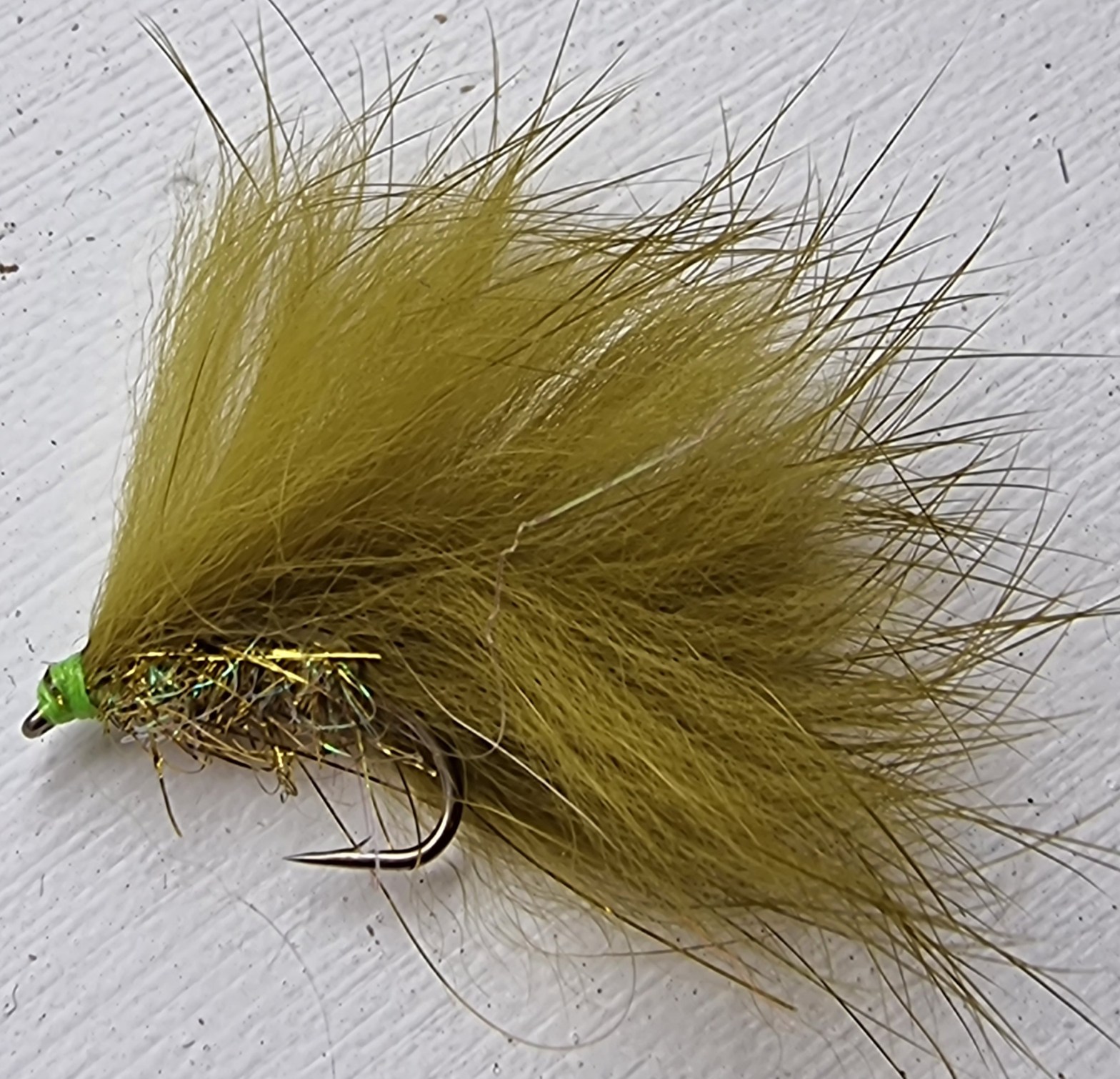
Apologies to all, there have not been many posts from me of late. My step son is home from Australia for 6 weeks, so there has been a bit of catching up to do, plus I nipped over to Aberdeen for my mother’s 91st birthday. With all that going on there has been no time for fishing and not much in the way of fly tying either. I have however been stocking up on mini zonkers when I had a few minutes to myself and it occurred to me you guys might like to see how I make these wee lures.
Zonkers, and their many derivatives, have been around for a long time. Generally, they are tied on large hooks, frequently long shanks, and are fished as streamers for river trout and as out and out lures for rainbows on still waters un the UK and Ireland. I have caught a fair few trout on big zonkers in my time, but over the years I found a smaller version was even better, so let’s take a look at these lures in some detail.
I use size 10 wet fly hooks for these flies, a Kamasan B175 (or similar) is perfect. Tying silk can be 8/0 or the stronger but thicker 6/0. Apart from that I use only two materials, rabbit strips and flashy dubbing such as angel hair. Tying is very easy but I use a very specific way of tying in the materials and this is what I want to show you here. Note that I am right-handed, so change as required if you are a southpaw.
Put the hook in the vice and test it. Now start the tying silk at the bend of the hook. Wind the tying silk back up to the eye. This is so there will be a good bed of tying silk on the shank.
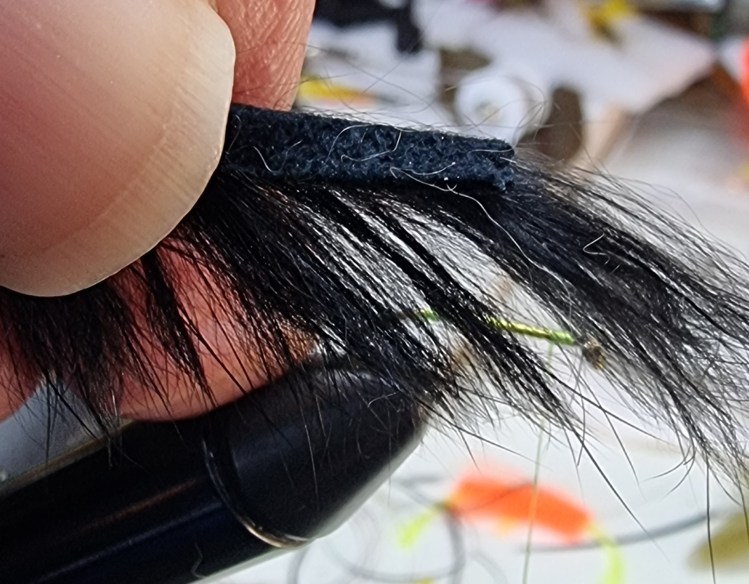
Now take a piece of rabbit strip and hold it to the skin is uppermost and the fibres are pointing towards the eye of the hook. This is vital, so make sure you are holding the strip correctly.
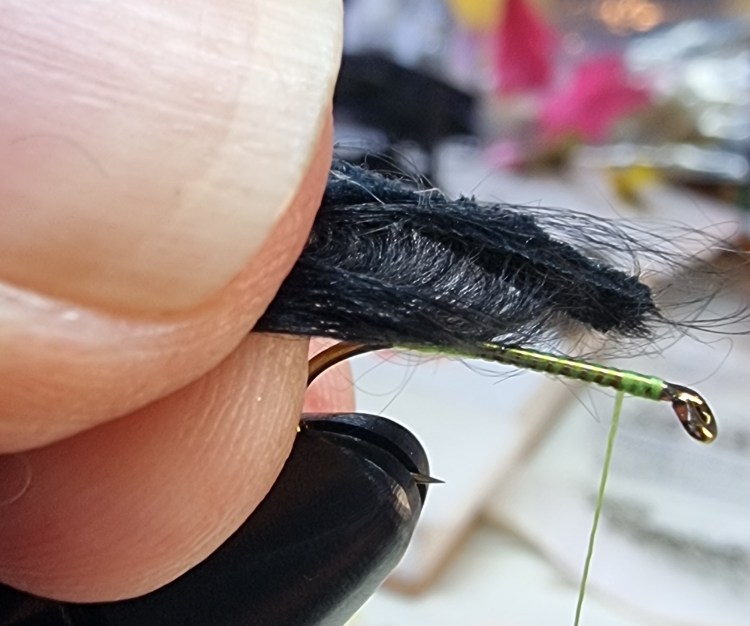
Now with the very end of the rabbit strip held tightly between the thumb and forefinger of your right hand, stroke the fibres to the left. This feel very counter-intuitive, but trust me this is what you do.
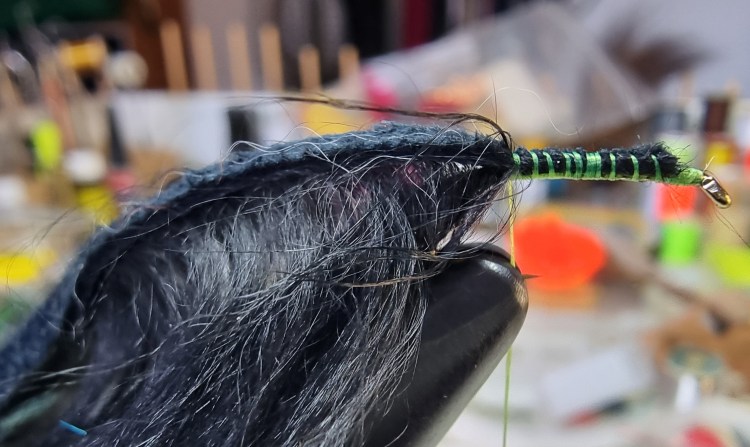
With the hair now pointing to the bend end of the hook, offer up the strip and catch it in on top of the hook with the tying silk. One loose turn and then further tight ones works best.
Being careful to keep the rabbit strip central on the hook shank, bind it down with tight, touching turns. Make a locking turn by lifting up the strip and taking a couple of wraps just on the hook shank. Pull the rabbit skin down again and continue to bind it tightly to the shank until you reach the bend.
Dub the tying silk with your chosen synthetic dubbing and form a body by winding back up the hook, leaving a space at the eye for tying in the rabbit.
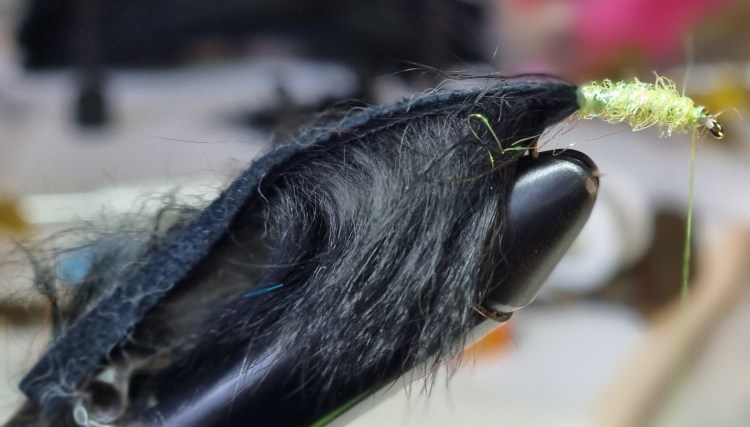
Pull the rabbit strip forward and bind it down tightly with the tying silk before cutting off any waste.
Wrap a net head, whip finish and varnish.
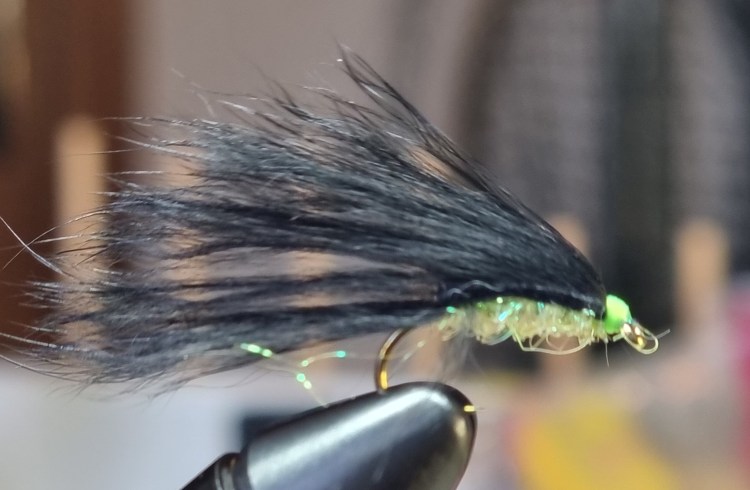
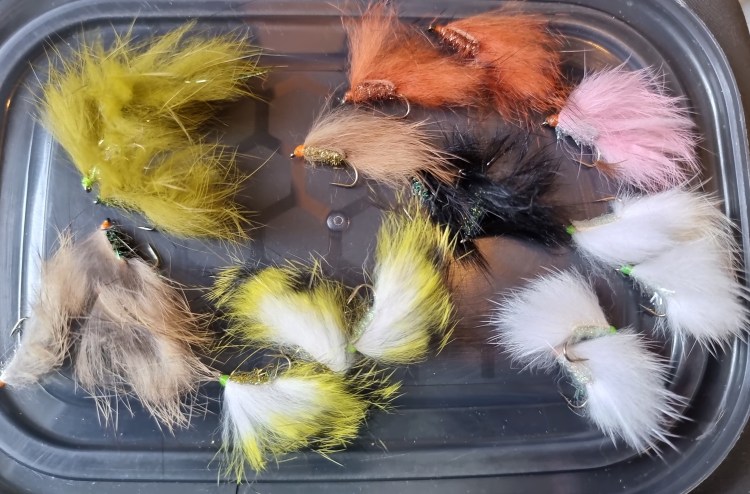
All of that sounds a lot but in practice it is not and you can churn out lots and lots of mini zonkers in no time at all. You can of course make a boobie version by whipping on a pair of booby eyes or alternatively, you can add a bead before you begin the dressing. As for colours, the world is your oyster! Black, white, natural and olive are my preferred shades but you can be as conservative or as wild as you want.
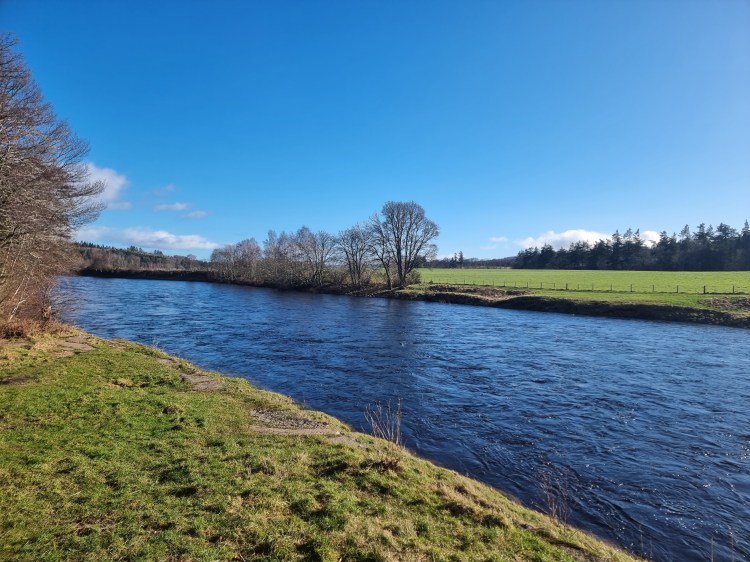
In case you are wondering, I did not have time to do any fishing in Scotland, and anyway I did not take any gear with me. The cost of the ferry was prohibitive, so I flew Dublin to Aberdeen with minimal spare clothes and nothing else. It is a shame the cost of driving over has gone so crazy, I used to enjoy the journey despite its length and complexity. When I was there, I had a walk along part of the Dee on Sunday and the river looked to be in good condition now after recent floods. I have no doubt that many pools are now completely different to last year as the Dee has long stretches of gravel bottom which shift miles down river in extreme spates. As you can see, the sun came out for a change!

 Claretbumbler
They’d work very nicely in small streams for the 12″+ giants.
LikeLike
Yes, they work well here on smallish rivers. Planning on trying them a bit more this coming season.
LikeLike
Hi Colin, it’s great to see you back on air! I hope you had a good trip to Aberdeen, it’s allways nice to return to home shores as they say. My great grandfather came from Aberdeenshire so you never know we may be related! That part of the world is more about sea angling and obviously Trout and Salmon fishing. There is a tiny enclave of coarse fishing to be had up at Portsoy in a small man made boating lake which holds Roach, Perch and also Tench and a few Carp. Other than that it’s a bit of a coarse anglers desert.
LikeLike
Hiya Andrew, growing up in Aberdeen I had virtually no access to coarse angling. A few small perch in a couple of tiny lochs on the edge of the city and pike in loch Skene and that was about it! I learned to trot worms and maggots for grayling on the Tay system in the winter and loved that (but that’s not coarse fishing). Never heard of that boating lake near Portsoy, I may have to investigate that the next time I am over that way.
LikeLike
Hi Colin, Shane here. Thanks for this – I have a bunch of zonker strips I’ve been meaning to do something with. Perfect!
LikeLike
Hi Shane, you have no excuses now! They are a really handy addition to the fly box, often tempting a trout when ‘conventional’ flies fail.
LikeLike