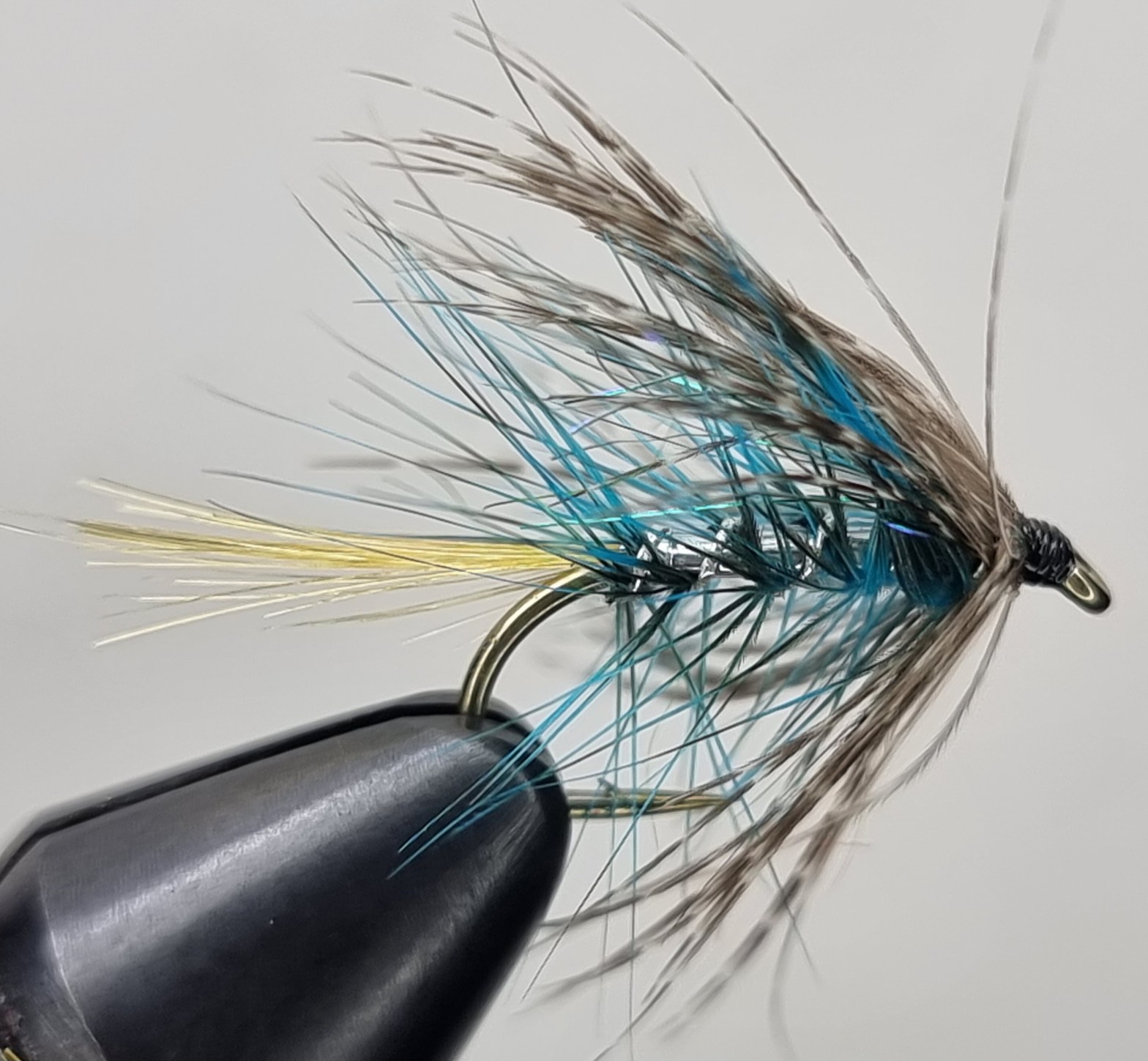
I am risking life and limb here as I commit fly tying heresy. The ‘bumble’ patterns devised by the late, great Justice T.C. Kingsmill Moore were ahead of their time in many ways. His use of multiple different coloured hackles to impart ‘life’ into his flies were an inspiration and his prodigious catches of trout from the famous west of Ireland fisheries are the stuff of legend. These flies have stood the test of time and fly fishers in Ireland and the Uk use many of them to this day. The Golden Olive Bumble, the Claret Bumble, the Grey Ghost – the list goes on. Why in God’s name would I interfere with any of these superb patterns?
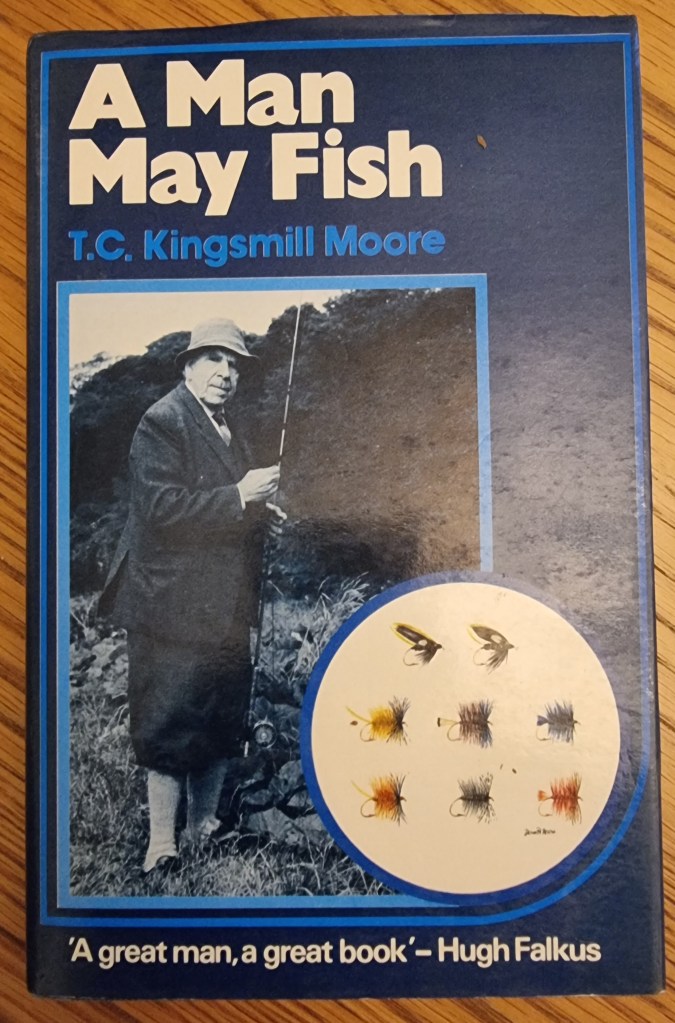
In his seminal work, ‘A Man May Fish’ he gives the dressing for a fly called the Silver Blue Bumble, and here it is:
Tail: G.P. Topping
Body: Closely wound, fine, oval silver tinsel
Body Hackles: Bright, medium blue dyed cock (R.H.S. Butterfly blue 645) and a natural badger cock. They should be wound rather open
Shoulder hackle: Teal
He goes on to say that this fly and his Magenta and Gold Bumble have ‘limited use’ for fresh run white trout in low water and bright sun. Sound words and lovely flies.
I have never been really happy with oval tinsel bodies, despite their common use on bumbles and Irish shrimp flies. I can see that they could possibly disperse more light than flat tinsel but I have found them to be frail in use and so I tend to avoid them. That is why I started messing around with the silver blue bumble in the first place but then I went one step further. To my eye, the badger hackle muted the blue of the other cock hackle and when I am fishing for fresh sea trout I like a fly to be very blue. In the end, I left out the badger hackle and even replaced the butterfly blue with a grizzle cock hackle dyed bright blue (sorry TC, I have no idea what the R.H.S. code is).
In a final act of vandalism, I also incorporate a few strands of thin flash as a sort of under-hackle for the teal. I add this to lots of my flies and I like the way it catches the light in the water. I personally use LiteBrite but there are lots of new alternatives on the market. It just has to be very fine so that it is mobile.
What I ended up with is this:
Hook: sizes 8 down to 12, heavy wet fly hooks (usually barbless these days)
Tail: G.P. Topping
Rib: No.14 fine oval silver tinsel
Body: flat silver tinsel
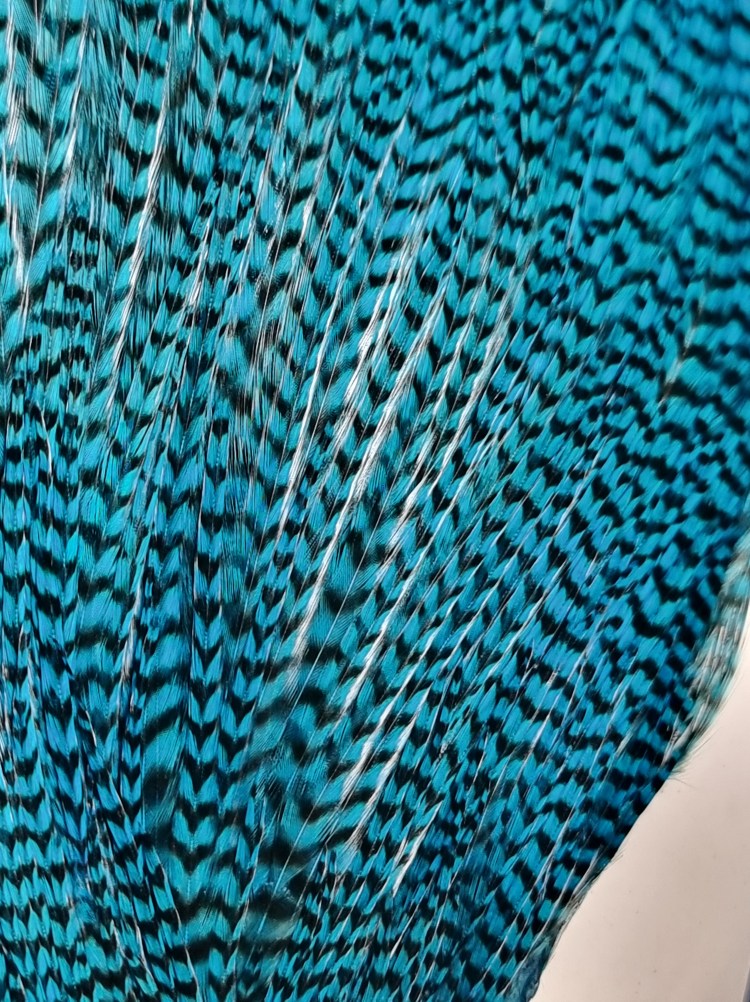
Body Hackle: a grizzle cock hackle dyed bright blue
Flash: a few strands of blue LiteBrite tied in between the body hackle and the teal. Stoke the LiteBrite back and cut to the same length as the teal fibres. Don’t over do this, 6 or 8 fibres are enough.
Shoulder hackle: Teal, tied in by the tip and doubled.

I find that making the body from flat tinsel is both easier and quicker than winding fine oval tinsel. If you do want to follow the original pattern it is vital the wraps of tying silk under the oval tinsel are perfectly smooth, otherwise the oval tinsel goes all over the place and you are left with a very untidy body with gaps and spaces. The flat tinsel does tend to hide a multitude of sins.
I used to make this fly with just normal cock hackle dyed blue but moved over to a grizzle one dyed blue. I like the broken colouring of the dyed grizzle feather, in some ways it does what Kingsmill Moore wanted, a blend of shades over the tinsel body. As with everything in this life you have to pay for quality and good dyed grizzle capes are horribly expensive. Does the difference in the hackles justify the huge cost of such a cape? Probably not if I am truthful, but I ‘invested’ in a few high quality genetic capes when I was working and could afford them. I won’t be replacing them when I have used all the hackles, not on my pension!
Winding Teal feathers as head hackles requires some attention. Be fastidious when choosing the feathers, markings vary enormously as does the quality of the feathers. Also be sure to check the fibre length is correct for the fly before you tie the feather in. I prepare the feather by stripping the unwanted lower fibres and flue off before I tie it in. Wetting my finger and thumb, I stroke the fibres backwards, leaving a small tip which is tied in and the waste end cut off. Wind the feather while stroking the fibres back so the doubled feather has all the fibres laid in the same plane. Two or three turns of the feather is all you get before tying it down firmly and removing the waste end of the stem. This sounds easy here but a bit of practice will be required until you get the hang of doubling these thick stemmed feathers.
I also tie and fish another tinsel bodied bumble.
Hook: sizes 8 down to 12, heavy wet fly hooks
Tail: a G.P. Topping
Rib: No.14 fine oval gold tinsel
Body: flat gold tinsel
Body Hackle: a cock hackle dyed green
Flash: a few strands of gold LiteBrite tied in between the body hackle and the teal
Shoulder hackle: Teal, tied in by the tip and doubled
Both of these patterns are designed to be fished as bob flies on a wet fly leader. The Teal, Green and Gold is also a good fly for brownies when tied on size 10 or 12 hooks.

 Claretbumbler
If your vandalism catches more fish then why not.
LikeLike