
In an earlier post I said that I was aiming to make 1,000 flies over the winter period. I envisaged it would take me until the end of February 2026 to complete that number, but it looks like I might be a bit wide of the mark. This week the 500th fly rolled off my vice, so here are a few of the patterns I have been tying.
Yellow French Partridge
A wet fly I used to rely heavily on, but it has slipped out of my ‘go to’ box over recent seasons. I should try to use this one a bit more often next season, so I made a few up on size 10 and 12 Kamasan B175 hooks.
Tying silk can be yellow or chartreuse, 8/0. A tag of either pearl tinsel or Globrite no.3 floss. Body is yellow seal’s fur ribbed with fine oval silver tinsel and the hackles are a french partridge dyed yellow in front of a dyed yellow cock hackle.

CDC Hoppers
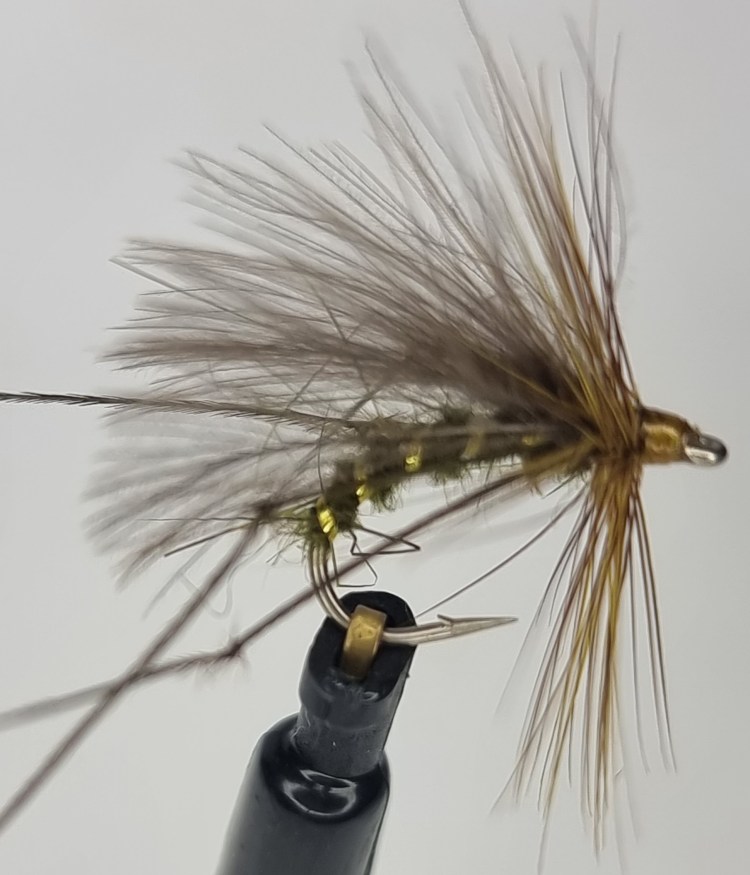
A half empty box of emerger style hook in size 12 got me thinking about CDC emerger patterns. I use these frequently when faced with calm conditions and they work quite well. I mess around a lot with the pattern, but generally olives and black/Bibio colours are useful. Here is the dressing for the olive version.
Tying silk is olive, 8/0. Body is rough olive dubbing, usually i don’t bother with a rib but you can add a wire rib if you like. A pair of knotted pheasant tail herl legs, one each side are tied in before the wings which are 3 natural grey CDC feathers tied over the back of the hook. Hackle is a cock hackle, dyed olive, wound in front of the wing.
Olive Bumble
One which features in every lough angler’s box. Thetying is easy and i use Kamasan B175 hooks for this fly. Tying silk is olive, 8/0. A short tag of Globrite no. 4 floss under the tail which consists of golden pheasant tippets. The body is olive seal’s fur ribbed with oval gold tinsel. Body hackle is an olive cock hackle and the head hackles are a couple of turns of a cock hackle dyed blood red under a guinea fowl feather which has been dyed olive.

Coch-y-Bondhu
Not a fly I see being used by other anglers too often over here in Ireland but I have done well with it on the smaller loughs around here. Can’t say I have used it on Conn or Mask but who knows? Maybe it would be a killer?
I use size 12, 14 or 16 hooks for this fly and brown, 8/0 tying silk. Make the tail from orange floss, tied short and thick. The body is made of three strands of bronze peacock herl with a fine copper wire rib to give the herls some degree of protection. A coch-y-bondhu hen hackle finishes off the fly

To meet my self imposed target of 100 flies by the end of February I will have to tie an average of just under 5 flies per day from now until then. Some of you have reached out to ask me to make some flies for you and I am making those as I go along. Bear with me as it makes sense to tie 5 – 10 of a pattern at a time instead of chopping and changing after each fly. I don’t think any of you are in a particular rush for the flies!

 Claretbumbler