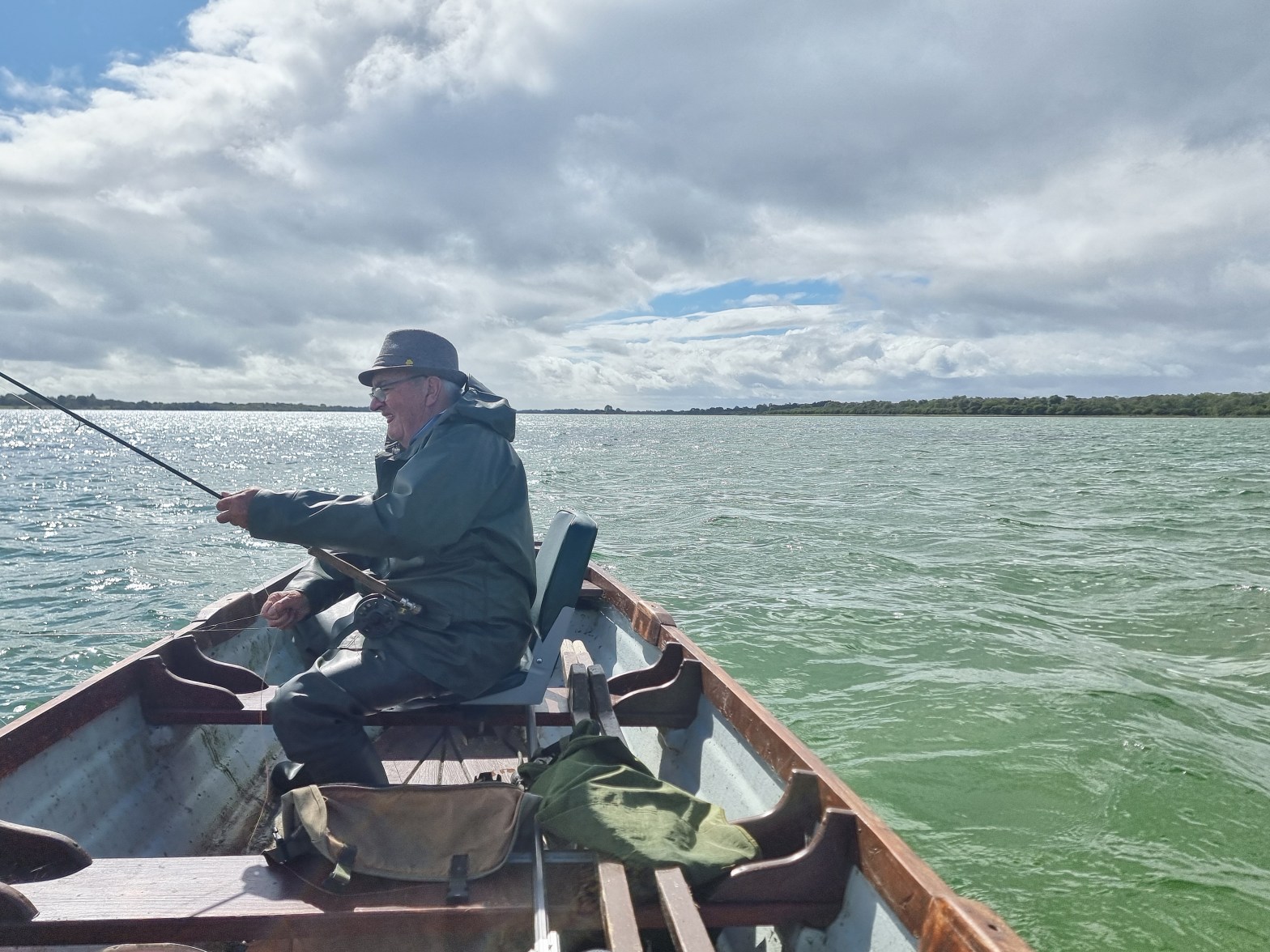
My plans to do a lot of fishing on Carra this season turned to dust, but I did manage to get out one last time last Sunday. It was the final competition for the club, a day which the forecasters had predicted would be one of gales and torrential rain. Strange as it may seem, I was looking forward to that! 2025 has been another poor season for fly anglers on Carra. Trollers have done OK, so there are fish in the lough, it’s just that they are not responding to the fly. Would Sunday be any different given that we would be fishing in optimum conditions?
I, like many other seasoned Carra fishermen, believe the lough fishes at its best in a big wind. Experience over the years has backed this claim up and while trout can be caught in just about any weather, a strong south wind that bring big, rolling waves on the face of the lake are what we fly fishers and dappers dream of. I could write a book on different waves on the western loughs, each has their own distinctive form. On Carra, a windy day brings more of a swell than waves, very different to the white crested walls of water on neighbouring lough Mask.
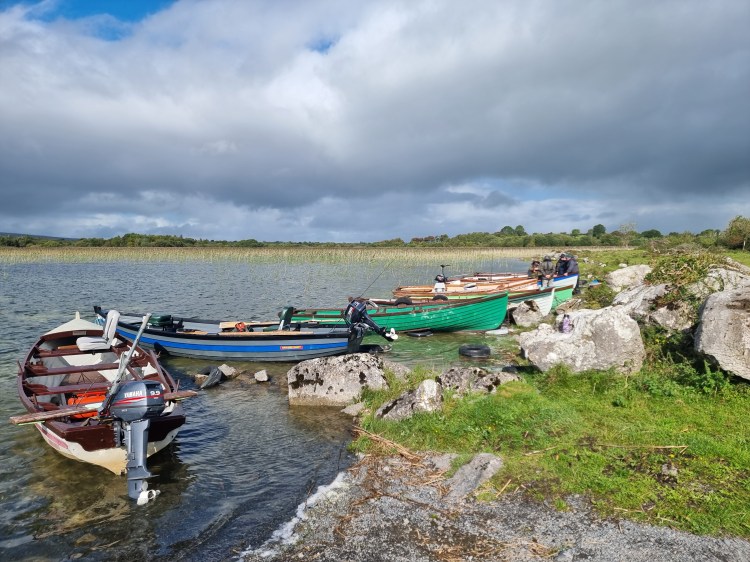
For those unfamiliar with this lough, it is really like two separate lakes joined together by a very shallow channel. I would be fishing the western basin out of the small mooring at Castleburke, with my old mate Liam. He keeps his boat there so there was no need to go moving boats around from another lough. We met at the appointed time along with 5 other boats. Banter was shared, rods strung and we all set off under a hazy sun. Hang on, where was the gales and heavy rain? As it turned out, once again the weather forecast was woefully out of sync with the actual conditions. The day turned out to be one of steady, soft winds which switched between south and west and only the occasional squally shower. Of big, rolling waves there was not a sign.
September means a drop in temperatures and the trout feeding hard before the upcoming rigours of spawning. Nature has provided a rich larder for the fish to pick from but one of the favourite sources of food is the cranefly or daddy long legs as it is better known. Far less common than it used to be, we still see the odd one being blown on to the surface where the trout gobble them up. I often tie a daddy imitation on the bob position of my wet fly leader at this time of the year, but these days it is as likely to sport a foam body as the more traditional pheasant herl. Some patterns are very good imitations of the naturals while others focus more on movement over exact copying. My fly boxes are crammed full of daddy patterns, some for brown trout and others for migratory trout and salmon. I started off with a Daddy on the bob, a Green Gorgeous George in the middle and a Mallard and Claret on the tail. With no better plan we headed into Quinn’s Bay to start with. Soon Lian spotted a trout rise far off to his right, so we pulled over to that spot and tried there for one drift, but without success. Two more drifts were equally unproductive, so we moved down to Henaghen’s Bay. I swapped flies a couple of times but with no response from the trout. Liam was having just as much luck as I was at the other end of the boat. We agreed it was time for lunch so we drove over to the church and pulled in there among the dying reeds.

We had passed some of the other boats during the morning and none had caught anything substantial. With no clues as to where some feeding trout could be found we motored back out after wolfing down our sandwiches. Flies were changed again, then again, but still I could not find one the trout liked. I decided to try the dies for a while, putting up a dry daddy and a dry sedge, but these were as useless as my wets. We fished under the castle, then doubled back into Heneghan’s Bay before trying the shallows, but we couldn’t buy a rise. By 3pm we decided that we would head back into Quinn’s Bay. As we were motoring up the lough Liam saw a big trout hurl itself out of the water in front of the boat, the fish were just laughing at us by now! I changed back to the wets, feeling there had to be a chance of pulling a trout to a fry pattern. A big Silver Dabbler on the tail might work?

Back in Quinn’s Bay we fished hard, me using a floating line, Liam on an intermediate. At last, our perseverance paid off when Liam’s line tightened and he hooked a fish as I was undoing a wind knot in my leader. The fourteen incher pulled and darted but was well hooked and soon safely netted, a fish richly deserved. Any hopes this was a sign that the trout were going to come on the feed were groundless and despite more drifts and hundreds more casts we failed to elicit any more offers. A yank on the cord started the old Johnson engine and we set off for the shore and the 6pm finish. The other boats came in clean, a few under size trout had been all some anglers met, others, like me, had not even touched a fish all day. As it turned out, the anglers on the other side of the lough had similar tales to tell, but two other trout were weighed in and Liam had to settle for third place. Sean Coyne won it with a nice fish.
So what to make of my second blank in two outings on Carra this season? Look, the lough is fishing poorly, but that is no excuse for me. I am ring-rusty on the loughs due to not being out much this year. The more you fish, the better your luck gets and months of inactivity with the fly rods have taken their toll. There is always next year. And the fly that Liam caught his fish on? Well would you believe it was a bloody Green Gorgeous George, just like the one I had on the middle when we started out!


 Claretbumbler