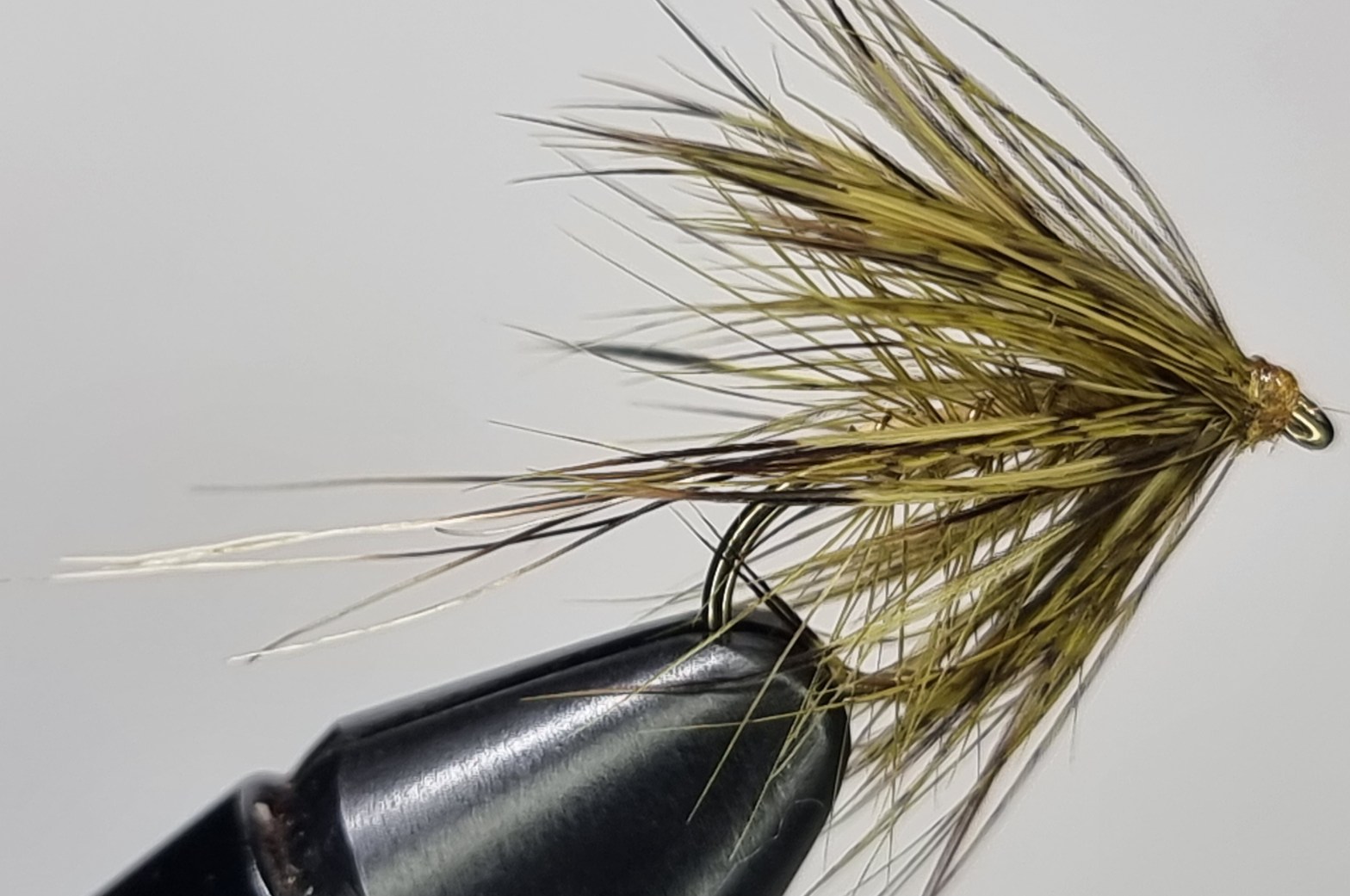
In a world where every day seems to pressure us buy yet another ‘must have’ synthetic material, I want to talk about an old material which I never see anyone else use now, the body har from a badger. I realise this is not an easy material to find and it has very limited uses, but I like it and have used it since I was a novice. Unfortunately, we all very familiar with the sight of dead badgers by the roadside. These nocturnal creatures are routinely killed as they amble across roads at night. As long as you can access the carcass safely it is possible to harvest some of the hair with just a pair of scissors. I don’t recommend taking the whole corpse or even part of it and trying to cure the skin. As the badger has thick, fatty skin it would prove very difficult, smelly and time consuming to do this. It doesn’t make sense for all the material you will use. An alternative source is old paintbrushes and shaving brushes as these were made using badger hair at one time.
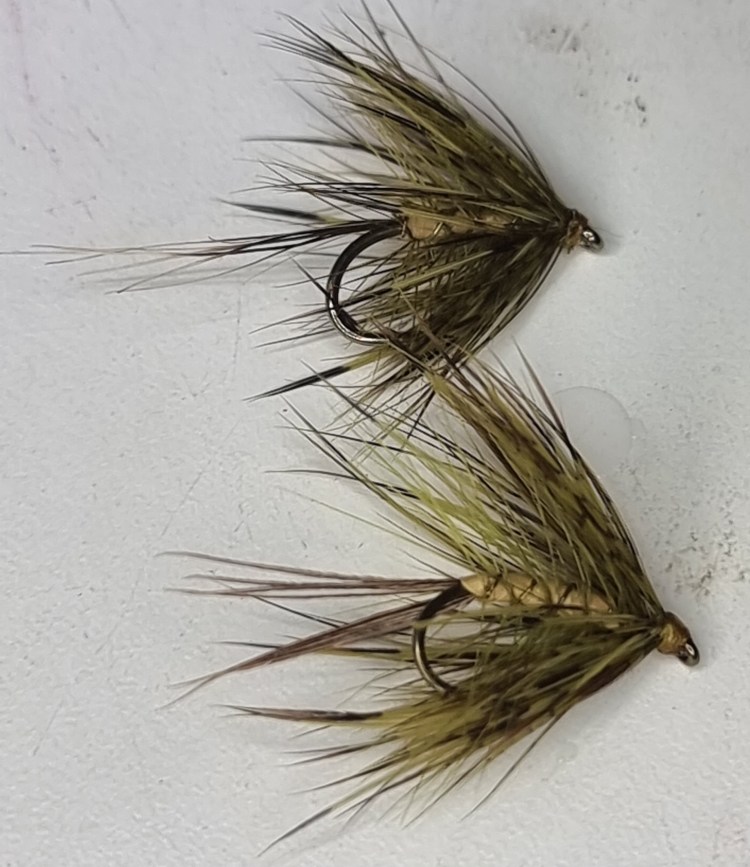
The biggest issue with badger hair, apart from actually getting your hands on some, is the individual fibre stiffness. While it was used as a winging material in the past it has almost entirely been superseded by grey squirrel tail hair, simply because even the relatively stiff squirrel still has more movement in it than the badger. Any Beltra Badgers or Silver Badgers I see these days are all tied with squirrel tail wings and I honestly believe these are more effective for that. The only time I use badger hair for wings is if I am lucky enough to find some hair from a very young animal and take some hair from the back of the neck. Otherwise, I just use badger hair for making tails, just like in the Straggle Dabbler below.

Here in Ireland our mayfly patterns are hugely varied and use diverse materials. The one common item though is the near total commitment of dressers to using cock pheasant tail fibres for the tails on mayfly patterns. These work extremely well of course, but the pheasant herls are fragile and easily broken when a trout takes the fly. Lord only knows how many flies I have discarded due to the loss of a tail, and that is where badger hair comes in. I use a few strands of badger hair as a tail in place of the fragile cock pheasant tail fibres. When compared to the tails on a natural mayfly they are very realistic too, actually more so than the pheasant (by the way, when I do use cock pheasant tail fibres these days I add a strand or two of an old Lureflash synthetic called Twinkle. This is tough stuff and even if the fish chew off the pheasant fibres the fly still has a tail left).
Using badger hair is easy, the only slight issue is the loose fibres you have collected need to be aligned using a hair stacker before tying them in. The fibres are smooth and slippery, so wax your tying silk well to ensure it gets a good grip.
As I said earlier, finding badger hair can be problematical. I am lucky to have some which has been in my possession since I was only 17 years old. Let me explain…..When I left school I went to work in one of the local papermills. By a stroke of luck the managers there wanted me to go off and get a bit of education so I was enrolled in the local Technical College to study a for a qualification with the rather grand sounding title of ‘paper and board manufacturing and management’. As someone who was useless at school this felt like a tall order but I soon discovered I loved college. The highlight of each week was a trip to one of the local mills or suppliers where us green horns could see the machines and processes we were studying in real life. Most of these trips were to the old and complex site at Stoneywood on the river Don. Part of that site was a coating line where fine art papers were made and one of the ancient coating machines was a brush coater.
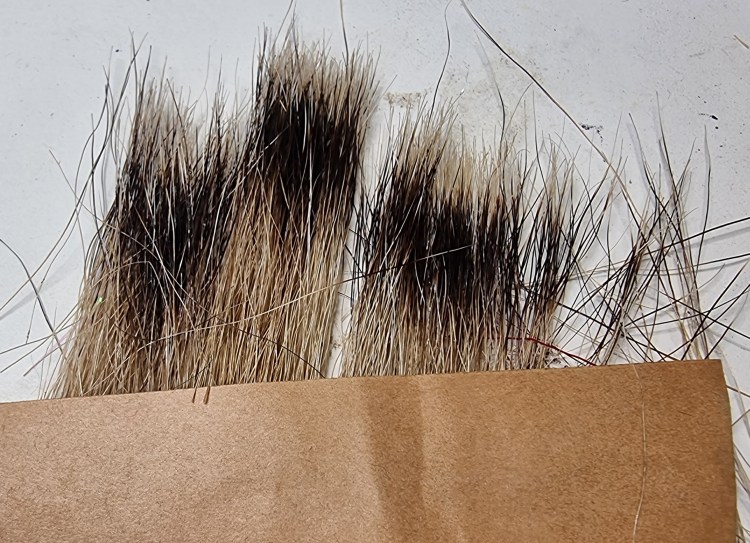
Brush coating is a process where an excess of coating (think viscous white paint like fluids) as applied to a moving web and the excess is removed by a series of brushes which can be pressed into the sheet. I doubt very much of any brush coaters survive to this day, as much faster and more accurate coating processes have been developed. The thing was, the hair on the brushes came from – yes, you have guessed it – badgers! One of the lads on my course actually worked in that part of the mill and I persuaded him to try and get me some of the hair. Remarkably, he found a broken brush which was being thrown out and he gave a piece of it to me. That hair has kept me going all my life. Below is all I have left of it, a scant few hairs from a long departed badger, but just about enough to see me out I reckon.
No fishing for me today. I was planning on going out but it is cold, wet and windy outside, miserable weather all together. Instead I will fish for a few hours on Conn tomorrow afternoon.

 Claretbumbler