
Not a fly I use personally, but it is popular in the area for all game fish. I guess I am just too wedded to the old Claret Bumble to bother with this fly personally, but I am tying a few up today to sell. The one I see most often is the dressing I am giving here, but I think the original used a peacock neck feather as a head hackle, hence the name of the fly.
Hook: sizes 8 to 12 will cover most situations
Tying silk: black, 8/0
Tail: a golden pheasant topping
Rib: oval silver tinsel
Body: Claret seals fur
Body hackles (3): one each, black, claret and magenta cock, palmered
Head hackle: Guinea fowl dyed blue
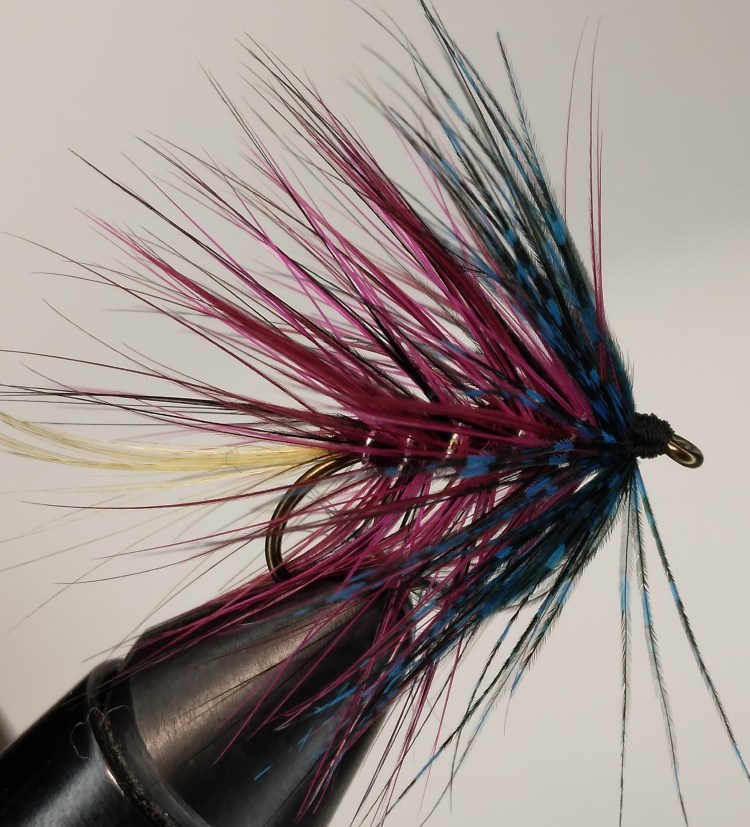
There is not much to tying this fly, the only possible issues are around winding the three body hackles so let’s take a look at that. For me, the secret is in selection of the feathers. Get that right and you will find winding multiple hackles becomes much easier. These days we are blessed to have access to wonderful genetic capes and if your budget stretches to these expensive feathers then you are on a winner. The thin stems on genetic hackles makes them ideal for this job, so use them if you can. Don’t panic if you don’t have genetic hackles though. ‘Normal’ cock hackles will be fine, but you have to take time to select the right ones and by that I mean hackles which are physically very similar. We tend to look at just the fibre length when comparing hackles but just as important is the stem thickness. Thinner is obviously better, but as long as all three hackles stems are the same thickness they will wind nicely.
My own method of fly construction, where I tie in the body hackles first of all, is very useful for this type of fly as the thick hackle butts are lashed to the hook shank under the body.
The Stone Goat is subject to a host of variations. Adding a gold tag is common for example. I have also seen samples with large cheeks made from pearl mylar on each side. Jungle Cock eyes are yet another addition, which I have to admit do look very good. Omitting the claret hackle altogether seems to be another option but I personally don’t like the look of just black and magenta hackles together. Then again, who am I to second guess what the fish want!


 Claretbumbler
Help me out here … how does using a “peacock neck feather as a head hackle” contribute to the name of the fly?
LikeLike
The same iridescent blue feather from the neck of the peacock is used on another famous salmon fly called the Goat’s Toe. I am guessing that is why the Sone Goat got the ‘goat’ part of the name. If i can find a photo of a Goat’s toe i will add it to the post.
LikeLiked by 1 person